




Waterproof Breathable
Stay Dry, Move Free in KÜHL Women's Waterproof Breathable Jackets
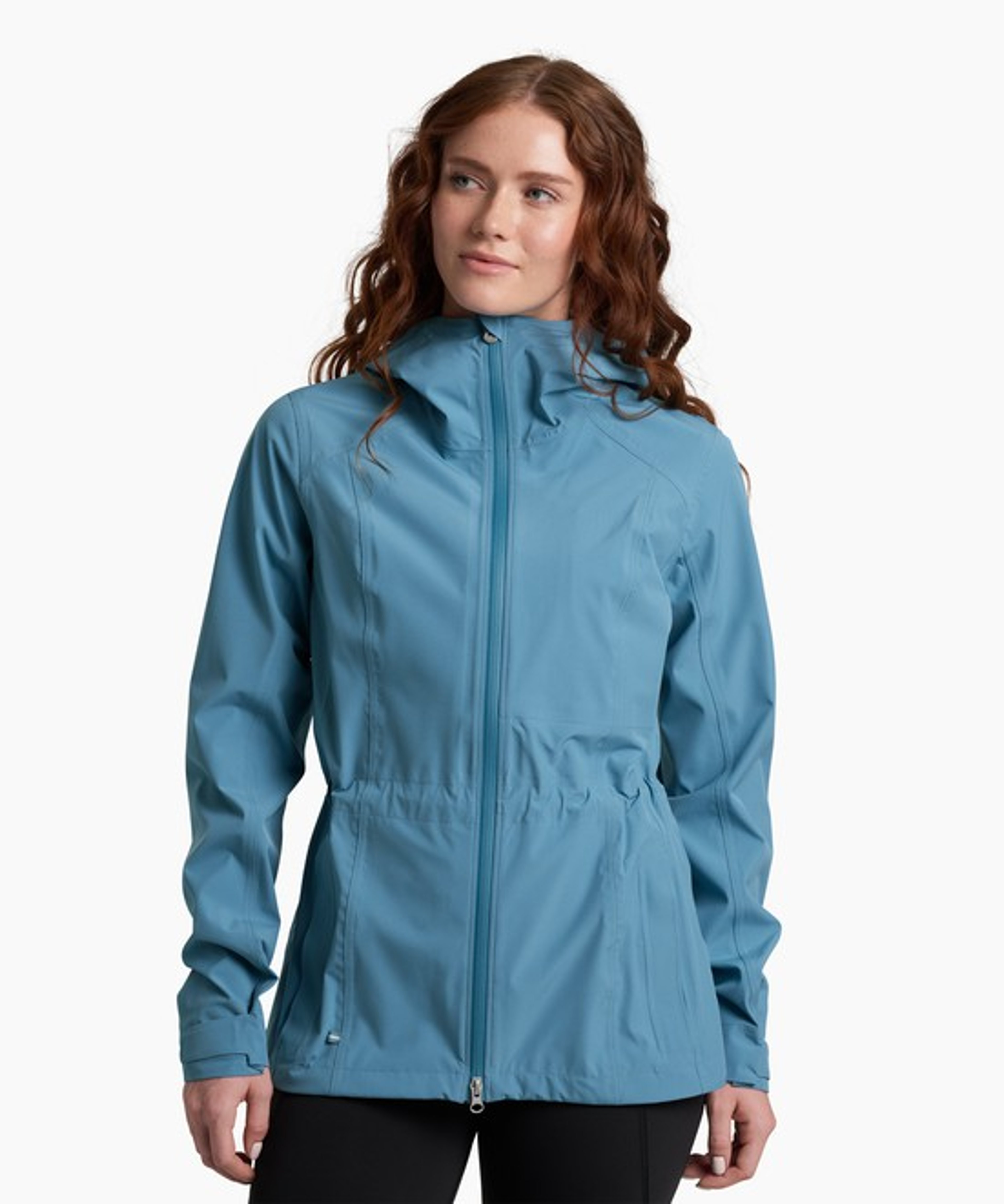
Choose from a variety of constructions, weights, and features for the women's waterproof breathable jacket that's right for you:
Hardshell Storm Protection. When the forecast turns serious, a true hardshell delivers full waterproof performance with taped seams, a durable water repellent (DWR) finish, and a membrane built to shed sustained rain. Look for 4-way stretch in the face fabric so the shell moves with you on technical terrain instead of fighting your reach.
Insulated Wet-Weather Warmth. Some of our waterproof breathables pair the same shell technology with premium synthetic insulation, giving you a single piece that handles cold rain and shoulder-season storms without a separate mid-layer. Synthetic fill keeps insulating when damp, a meaningful advantage over down once the weather actually arrives.
Quiet, Lightweight Construction. Modern waterproof breathables don't have to crinkle like a tarp. Look for soft hand-feel face fabrics, low-bulk seams, and packable designs that compress small enough to live in your pack until you need them. Ripstop nylon adds tear resistance without adding weight, so brush and rock won't end the trip.
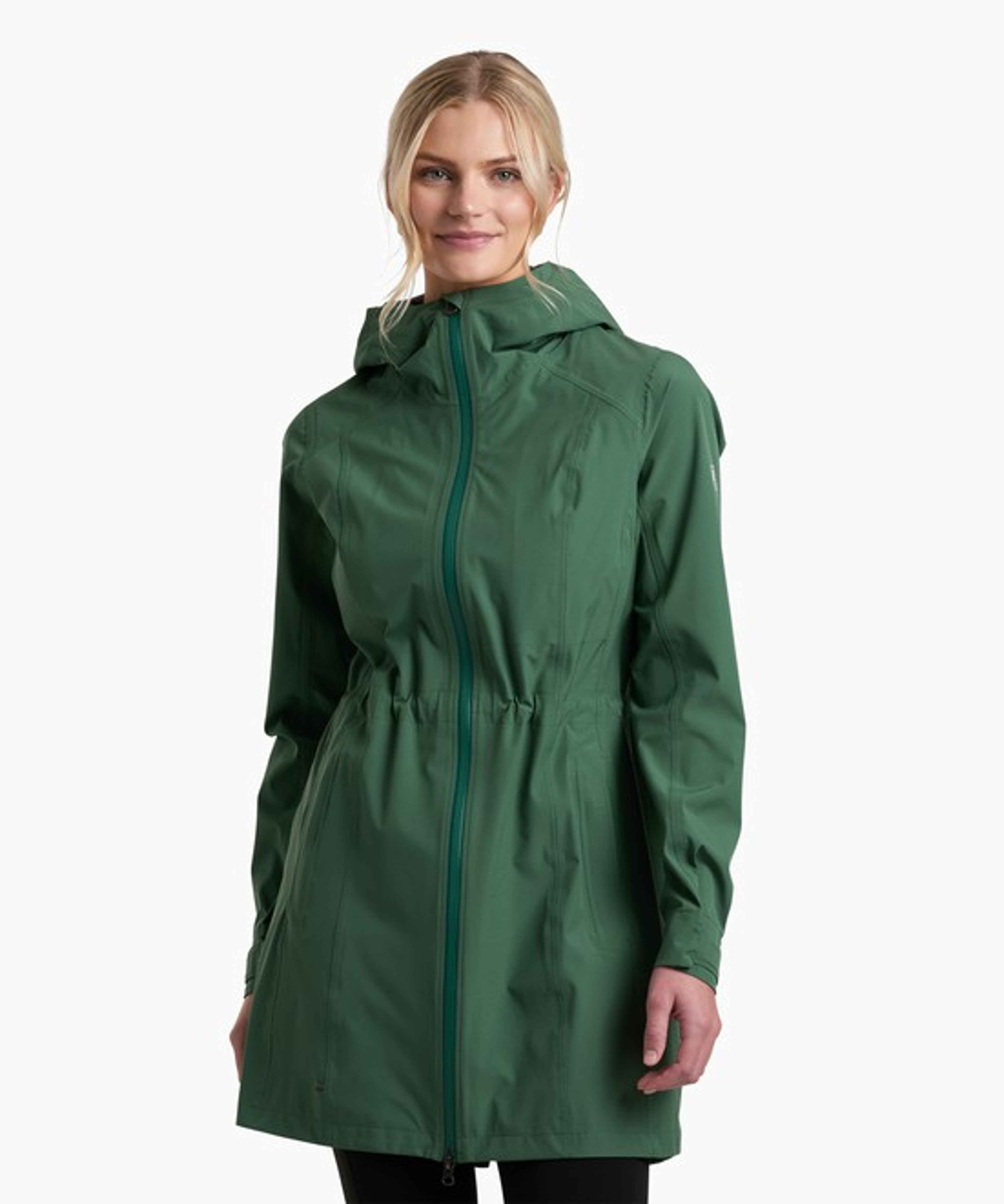
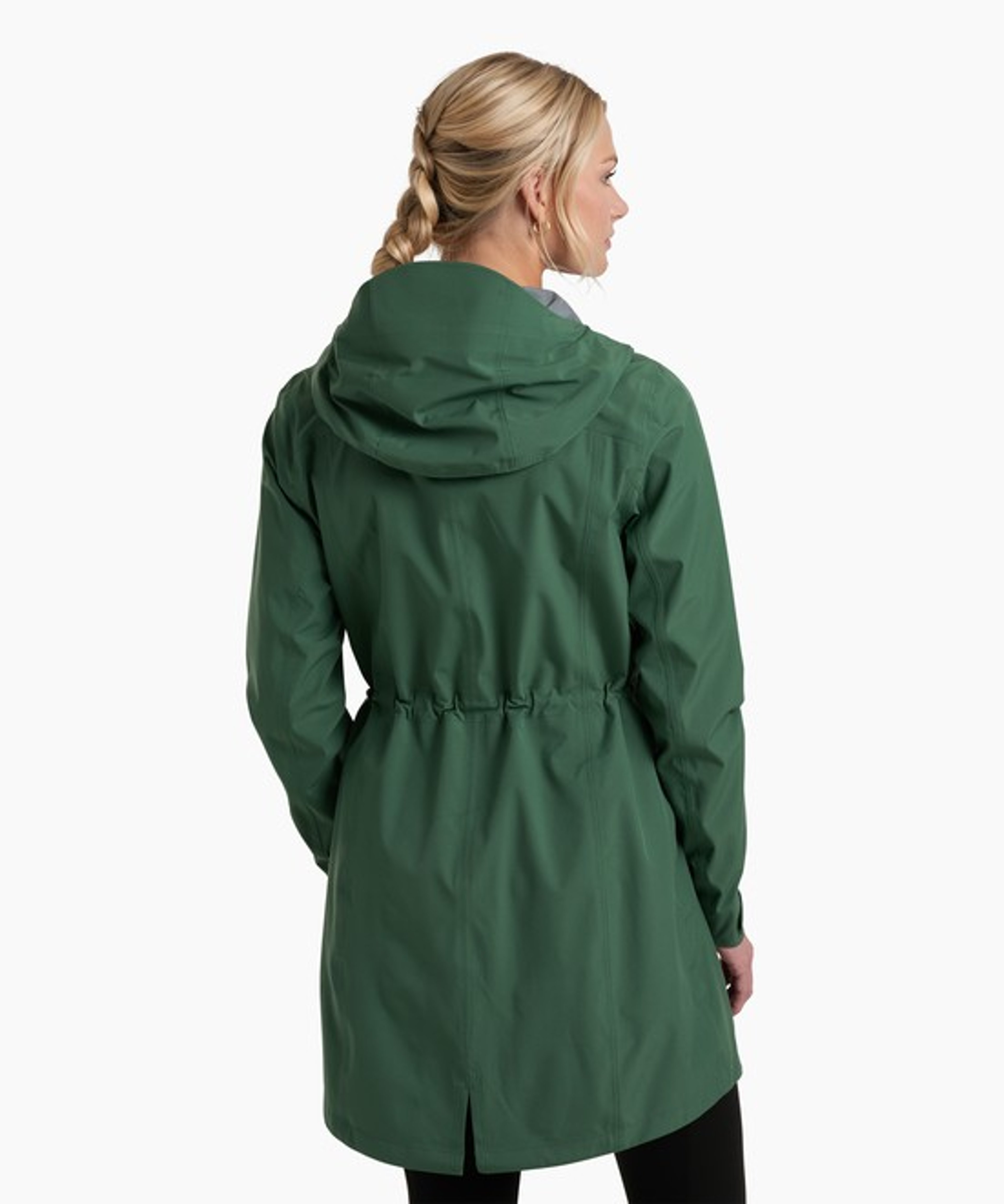
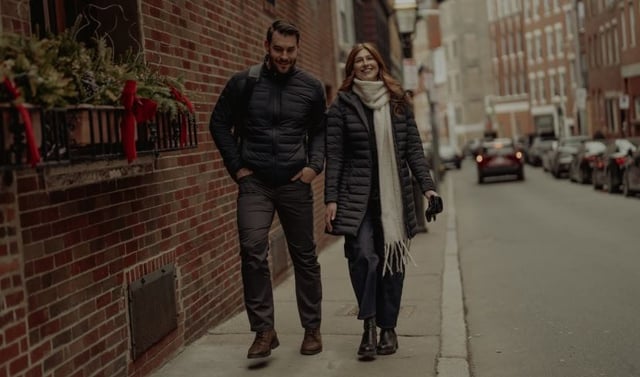
Trench-Length Coverage. For wet city days and longer commutes, a longer-cut waterproof shell extends protection past the hips without sacrificing breathability or movement. The same membrane technology that performs on the trail also works walking to the office.
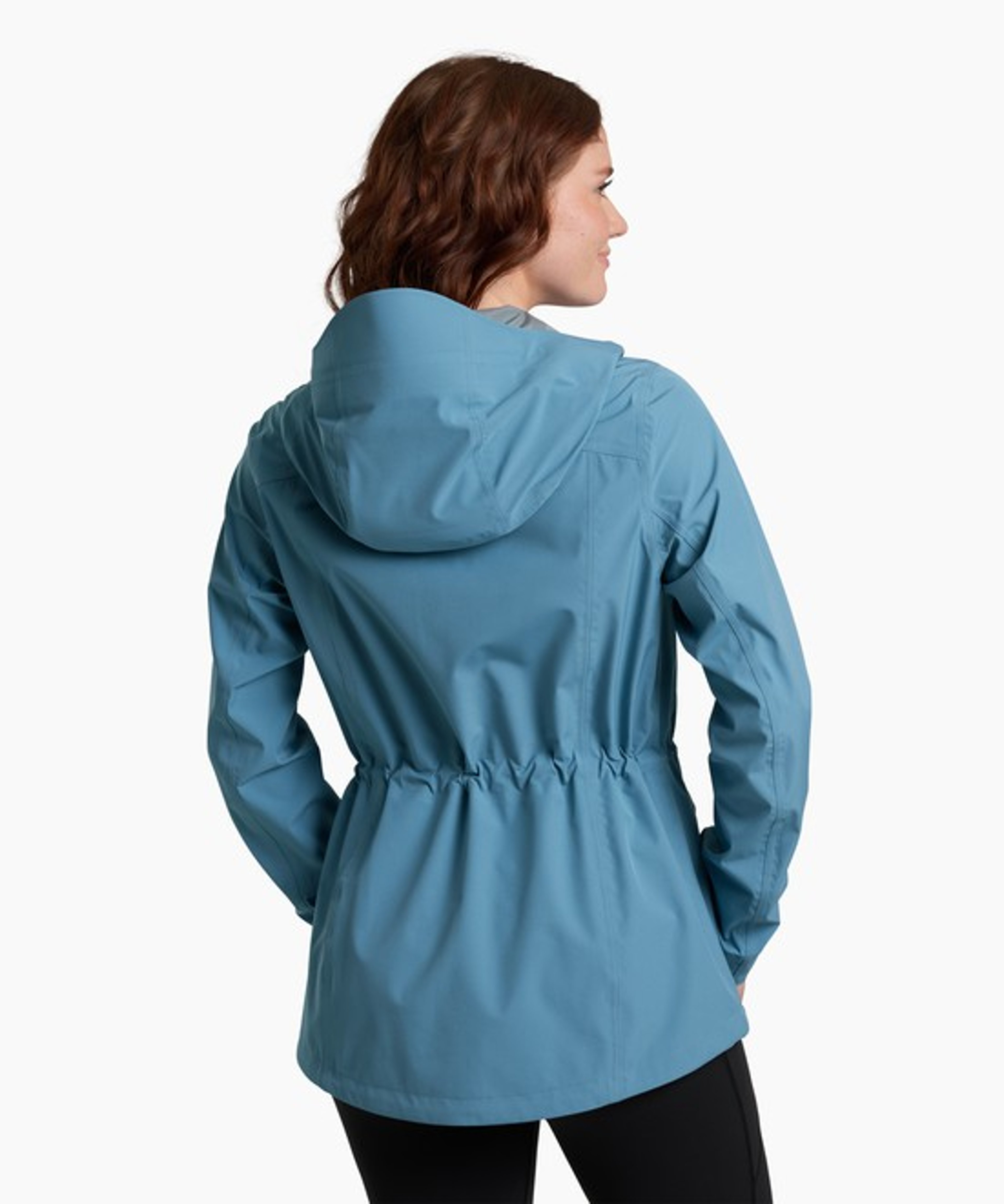
When choosing, look for details like an articulated cut through the sleeves and shoulders for full overhead reach, adjustable cuffs and hem to seal out wind-driven rain, and a hood designed to layer over a beanie or under a pack. When the forecast leans dry but breezy, a lighter women's rain jacket may be all the protection you need.
Choose from a variety of constructions, weights, and features for the women's waterproof breathable jacket that's right for you:
Hardshell Storm Protection. When the forecast turns serious, a true hardshell delivers full waterproof performance with taped seams, a durable water repellent (DWR) finish, and a membrane built to shed sustained rain. Look for 4-way stretch in the face fabric so the shell moves with you on technical terrain instead of fighting your reach.
Insulated Wet-Weather Warmth. Some of our waterproof breathables pair the same shell technology with premium synthetic insulation, giving you a single piece that handles cold rain and shoulder-season storms without a separate mid-layer. Synthetic fill keeps insulating when damp, a meaningful advantage over down once the weather actually arrives.
Quiet, Lightweight Construction. Modern waterproof breathables don't have to crinkle like a tarp. Look for soft hand-feel face fabrics, low-bulk seams, and packable designs that compress small enough to live in your pack until you need them. Ripstop nylon adds tear resistance without adding weight, so brush and rock won't end the trip.
Trench-Length Coverage. For wet city days and longer commutes, a longer-cut waterproof shell extends protection past the hips without sacrificing breathability or movement. The same membrane technology that performs on the trail also works walking to the office.
When choosing, look for details like an articulated cut through the sleeves and shoulders for full overhead reach, adjustable cuffs and hem to seal out wind-driven rain, and a hood designed to layer over a beanie or under a pack. When the forecast leans dry but breezy, a lighter women's rain jacket may be all the protection you need.
KÜHL women's waterproof breathable jackets combine real rain protection with airflow that breathes. Here's how to choose the right shell for your weather and your activity.
What should you look for in women's waterproof breathable?
The best women's waterproof breathable jackets balance four things: a waterproof membrane with taped seams, real breathability so you don't sweat out from inside, room to layer over a base and mid-layer, and a hood and cuffs that actually seal.
Sustained-rain conditions call for a hardshell with a 3-layer construction and a fresh DWR finish on the face fabric. For mixed weather where you're working hard, prioritize 4-way stretch, pit zips or mesh ventilation, and a trim-but-not-tight fit through the torso. Pocket placement matters more than the spec sheet suggests: make sure hand and chest pockets stay accessible while wearing a pack hip belt.
Sustained-rain conditions call for a hardshell with a 3-layer construction and a fresh DWR finish on the face fabric. For mixed weather where you're working hard, prioritize 4-way stretch, pit zips or mesh ventilation, and a trim-but-not-tight fit through the torso. Pocket placement matters more than the spec sheet suggests: make sure hand and chest pockets stay accessible while wearing a pack hip belt.
What's the difference between a hardshell, softshell, and insulated jacket?
A hardshell is fully waterproof, built to handle sustained rain, wet snow, and wind, with a membrane, taped seams, and a DWR finish. A softshell is wind-resistant and water-repellent, breathes far better, and stretches to move with you, but it isn't built for hours of heavy rain. See our women's softshell jackets for that lane. An insulated jacket adds warmth via down or synthetic fill, and may or may not be waterproof on its own.
Pick by the threat you face most: if it's rain, hardshell. If it's wind plus aerobic output, softshell. If it's cold, insulation.
Pick by the threat you face most: if it's rain, hardshell. If it's wind plus aerobic output, softshell. If it's cold, insulation.
How do you choose between down and synthetic insulation?
Down gives you the best warmth-to-weight and packs down smaller, but it loses loft, and warmth, when it gets wet. Synthetic insulation is heavier and bulkier, but it keeps insulating when damp and dries faster, which is why most waterproof breathable jackets with built-in insulation use synthetic fill.
Choose down for dry cold and ounce-counting trips. Choose synthetic for wet, variable conditions or any time the jacket itself is your outer layer. If you want a dedicated mid-layer to pair under a shell, our women's down jackets cover the dry-cold scenarios.
Choose down for dry cold and ounce-counting trips. Choose synthetic for wet, variable conditions or any time the jacket itself is your outer layer. If you want a dedicated mid-layer to pair under a shell, our women's down jackets cover the dry-cold scenarios.
Are waterproof breathable waterproof or just water-resistant?
Truly waterproof breathable jackets use a membrane laminated to the face fabric: that's what blocks sustained rain while letting water vapor escape from the inside. A standalone DWR finish only beads off light moisture and wears off over time. It's water-resistant, not waterproof.
Two reliable tells for real waterproof performance: taped or sealed seams, so water can't wick through stitching, and water-repellent zippers. KÜHL's waterproof breathable jackets are built around membrane technology, not just a surface treatment, so they hold up when the forecast actually delivers.
Two reliable tells for real waterproof performance: taped or sealed seams, so water can't wick through stitching, and water-repellent zippers. KÜHL's waterproof breathable jackets are built around membrane technology, not just a surface treatment, so they hold up when the forecast actually delivers.
How should a waterproof breathable fit for layering?
A waterproof breathable should fit close enough to move with you, but with room for a base layer plus a mid-layer underneath without pulling tight across the shoulders or chest. Test the fit by raising both arms overhead: the hem shouldn't ride up past your hips, and the cuffs shouldn't expose your wrists.
Articulated sleeves and a gusseted underarm help here. The hood matters too: it should cinch around your head without blocking peripheral vision and accommodate a beanie or thin helmet. If you'll mostly wear it over a women's fleece mid-layer, size with that combination in mind.
Articulated sleeves and a gusseted underarm help here. The hood matters too: it should cinch around your head without blocking peripheral vision and accommodate a beanie or thin helmet. If you'll mostly wear it over a women's fleece mid-layer, size with that combination in mind.
What features matter most when hiking or backpacking?
For hiking and backpacking, prioritize ventilation, hood adjustability, and pocket access under a pack. Pit zips or mesh-lined vents let you dump heat on steep climbs without stopping to strip layers. An adjustable, helmet-compatible hood with a stiffened brim keeps rain out of your face when it's blowing sideways.
Hand pockets that sit above a hip belt, not buried under it, make the difference between a jacket you actually use and one you fight with. Ripstop face fabric resists snags from brush and abrasion against rock, and a packable design that stuffs into its own pocket earns its place at the bottom of your pack on dry days.
Hand pockets that sit above a hip belt, not buried under it, make the difference between a jacket you actually use and one you fight with. Ripstop face fabric resists snags from brush and abrasion against rock, and a packable design that stuffs into its own pocket earns its place at the bottom of your pack on dry days.