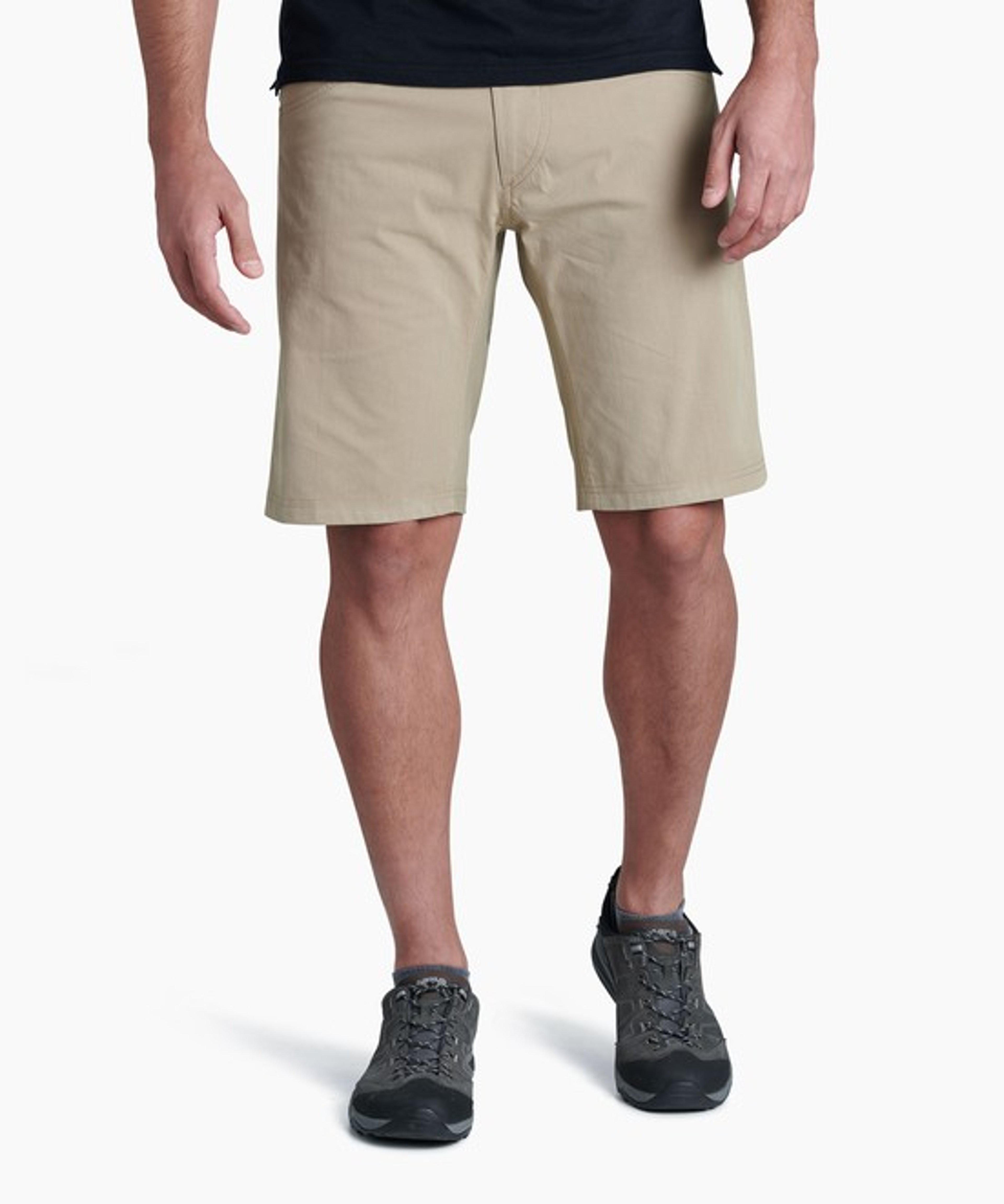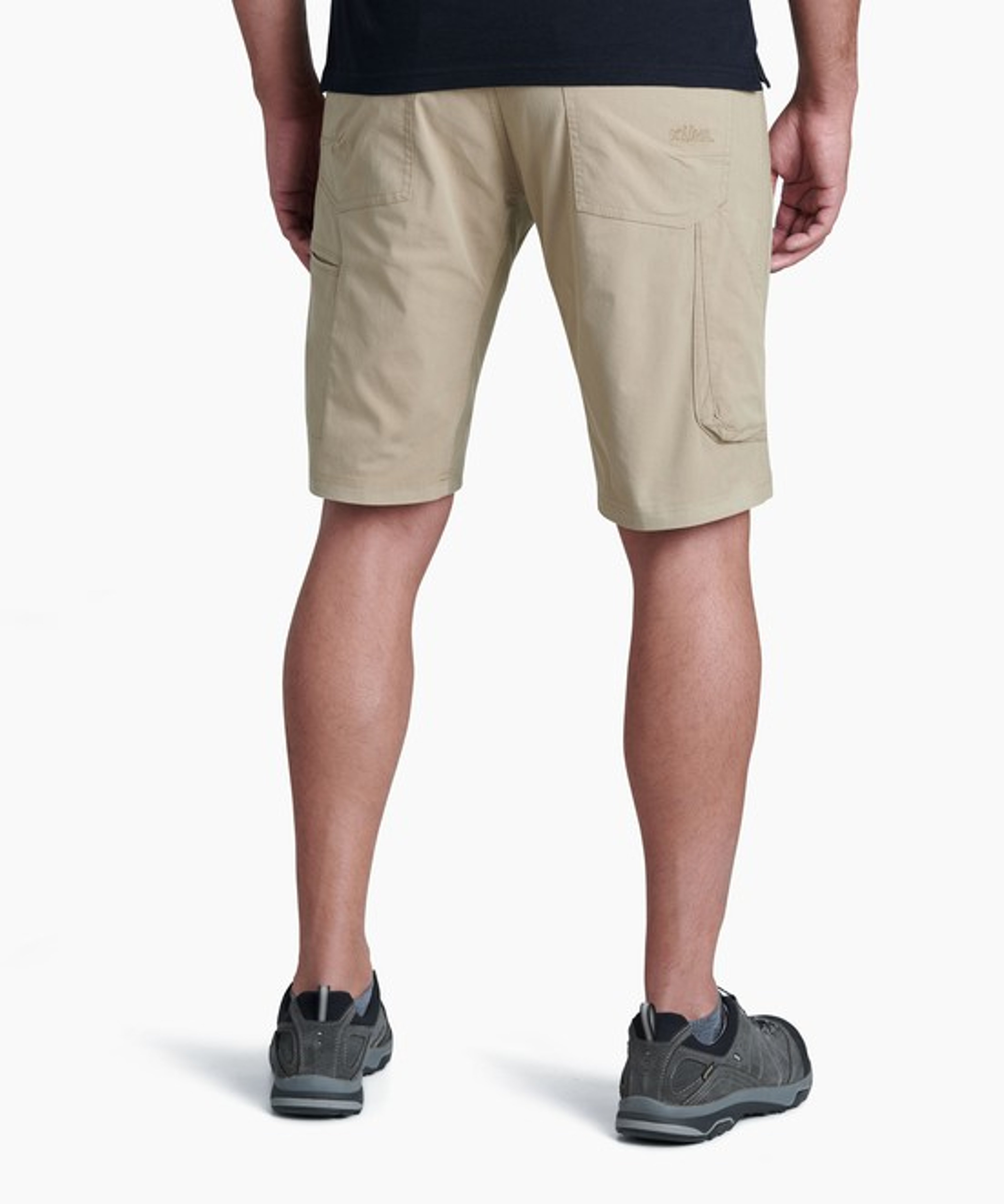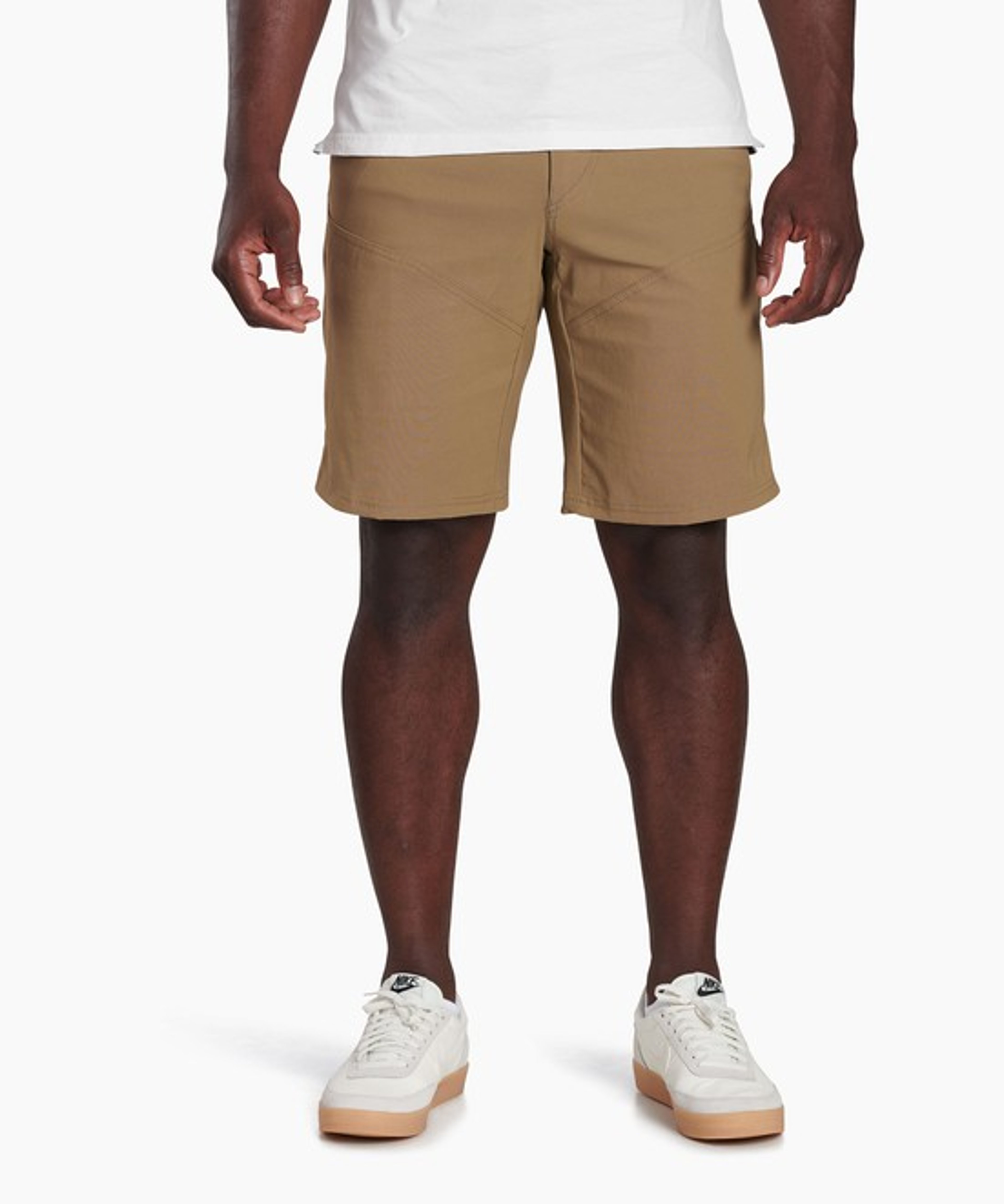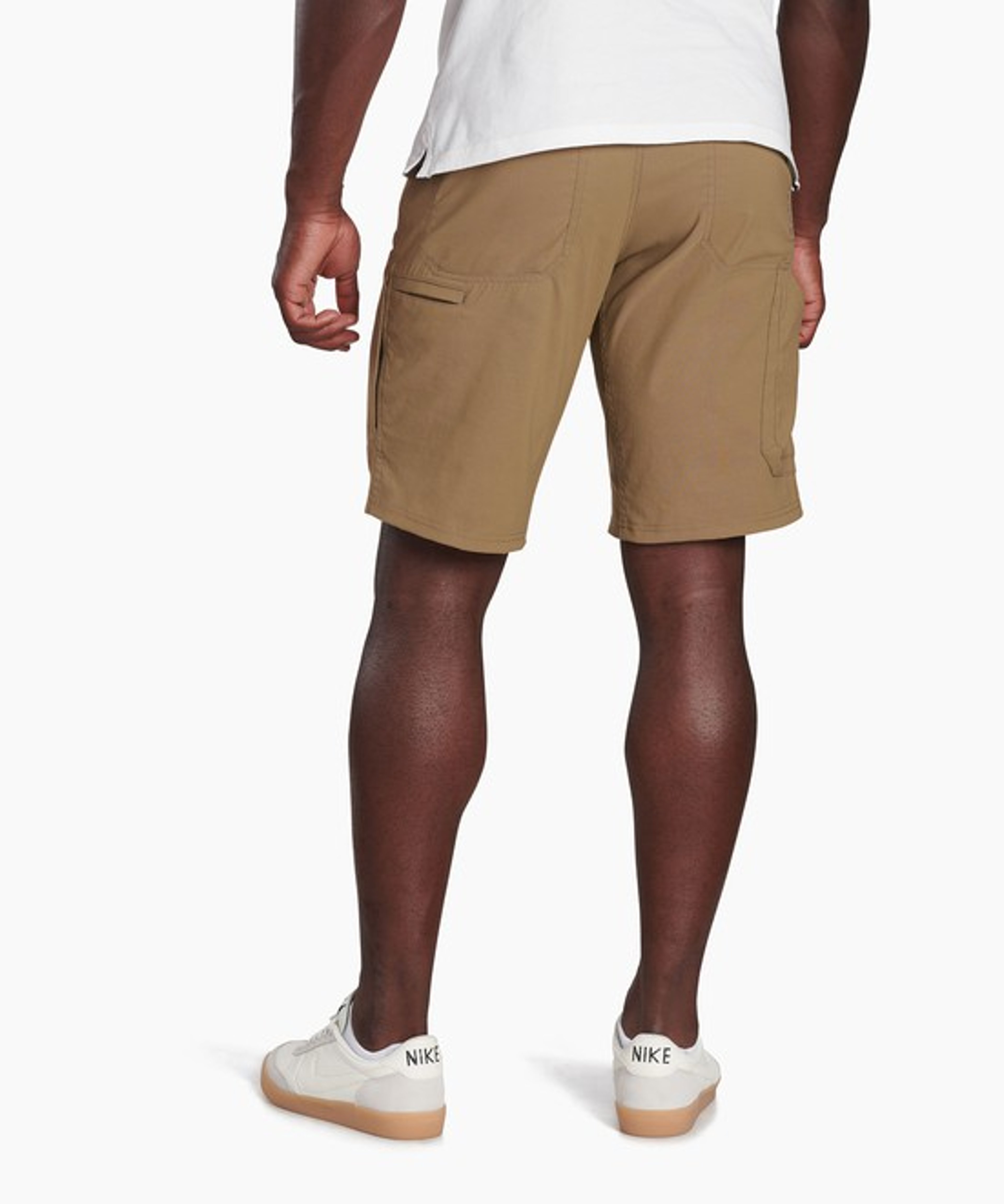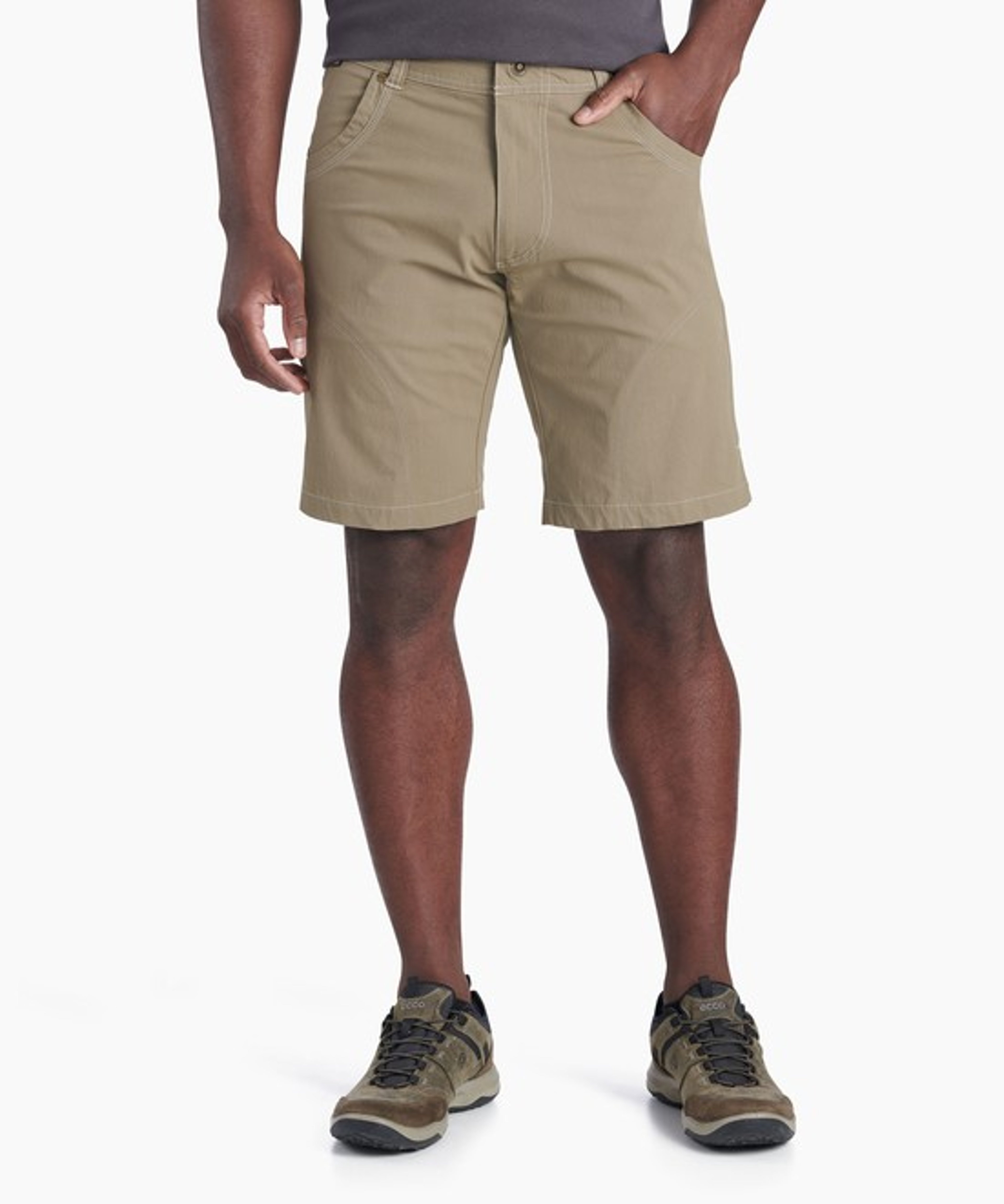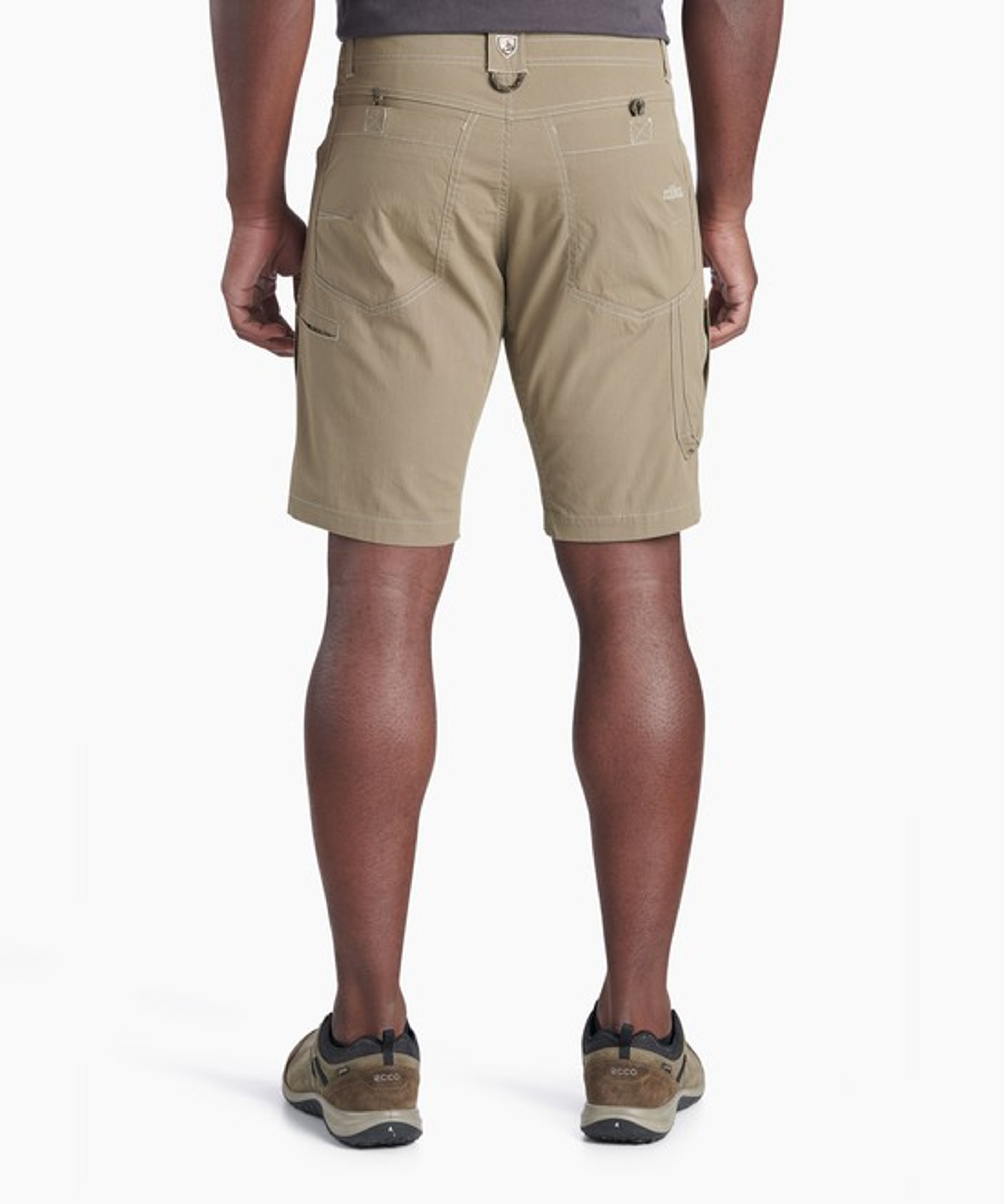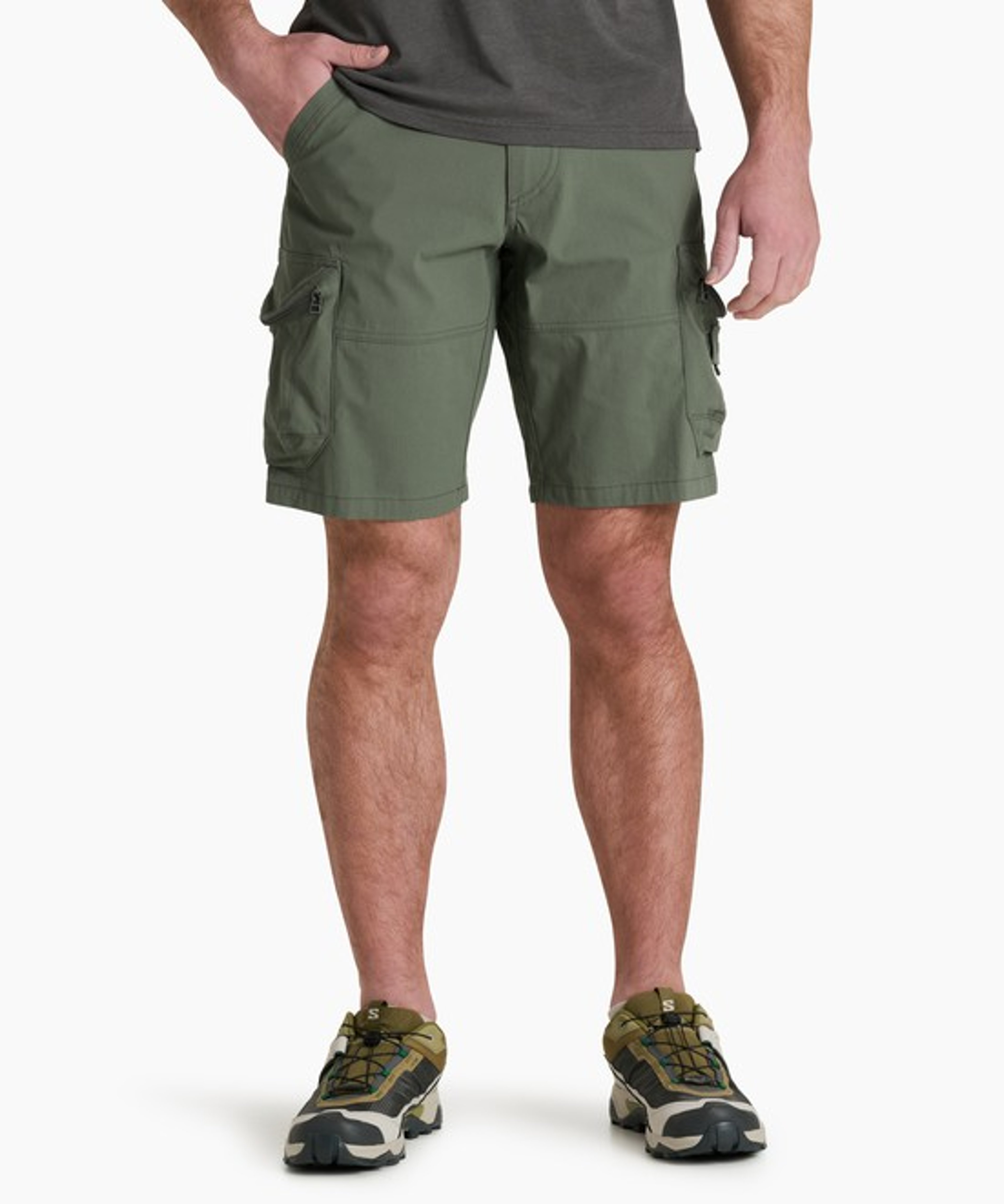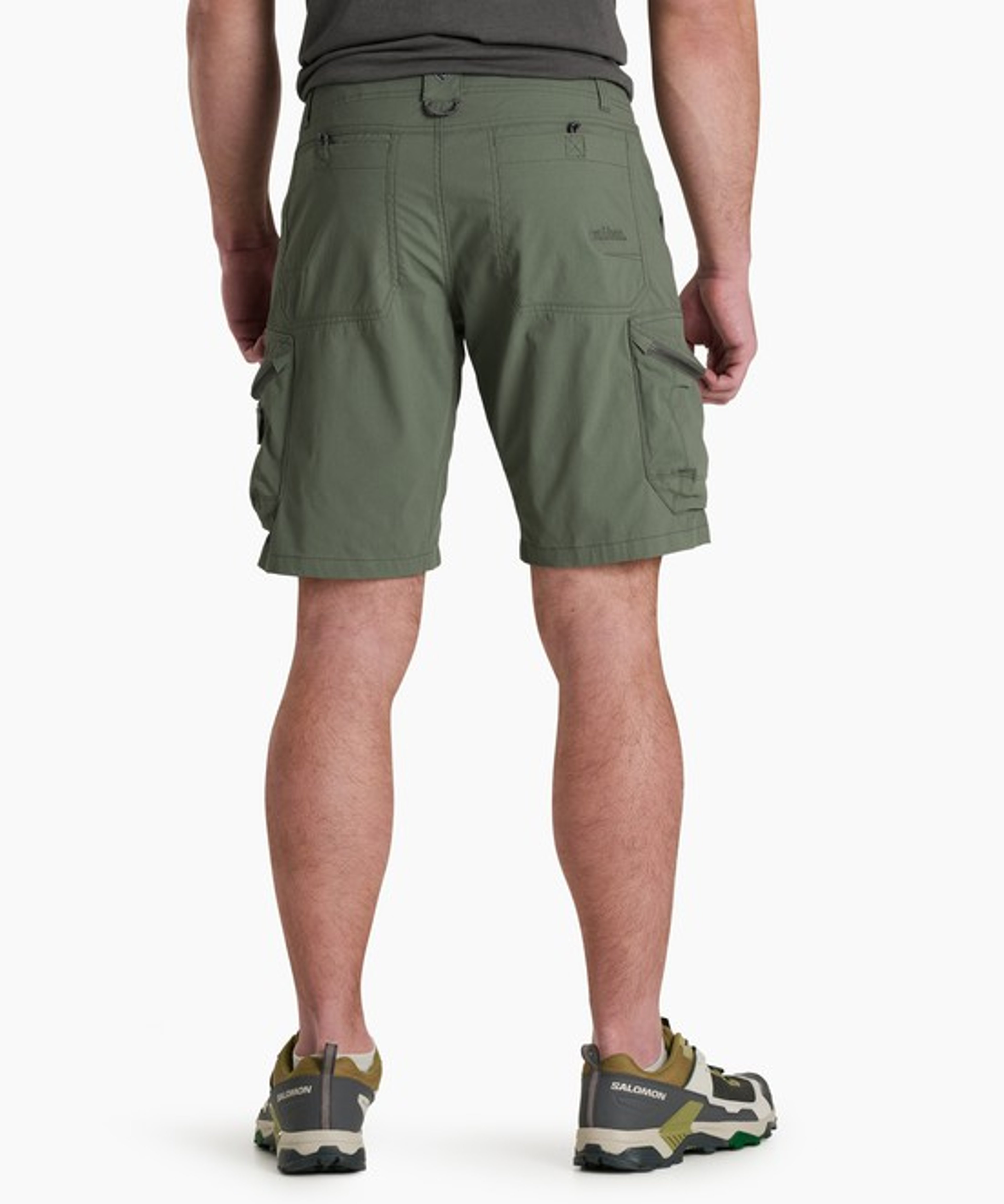






Men's Hiking Shorts
Take on the trail in KÜHL men's hiking shorts.
Choose from a variety of fabrics, styles, and features for the men's hiking shorts that are right for you:
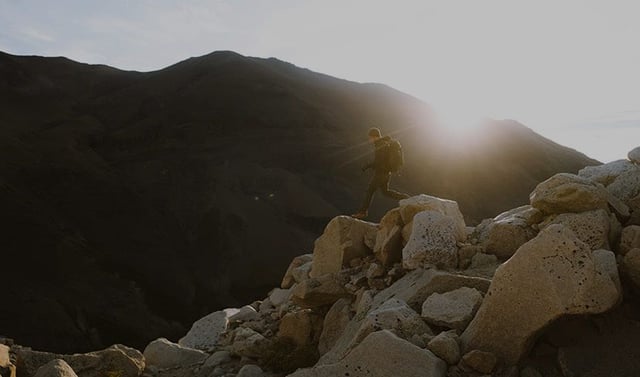
On-Trail Performance. Built for long miles on rocky ridgelines and dusty switchbacks, our hiking shorts pair stretch softshell fabrics with UPF 50+ sun protection and a DWR finish that sheds creek splashes and surprise drizzle. Articulated construction and a gusseted crotch give you full stride freedom on technical scrambles.
Stretch Where It Counts. REFLEX™ softshell is a nylon-spandex blend with built-in 4-way stretch, a soft hand feel, and quick-dry performance. It anchors our most popular trail cuts, soft enough for all-day wear, tough enough for talus and trail brush.
Lightweight Heat Performance. DURALUX™ runs light, breathable, and quick-drying with a DWR finish and UPF 50+ sun protection. When the trail turns hot, DURALUX-based shorts shed humidity, dry fast after a stream crossing, and stay comfortable mile after mile.
Built-In Ventilation. Our KÜHLair™ vent system uses strategically placed mesh and engineered airflow channels to dump heat where it builds up. On muggy climbs, it's the difference between a comfortable summit and a swampy one.
Rugged Trail Durability. When you're packing harder and hiking longer, ENDURO™ fabric delivers tough abrasion resistance against rock, brush, and pack-strap wear, without sacrificing the stretch and breathability the trail demands. Ripstop weaves add a second layer of tear protection for off-trail use.
For shorts that pack down small and clean up well after a long trip, our men's travel shorts carry the same construction DNA into trip-ready cuts.
When selecting the right hiking short, look for signature touches like the FreeRyde™ waistband that disappears under a pack hip-belt, a gusseted crotch and articulated cuts for full stride freedom, a zip-secure pocket for trail essentials, and reinforced seams that survive repeated washing after dusty miles.
Choose from a variety of fabrics, styles, and features for the men's hiking shorts that are right for you:
On-Trail Performance. Built for long miles on rocky ridgelines and dusty switchbacks, our hiking shorts pair stretch softshell fabrics with UPF 50+ sun protection and a DWR finish that sheds creek splashes and surprise drizzle. Articulated construction and a gusseted crotch give you full stride freedom on technical scrambles.
Stretch Where It Counts. REFLEX™ softshell is a nylon-spandex blend with built-in 4-way stretch, a soft hand feel, and quick-dry performance. It anchors our most popular trail cuts, soft enough for all-day wear, tough enough for talus and trail brush.
Lightweight Heat Performance. DURALUX™ runs light, breathable, and quick-drying with a DWR finish and UPF 50+ sun protection. When the trail turns hot, DURALUX-based shorts shed humidity, dry fast after a stream crossing, and stay comfortable mile after mile.
Built-In Ventilation. Our KÜHLair™ vent system uses strategically placed mesh and engineered airflow channels to dump heat where it builds up. On muggy climbs, it's the difference between a comfortable summit and a swampy one.
Rugged Trail Durability. When you're packing harder and hiking longer, ENDURO™ fabric delivers tough abrasion resistance against rock, brush, and pack-strap wear, without sacrificing the stretch and breathability the trail demands. Ripstop weaves add a second layer of tear protection for off-trail use.
For shorts that pack down small and clean up well after a long trip, our men's travel shorts carry the same construction DNA into trip-ready cuts.
When selecting the right hiking short, look for signature touches like the FreeRyde™ waistband that disappears under a pack hip-belt, a gusseted crotch and articulated cuts for full stride freedom, a zip-secure pocket for trail essentials, and reinforced seams that survive repeated washing after dusty miles.
What to look for in men's hiking shorts (fabrics, inseam, pockets, and fit) plus how hiking, cargo, and casual styles differ on and off the trail.
What should you look for in men's hiking shorts?
The best men's hiking shorts pair a stretch softshell or ripstop fabric with a gusseted crotch, a DWR finish, UPF 50+ sun protection, and a waistband that won't dig under a pack.
Skip cotton. It soaks, sags, and chafes on a long day. A nylon-spandex blend with 4-way stretch is the baseline: it moves with you, dries fast after a stream crossing or a sweaty climb, and resists abrasion against rock and brush. REFLEX™ and DURALUX™ both check those boxes, with REFLEX leaning toward soft-hand stretch and DURALUX leaning toward ultralight breathability.
Then check the details: at least one zip-secure pocket, a gusseted crotch, articulated construction, and a flat-profile waistband.
Skip cotton. It soaks, sags, and chafes on a long day. A nylon-spandex blend with 4-way stretch is the baseline: it moves with you, dries fast after a stream crossing or a sweaty climb, and resists abrasion against rock and brush. REFLEX™ and DURALUX™ both check those boxes, with REFLEX leaning toward soft-hand stretch and DURALUX leaning toward ultralight breathability.
Then check the details: at least one zip-secure pocket, a gusseted crotch, articulated construction, and a flat-profile waistband.
What inseam length should you choose for hiking shorts?
Choose a 7-8" inseam for hot, fast-moving days where ventilation matters most, and a 10-11" inseam when you want more leg coverage under a pack, against brush, or in mixed weather.
Shorter inseams run cooler and give more above-knee mobility, good for trail running, alpine scrambles, and high-output summer days. Longer inseams sit closer to the knee, add sun and abrasion coverage, and read as more versatile for trail-to-town wear.
Most hikers end up owning one of each: a shorter pair for peak summer and a longer pair for shoulder-season miles.
Shorter inseams run cooler and give more above-knee mobility, good for trail running, alpine scrambles, and high-output summer days. Longer inseams sit closer to the knee, add sun and abrasion coverage, and read as more versatile for trail-to-town wear.
Most hikers end up owning one of each: a shorter pair for peak summer and a longer pair for shoulder-season miles.
What's the difference between hiking, cargo, and casual shorts?
Hiking shorts prioritize stretch fabric, UPF 50+, quick-dry performance, and a gusseted crotch for trail movement. Cargo shorts add load-carrying side pockets. Casual shorts trade some trail tech for a cleaner around-town cut.
Hiking shorts are the technical specialists: lightweight softshell or ripstop, articulated construction, and a waistband engineered for pack-belt comfort. If you carry more gear on the trail, our men's cargo shorts keep the same stretch and quick-dry fabrics but add real cargo pockets for snacks, a multitool, and a map. For rest days, travel, and post-hike dinners, our men's casual shorts bring the same stretch and durability into a cleaner silhouette.
The lines blur on purpose. Many KÜHL shorts swing across all three.
Hiking shorts are the technical specialists: lightweight softshell or ripstop, articulated construction, and a waistband engineered for pack-belt comfort. If you carry more gear on the trail, our men's cargo shorts keep the same stretch and quick-dry fabrics but add real cargo pockets for snacks, a multitool, and a map. For rest days, travel, and post-hike dinners, our men's casual shorts bring the same stretch and durability into a cleaner silhouette.
The lines blur on purpose. Many KÜHL shorts swing across all three.
Are hiking shorts good for swimming or water activities?
Many hiking shorts handle quick water crossings and casual lake dips well (the same quick-dry fabrics and DWR finishes that shed sweat also shed water) but they aren't a true replacement for a dedicated swim short.
A DURALUX™ or ripstop hiking short will dry fast after a stream crossing and won't sag with water weight on the next mile. For real water time (paddling, snorkeling, dock-to-beach days), a purpose-built men's swim short with a quick-draining liner and saltwater-friendly fabric will be more comfortable.
Rule of thumb: trail with occasional water, reach for hiking shorts. Water with occasional trail, reach for swim shorts.
A DURALUX™ or ripstop hiking short will dry fast after a stream crossing and won't sag with water weight on the next mile. For real water time (paddling, snorkeling, dock-to-beach days), a purpose-built men's swim short with a quick-draining liner and saltwater-friendly fabric will be more comfortable.
Rule of thumb: trail with occasional water, reach for hiking shorts. Water with occasional trail, reach for swim shorts.
What about pockets? What should the layout include?
A hiking-short pocket layout should include at least one zip-secure pocket for valuables, two deep hand pockets, and a thigh or rear drop-in pocket sized for a modern phone.
The zip-secure pocket is the non-negotiable. Keys, cards, and trailhead permits don't belong in an open pocket on a scramble. Hand pockets should sit deep enough that contents don't fall out when you sit on a rock. A dedicated phone pocket on the thigh or rear keeps a phone from bouncing against a hip-belt buckle.
If you'll be wearing a pack, avoid bulky cargo flaps along the hip-belt line. They bunch and chafe.
The zip-secure pocket is the non-negotiable. Keys, cards, and trailhead permits don't belong in an open pocket on a scramble. Hand pockets should sit deep enough that contents don't fall out when you sit on a rock. A dedicated phone pocket on the thigh or rear keeps a phone from bouncing against a hip-belt buckle.
If you'll be wearing a pack, avoid bulky cargo flaps along the hip-belt line. They bunch and chafe.
How should hiking shorts fit at the waistband and in the seat?
Hiking shorts should sit snug enough at the waist to stay put without a belt under a loaded pack, with enough room in the seat and thigh to squat, scramble, and sit on a log without restriction.
The waistband is the make-or-break. Look for a FreeRyde™ waistband or a stretch-integrated waistband with a flat profile. It disappears under a hip-belt instead of digging in. The seat should be cut full enough for a deep squat, and a gusseted crotch is what makes high steps and long strides feel effortless.
If the shorts pinch when you sit or ride up when you climb, the size or cut is wrong, not the category.
The waistband is the make-or-break. Look for a FreeRyde™ waistband or a stretch-integrated waistband with a flat profile. It disappears under a hip-belt instead of digging in. The seat should be cut full enough for a deep squat, and a gusseted crotch is what makes high steps and long strides feel effortless.
If the shorts pinch when you sit or ride up when you climb, the size or cut is wrong, not the category.