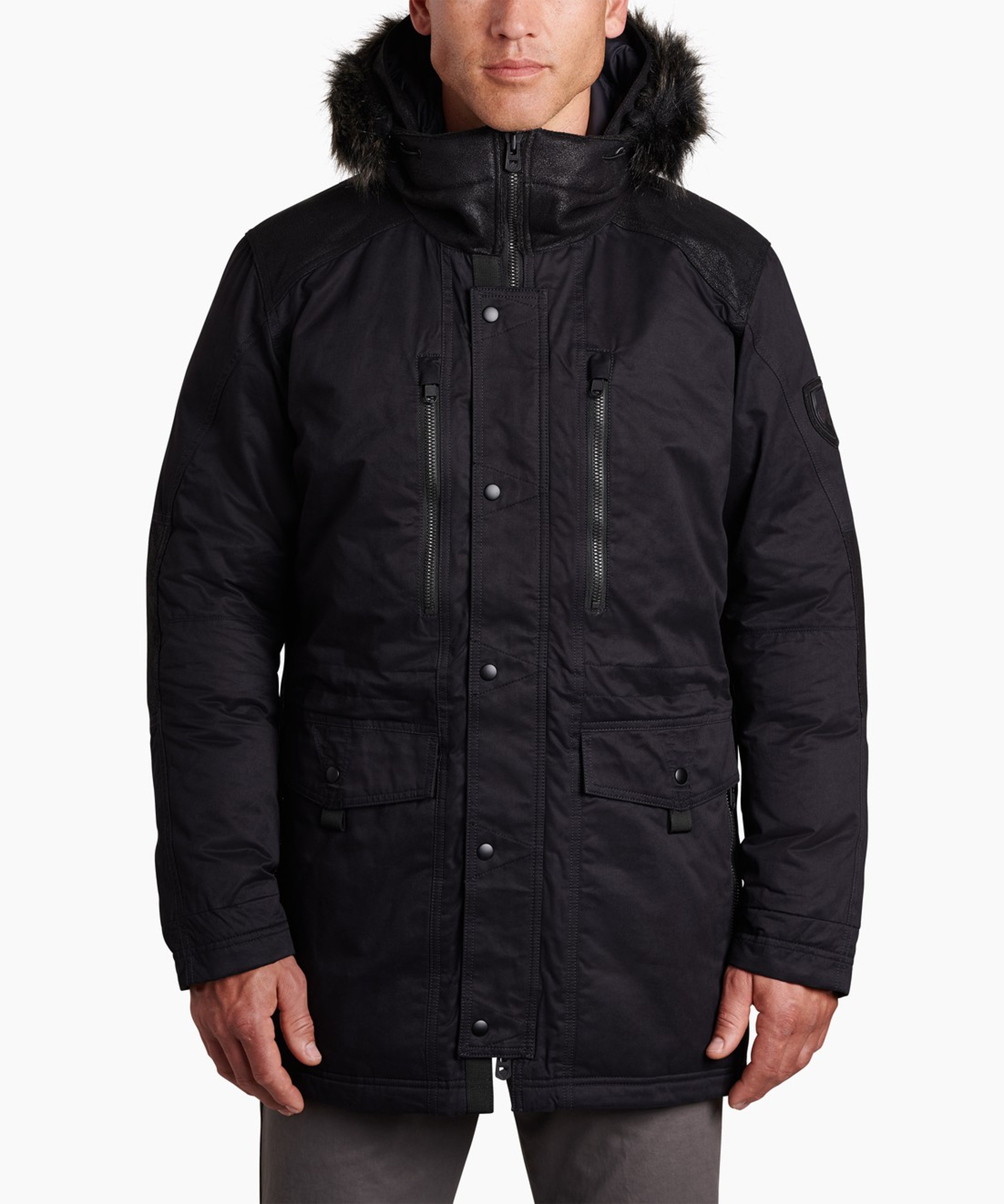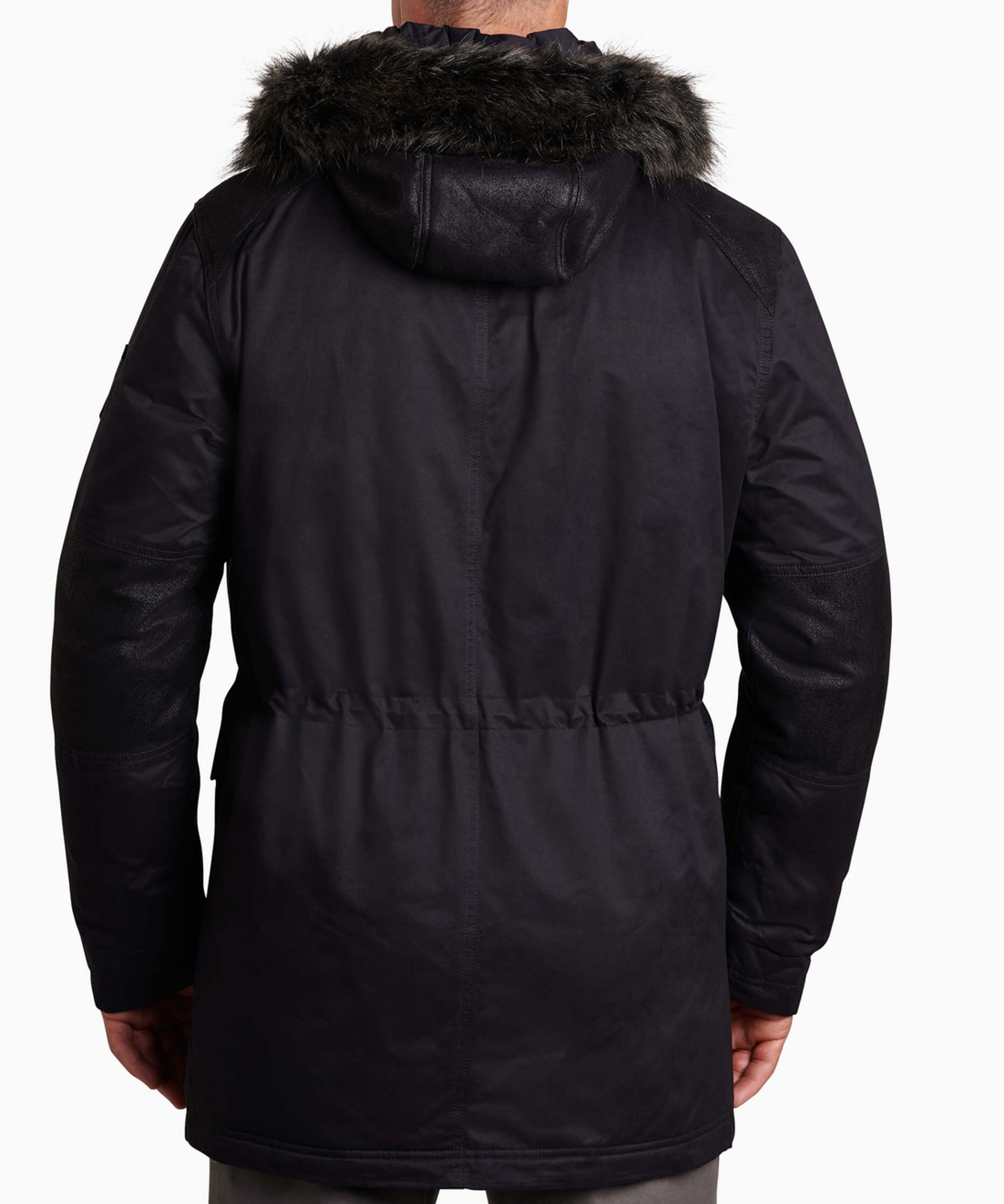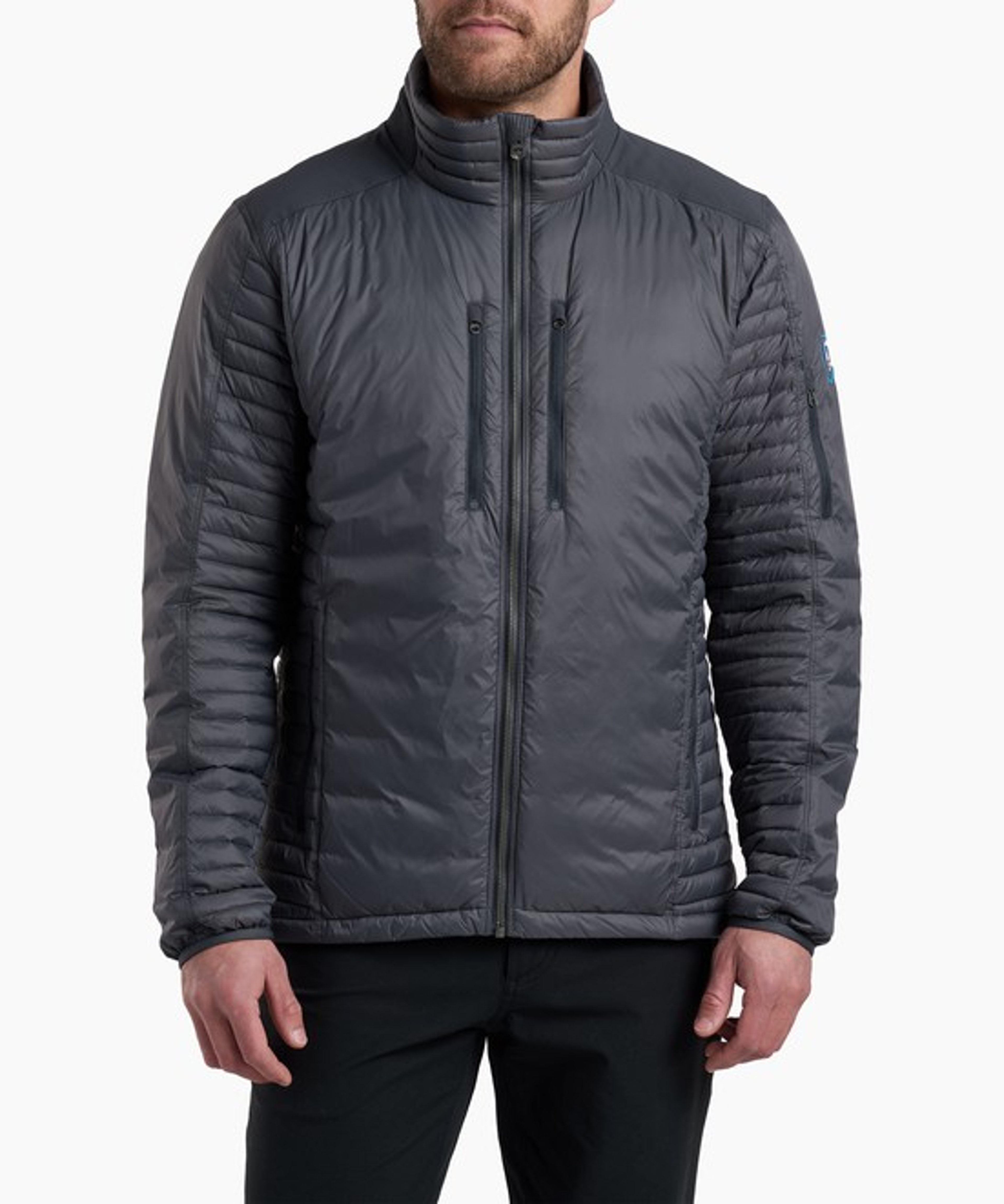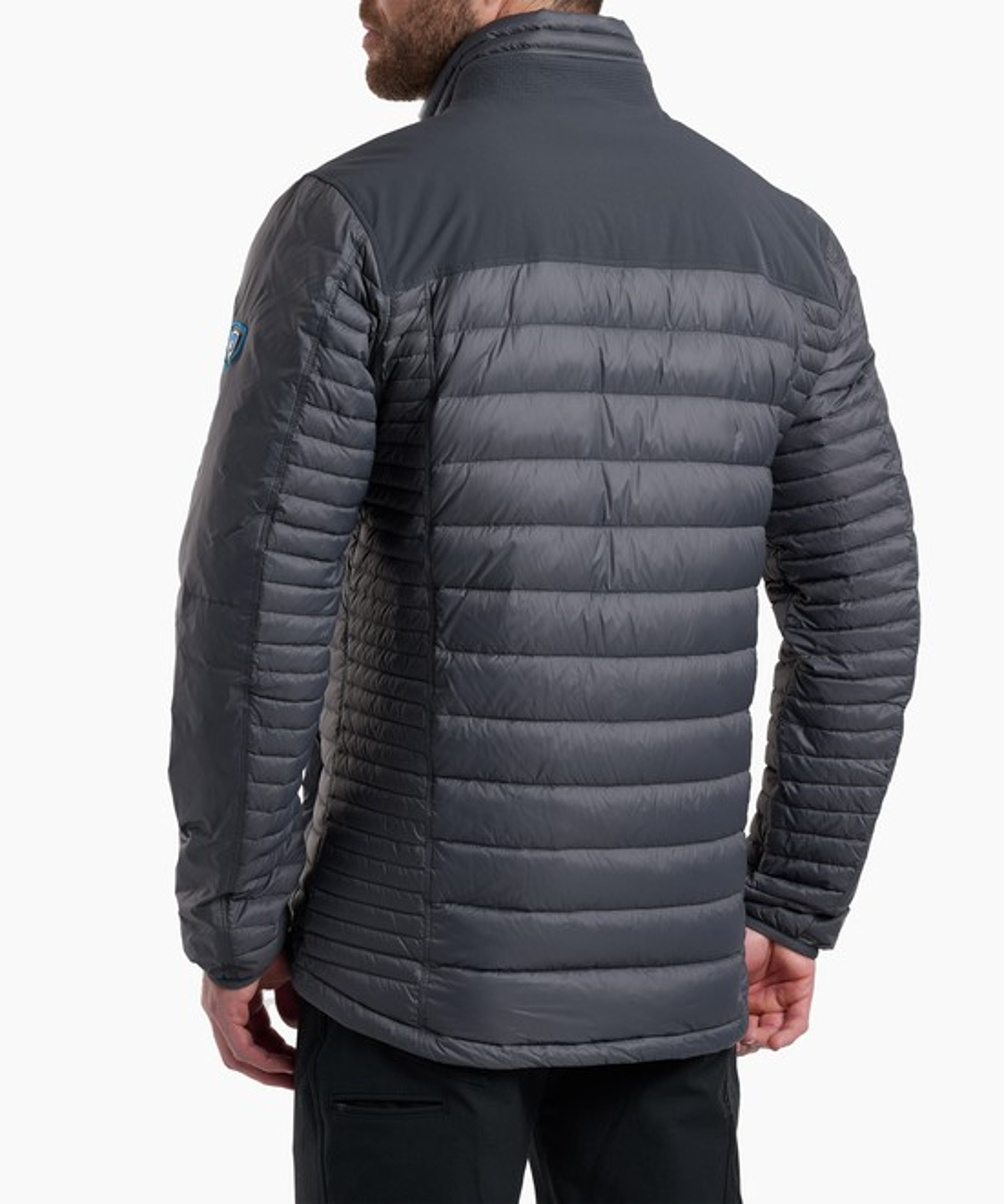






Men's Down Jackets
Lock in lightweight warmth with KÜHL men's down outerwear, built for cold mornings, alpine starts, and shoulder-season layering.
Choose from a variety of fills, shells, and silhouettes for the men's down vest, jacket, or hoody that's right for you:
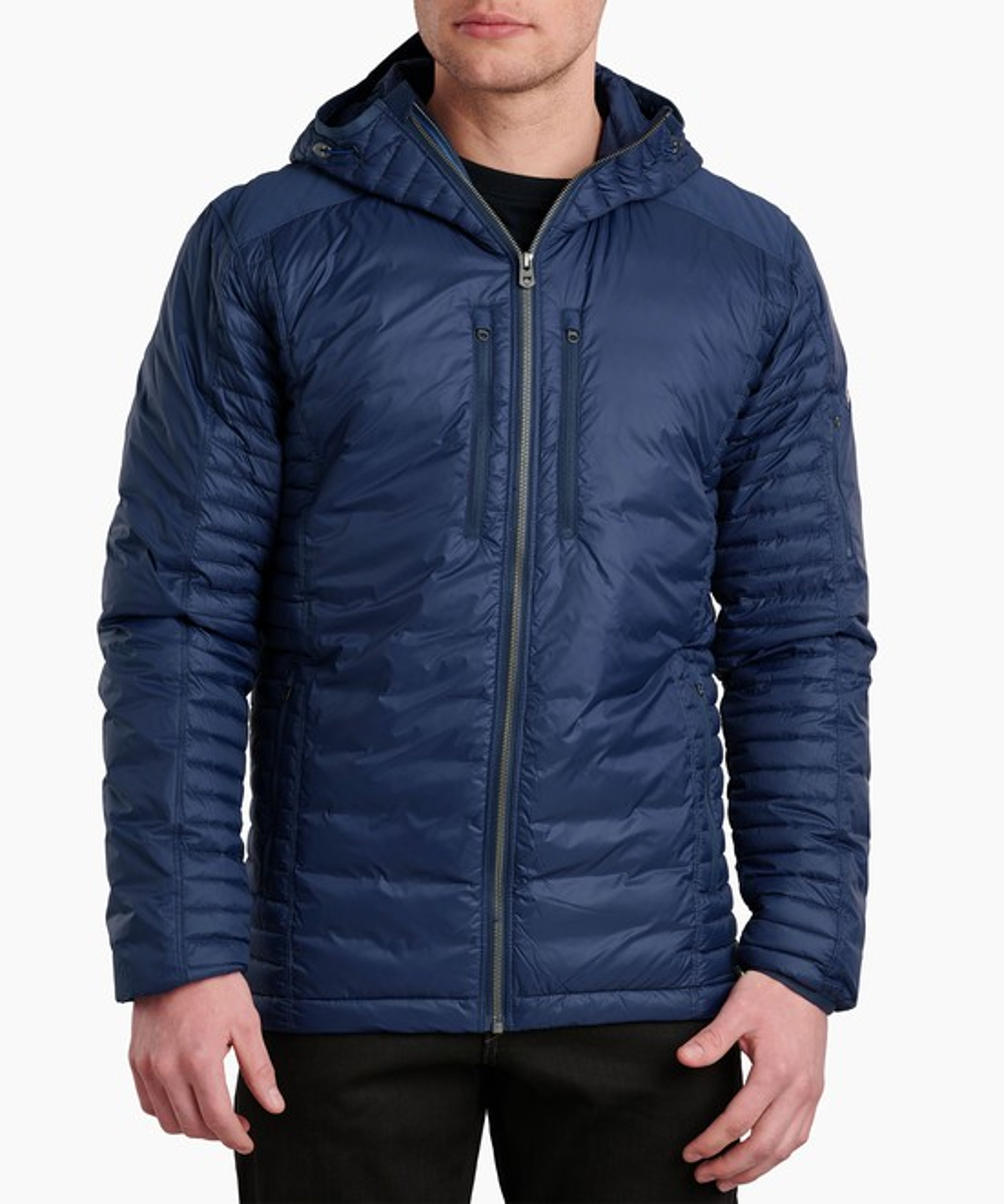
Body-Mapped Warmth. Down belongs where your core needs it most, not bunched at your armpits. The down jackets and hoodies here use thermal mapping to load fill at the chest and back, with lighter zones under the arms so you don't overheat on the climb. Pair with a men's fleece underneath for active cold weather.
RDS-Certified Down. Every down piece uses Responsible Down Standard goose down, traceable from farm to fill. High fill-power (800 on several styles) buys you serious warmth at a low weight, the same warmth-to-weight ratio that makes down the default mid-layer for alpinists and bike commuters alike.
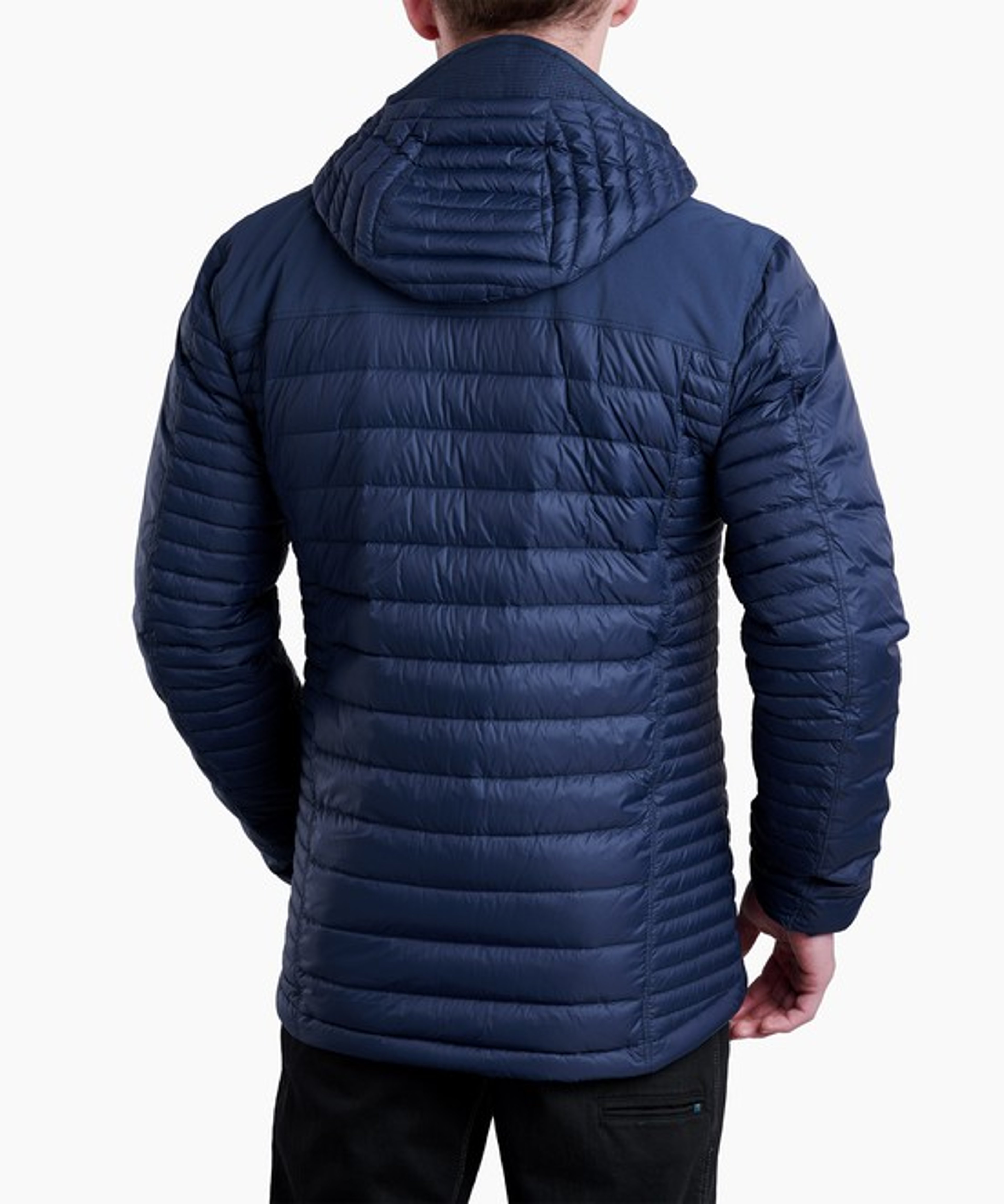
Durable, Weather-Ready Shells. The down stays loftier when the shell stays drier. Look for tightly woven, wind-blocking face fabrics with a DWR finish that sheds light snow and drizzle, plus reinforced overlays on the shoulders and elbows where pack straps wear a jacket out first. When sustained rain is in the forecast, layer a men's rain jacket over the top.
Vests for Core-Only Warmth. A down vest is the most versatile piece in a cold-weather kit. It adds real warmth at the torso while leaving your arms free for chopping wood, casting a line, or moving fast on the trail. See more sleeveless options in our men's vests collection.
Ventilation That Matters. The best down outerwear lets you dump heat fast. Underarm gussets, two-way center zips, and articulated arms keep you from soaking out the fill on the uphill, then seal back up at the summit.
Look for signature touches like reinforced shoulders for pack-strap abrasion, two-way front zippers for ventilation on the move, secure chest pockets for phone and gloves, and stitch-free baffle construction that minimizes cold spots. For breeze-and-light-shower days when full insulation is overkill, see our men's softshell outerwear.
Choose from a variety of fills, shells, and silhouettes for the men's down vest, jacket, or hoody that's right for you:
Body-Mapped Warmth. Down belongs where your core needs it most, not bunched at your armpits. The down jackets and hoodies here use thermal mapping to load fill at the chest and back, with lighter zones under the arms so you don't overheat on the climb. Pair with a men's fleece underneath for active cold weather.
RDS-Certified Down. Every down piece uses Responsible Down Standard goose down, traceable from farm to fill. High fill-power (800 on several styles) buys you serious warmth at a low weight, the same warmth-to-weight ratio that makes down the default mid-layer for alpinists and bike commuters alike.
Durable, Weather-Ready Shells. The down stays loftier when the shell stays drier. Look for tightly woven, wind-blocking face fabrics with a DWR finish that sheds light snow and drizzle, plus reinforced overlays on the shoulders and elbows where pack straps wear a jacket out first. When sustained rain is in the forecast, layer a men's rain jacket over the top.
Vests for Core-Only Warmth. A down vest is the most versatile piece in a cold-weather kit. It adds real warmth at the torso while leaving your arms free for chopping wood, casting a line, or moving fast on the trail. See more sleeveless options in our men's vests collection.
Ventilation That Matters. The best down outerwear lets you dump heat fast. Underarm gussets, two-way center zips, and articulated arms keep you from soaking out the fill on the uphill, then seal back up at the summit.
Look for signature touches like reinforced shoulders for pack-strap abrasion, two-way front zippers for ventilation on the move, secure chest pockets for phone and gloves, and stitch-free baffle construction that minimizes cold spots. For breeze-and-light-shower days when full insulation is overkill, see our men's softshell outerwear.
A buyer's guide to men's down jackets, vests, and hoodies: fill, shell, fit, and how down stacks up against synthetic insulation for real-world conditions.
What should you look for in men's down outerwear?
Look for four things: fill-power and fill weight, shell durability, fit that allows layering, and ventilation features for active use.
Fill-power (often 600 to 800) tells you how lofty the down is. Higher numbers trap more air per gram. Fill weight tells you how much down is stuffed inside. A face fabric with a DWR finish keeps light moisture from collapsing the down, and reinforced overlays at the shoulders extend life under a loaded pack.
Fill-power (often 600 to 800) tells you how lofty the down is. Higher numbers trap more air per gram. Fill weight tells you how much down is stuffed inside. A face fabric with a DWR finish keeps light moisture from collapsing the down, and reinforced overlays at the shoulders extend life under a loaded pack.
What's the difference between a hardshell, softshell, and insulated jacket?
A hardshell is fully waterproof, a softshell is wind-resistant and breathable, and an insulated jacket (down or synthetic) is built for warmth.
Hardshells use a waterproof membrane with taped seams to keep out sustained rain and wet snow, a weather barrier, not a warmth layer. Softshells use stretch-woven face fabrics with a DWR finish for breeze, light precipitation, and high-output activity.
Insulated jackets are the warmth layer. Down packs the most warmth per ounce. Synthetic handles wet conditions better. Many men pair a down mid-layer with a separate shell in mixed weather.
Hardshells use a waterproof membrane with taped seams to keep out sustained rain and wet snow, a weather barrier, not a warmth layer. Softshells use stretch-woven face fabrics with a DWR finish for breeze, light precipitation, and high-output activity.
Insulated jackets are the warmth layer. Down packs the most warmth per ounce. Synthetic handles wet conditions better. Many men pair a down mid-layer with a separate shell in mixed weather.
How do you choose between down and synthetic insulation?
Choose down when warmth-to-weight and packability matter most. Choose synthetic when you'll be working hard, sweating, or moving through wet conditions.
Down has the best warmth-per-ounce of any insulation available. It compresses smaller than synthetic, lofts back up fast, and lasts decades when cared for. The trade-off: soaked down clumps and loses most of its insulating value until it dries.
Synthetic keeps insulating when wet and dries faster, but it's heavier for the same warmth. For cold, dry, weight-sensitive uses, down wins. For rainy hikes and high-sweat output, synthetic is often smarter.
Down has the best warmth-per-ounce of any insulation available. It compresses smaller than synthetic, lofts back up fast, and lasts decades when cared for. The trade-off: soaked down clumps and loses most of its insulating value until it dries.
Synthetic keeps insulating when wet and dries faster, but it's heavier for the same warmth. For cold, dry, weight-sensitive uses, down wins. For rainy hikes and high-sweat output, synthetic is often smarter.
Are down outerwear waterproof or just water-resistant?
Down outerwear is water-resistant, not waterproof. The shell sheds light moisture but won't hold off sustained rain on its own.
Most down jackets use a DWR finish on the face fabric, which causes water to bead and roll off in a light shower or dry snow. Some pieces also use hydrophobic-treated down that holds loft longer if it gets damp. Neither replaces a true waterproof membrane with taped seams.
If you expect real rain, layer a hardshell on top. For everyday cold with occasional drizzle, the DWR-treated down jacket alone is plenty.
Most down jackets use a DWR finish on the face fabric, which causes water to bead and roll off in a light shower or dry snow. Some pieces also use hydrophobic-treated down that holds loft longer if it gets damp. Neither replaces a true waterproof membrane with taped seams.
If you expect real rain, layer a hardshell on top. For everyday cold with occasional drizzle, the DWR-treated down jacket alone is plenty.
How should a down outerwear fit for layering?
A down jacket meant for layering should fit comfortably over a base layer and a mid-weight fleece, without pulling tight at the shoulders when you reach overhead.
Try it on with your typical winter layers underneath. Sleeves should clear the wrist bone and not ride up when you reach forward. The hem should sit at or just below the belt.
If the jacket is your outermost layer, a trimmer cut works. As a mid-layer under a shell, size for the bulkier kit you'll actually wear.
Try it on with your typical winter layers underneath. Sleeves should clear the wrist bone and not ride up when you reach forward. The hem should sit at or just below the belt.
If the jacket is your outermost layer, a trimmer cut works. As a mid-layer under a shell, size for the bulkier kit you'll actually wear.
What features matter most when hiking or backpacking?
For hiking and backpacking, prioritize packability, an adjustable hood, pocket access that works under a pack hipbelt, and a stitch-free baffle pattern that minimizes cold spots.
Look for jackets that stuff into their own pocket with a clip-in loop. A down jacket only earns its weight in the pack if it disappears when you don't need it. Chest pockets are gold under a hipbelt, because hand pockets get buried.
Look for jackets that stuff into their own pocket with a clip-in loop. A down jacket only earns its weight in the pack if it disappears when you don't need it. Chest pockets are gold under a hipbelt, because hand pockets get buried.