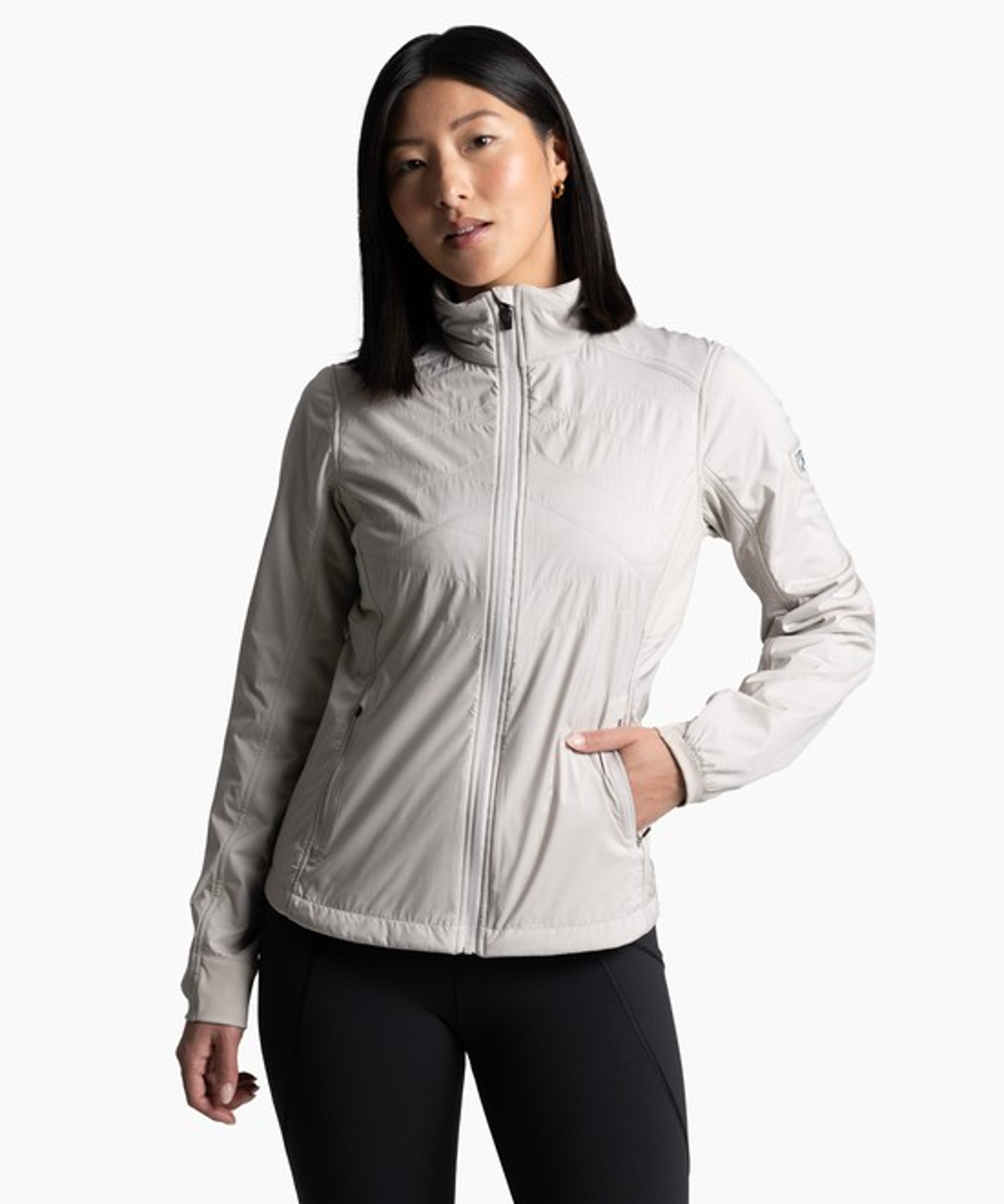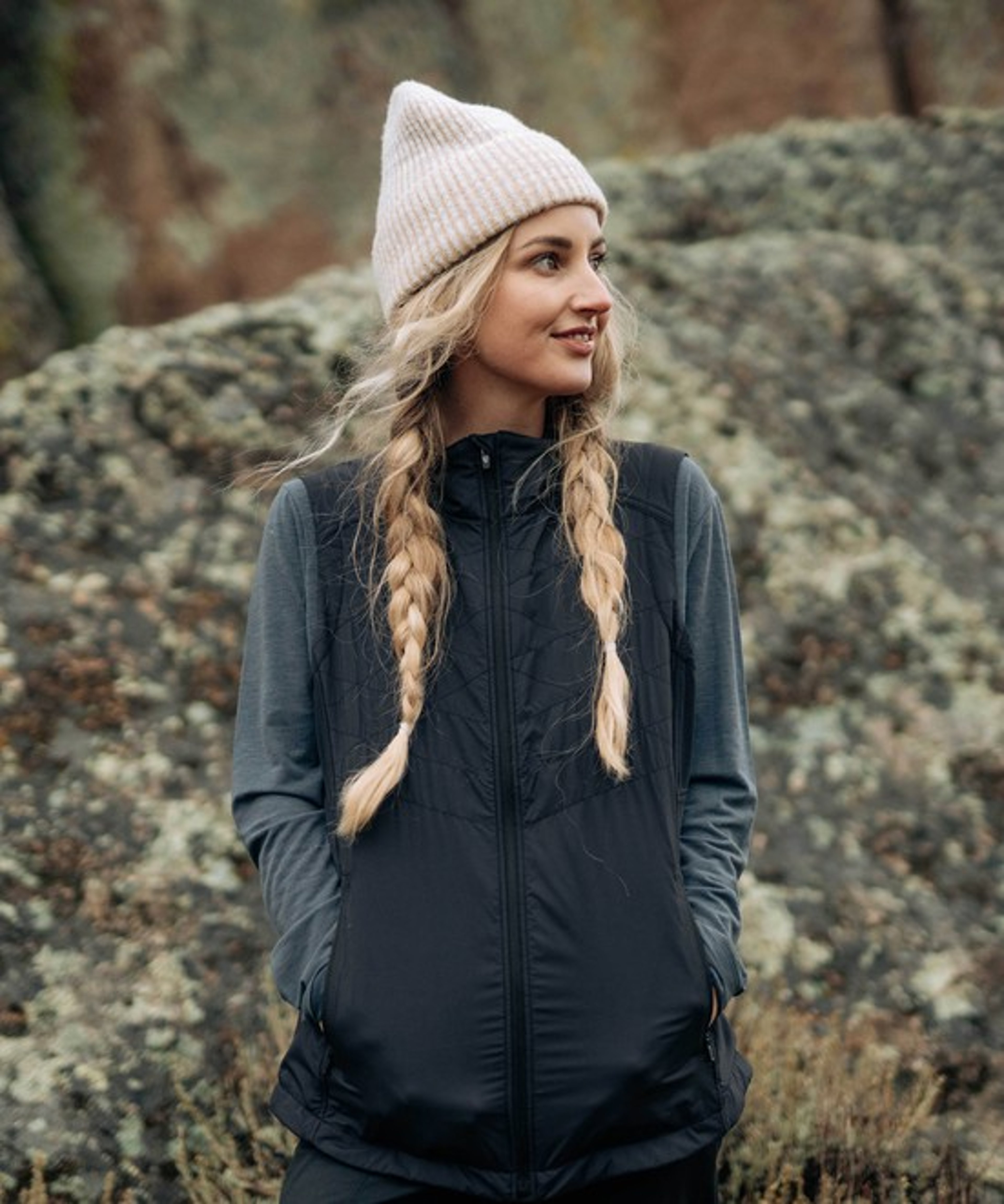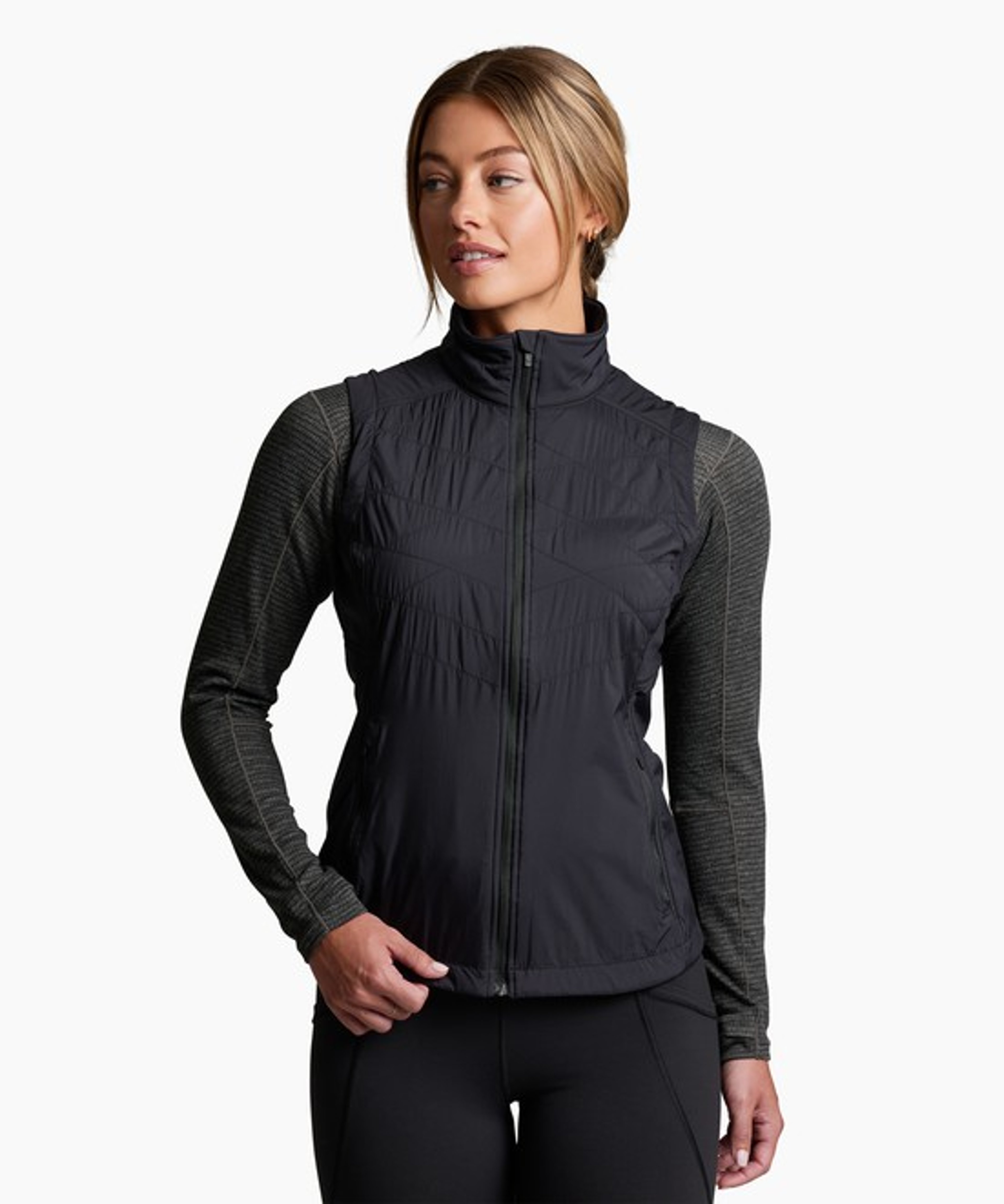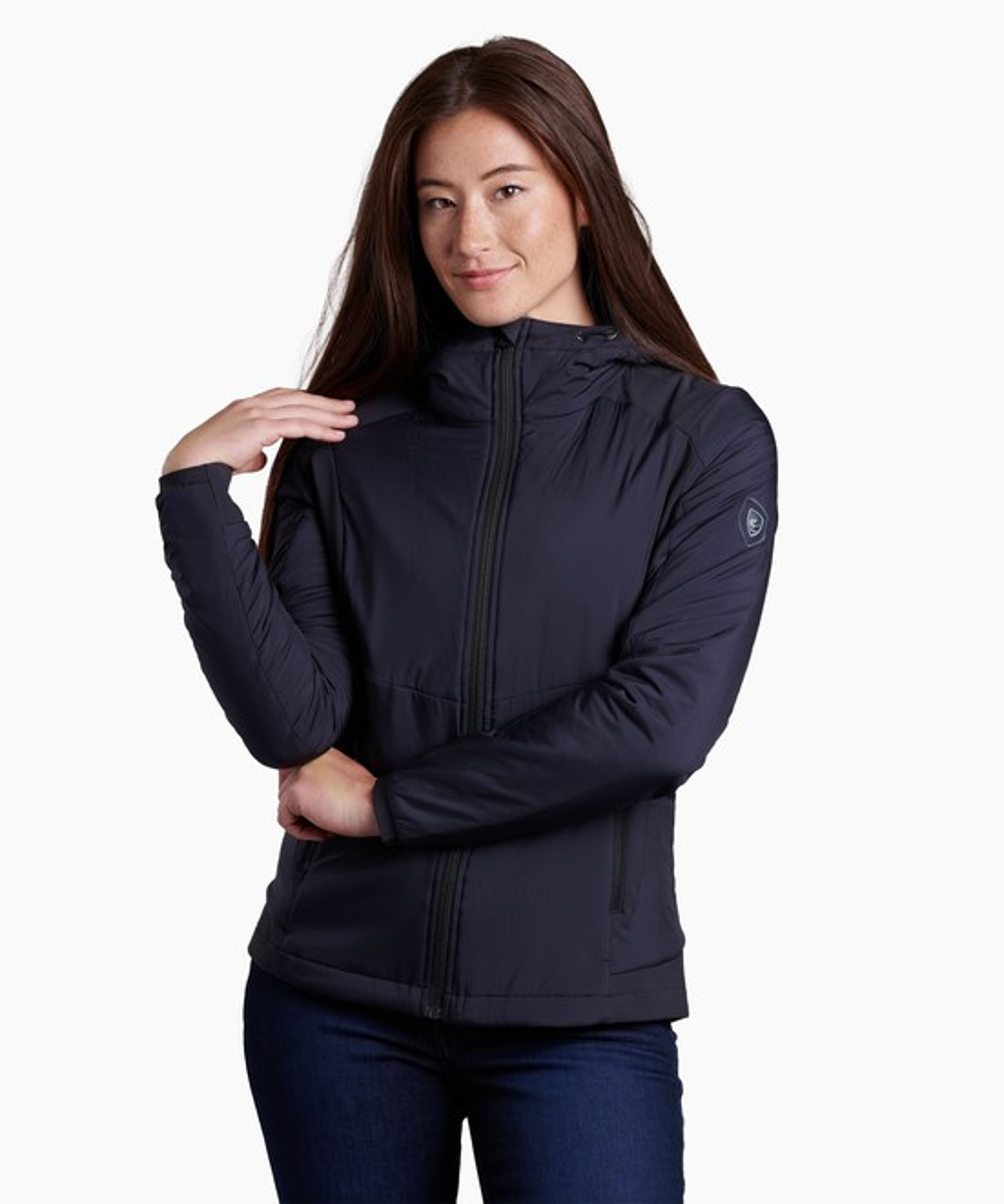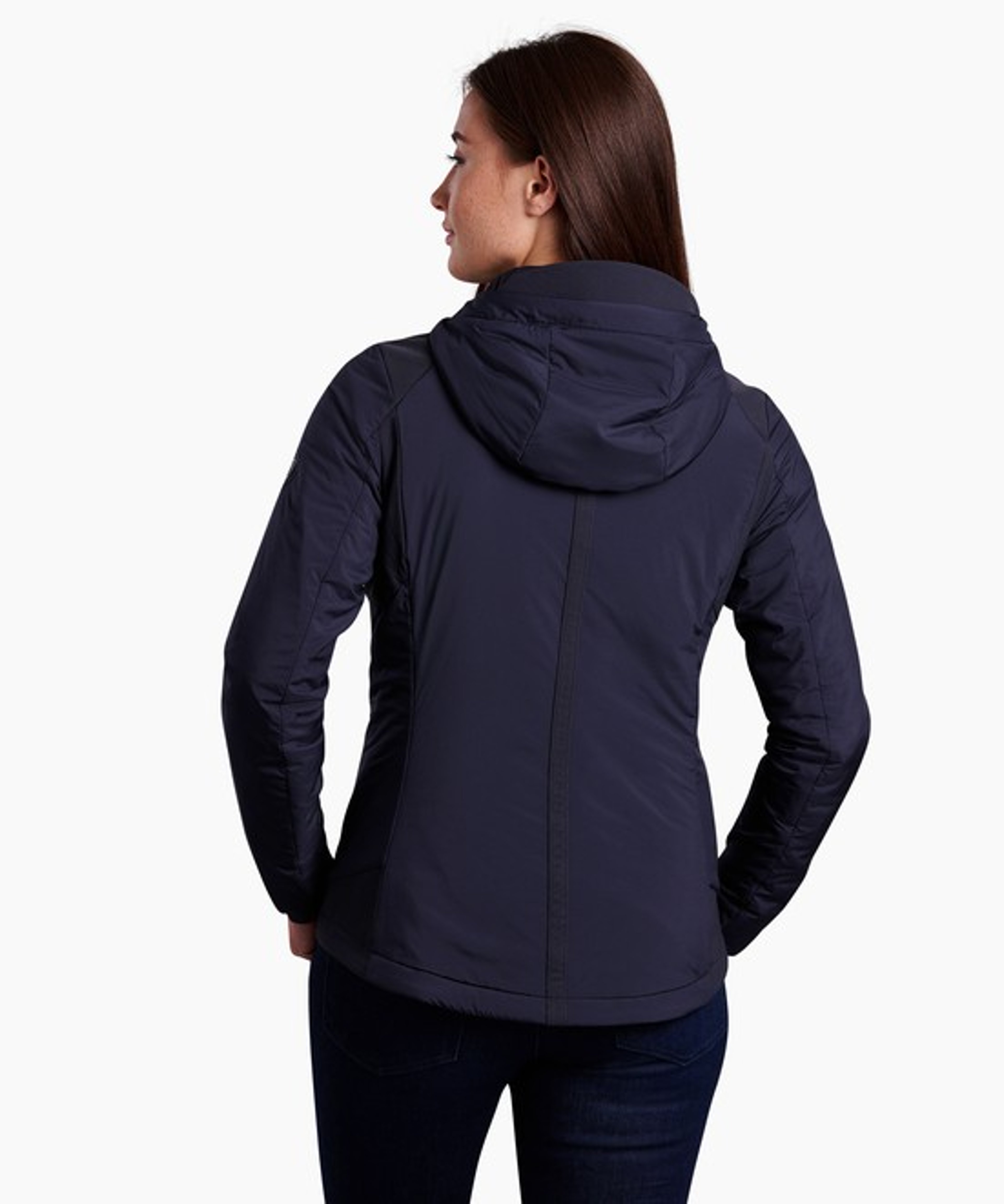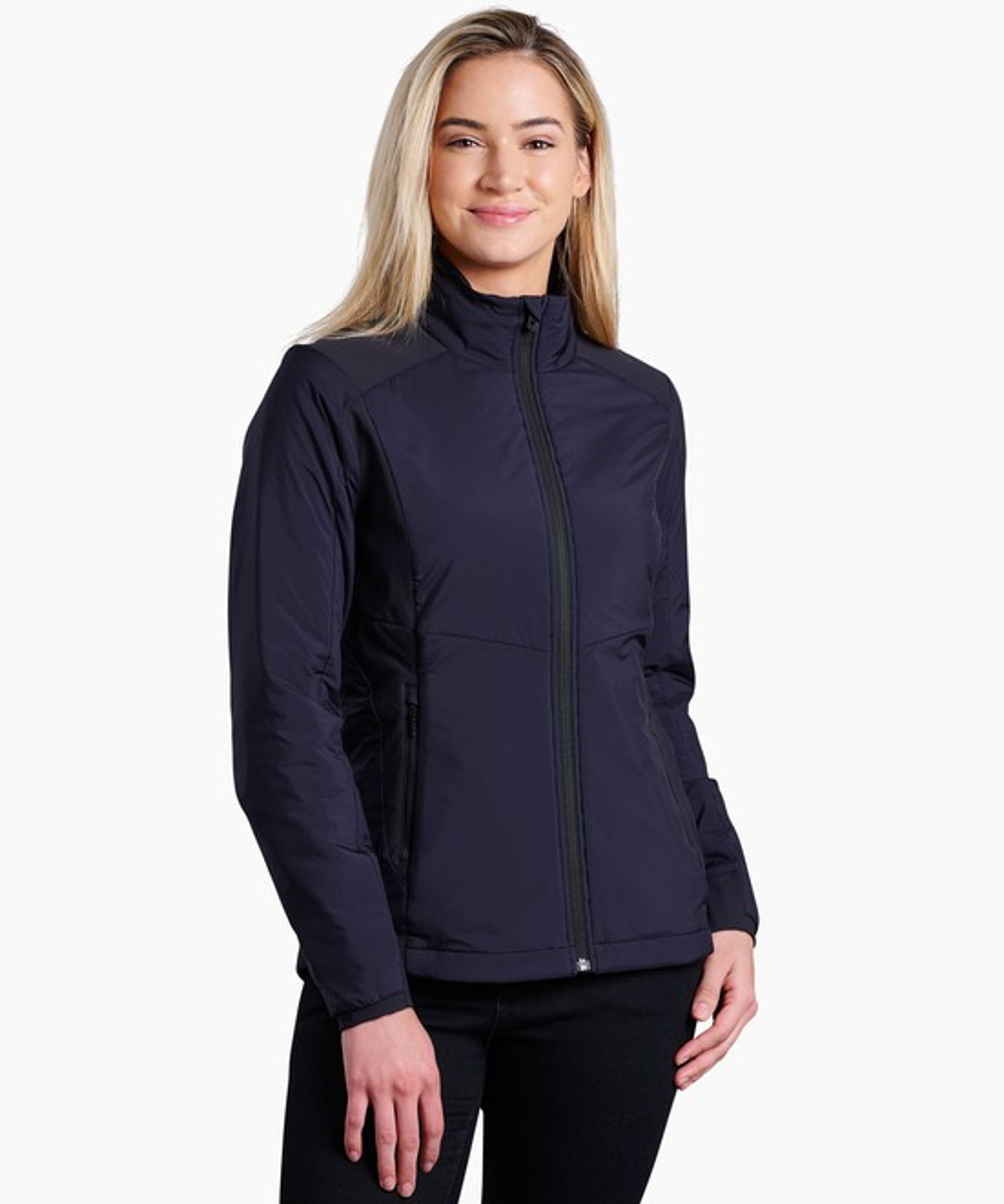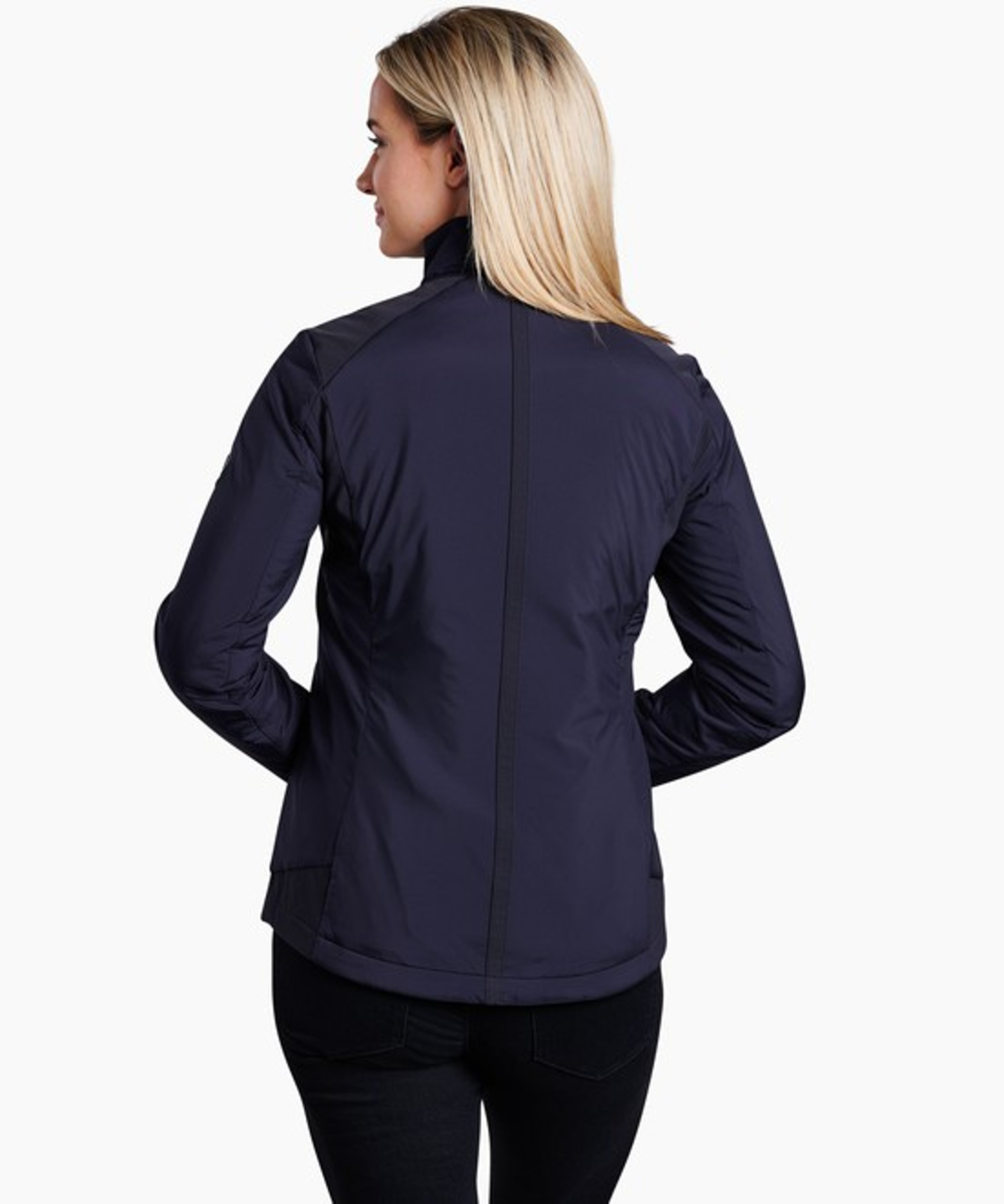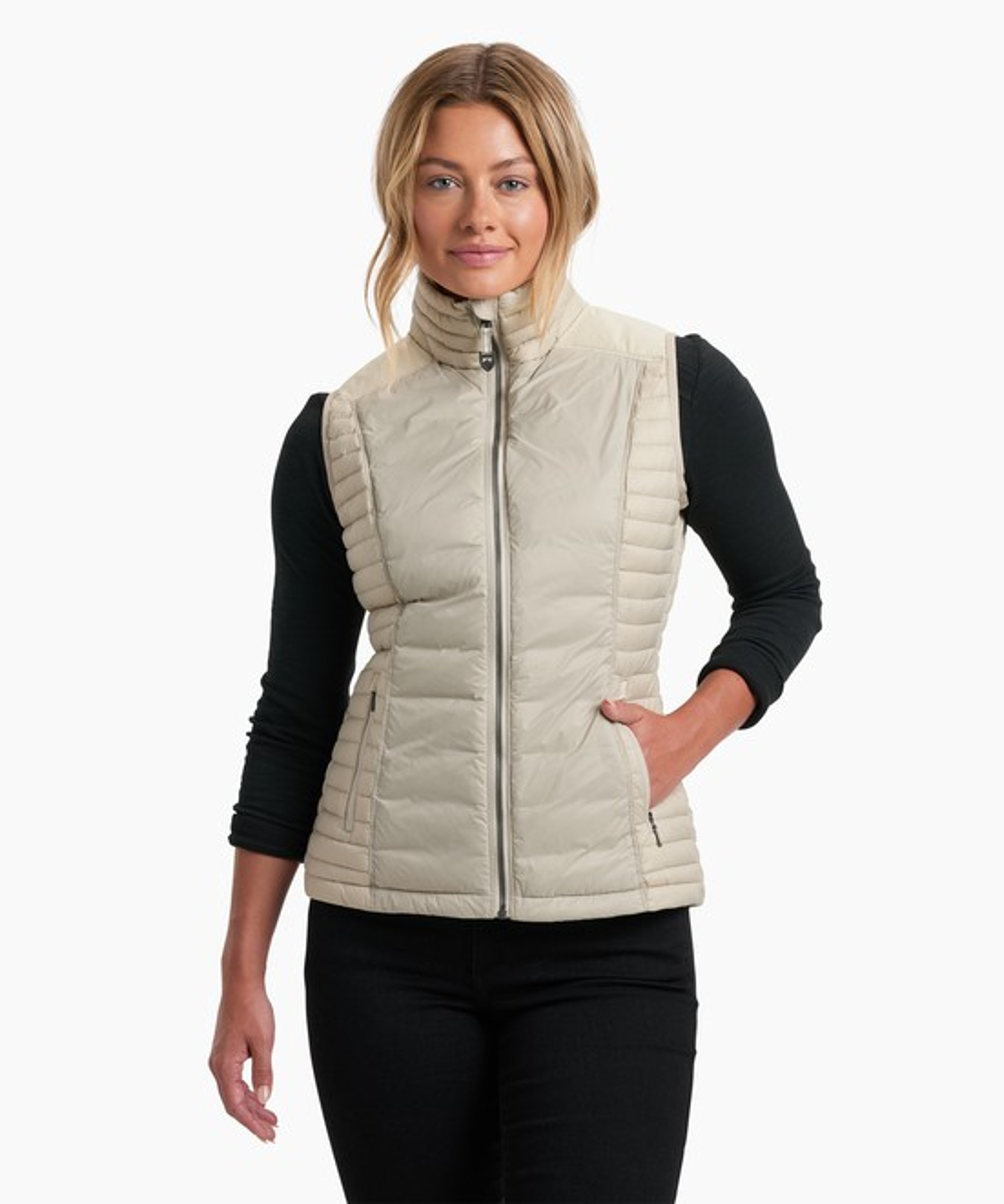






Women's Insulated Jackets
Wrap Yourself in Warmth Without the Bulk in KÜHL Women's Insulated Jackets
Choose from a variety of fabrics, fills, and silhouettes for the women's insulated jacket that's right for you:
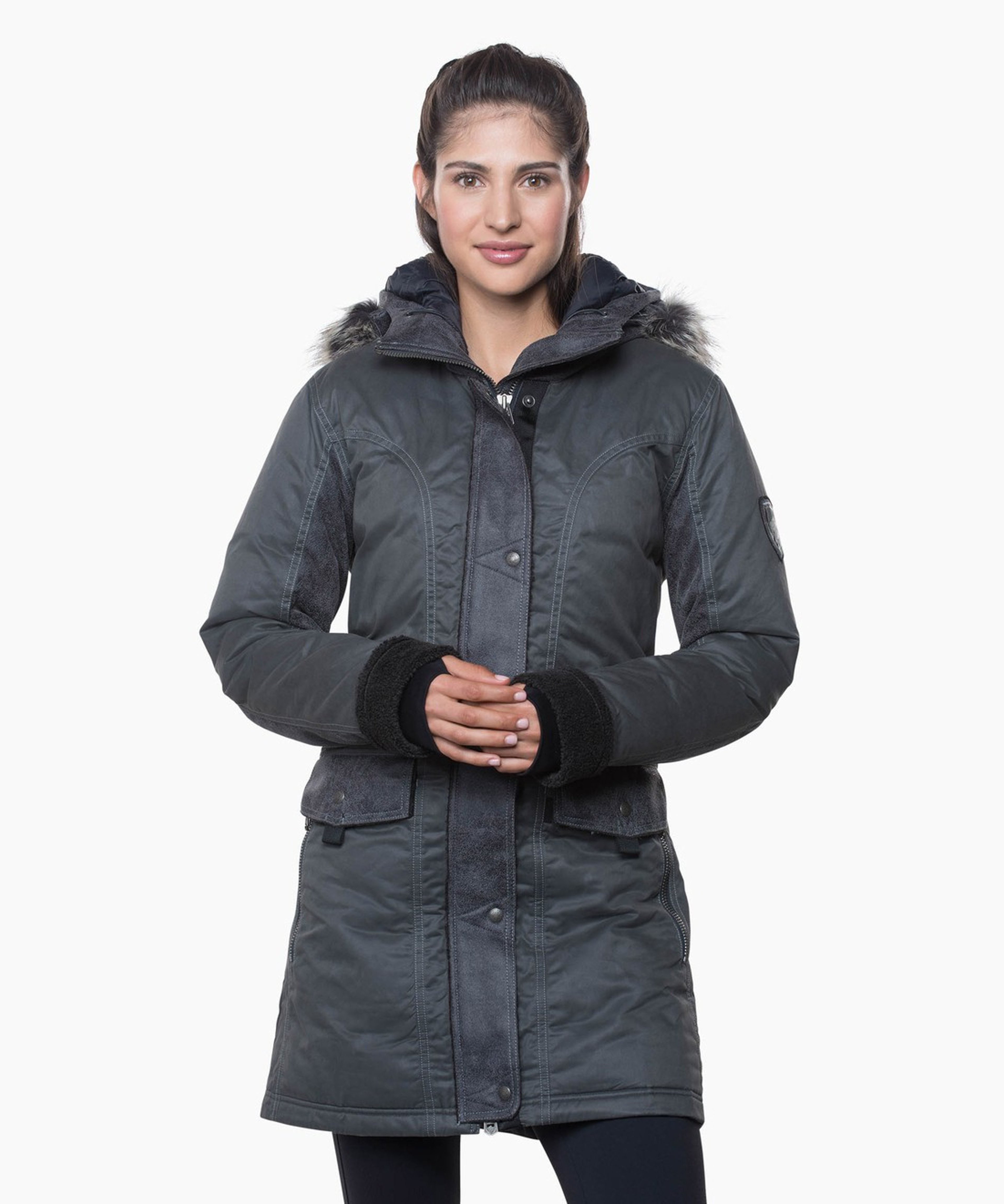
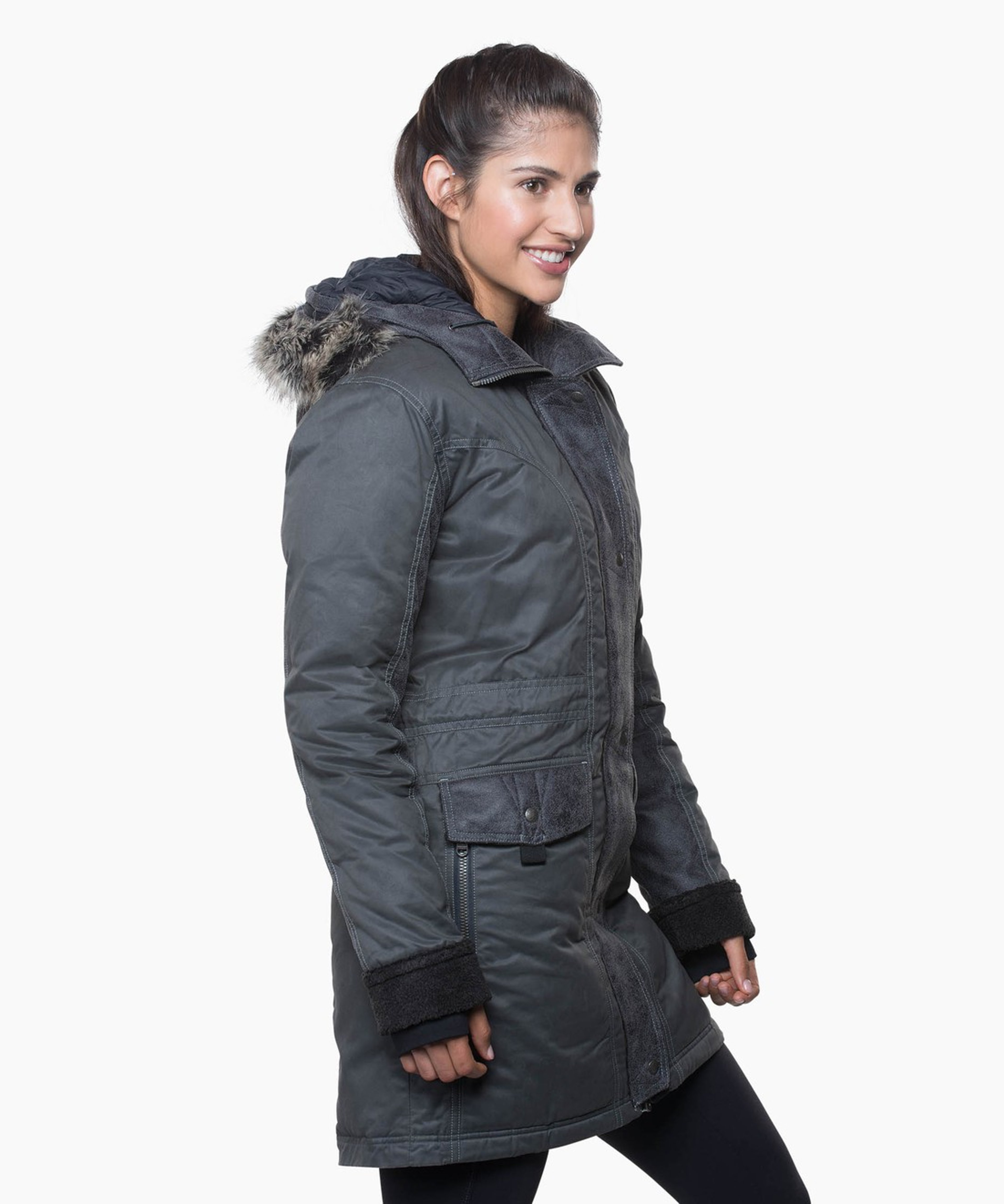
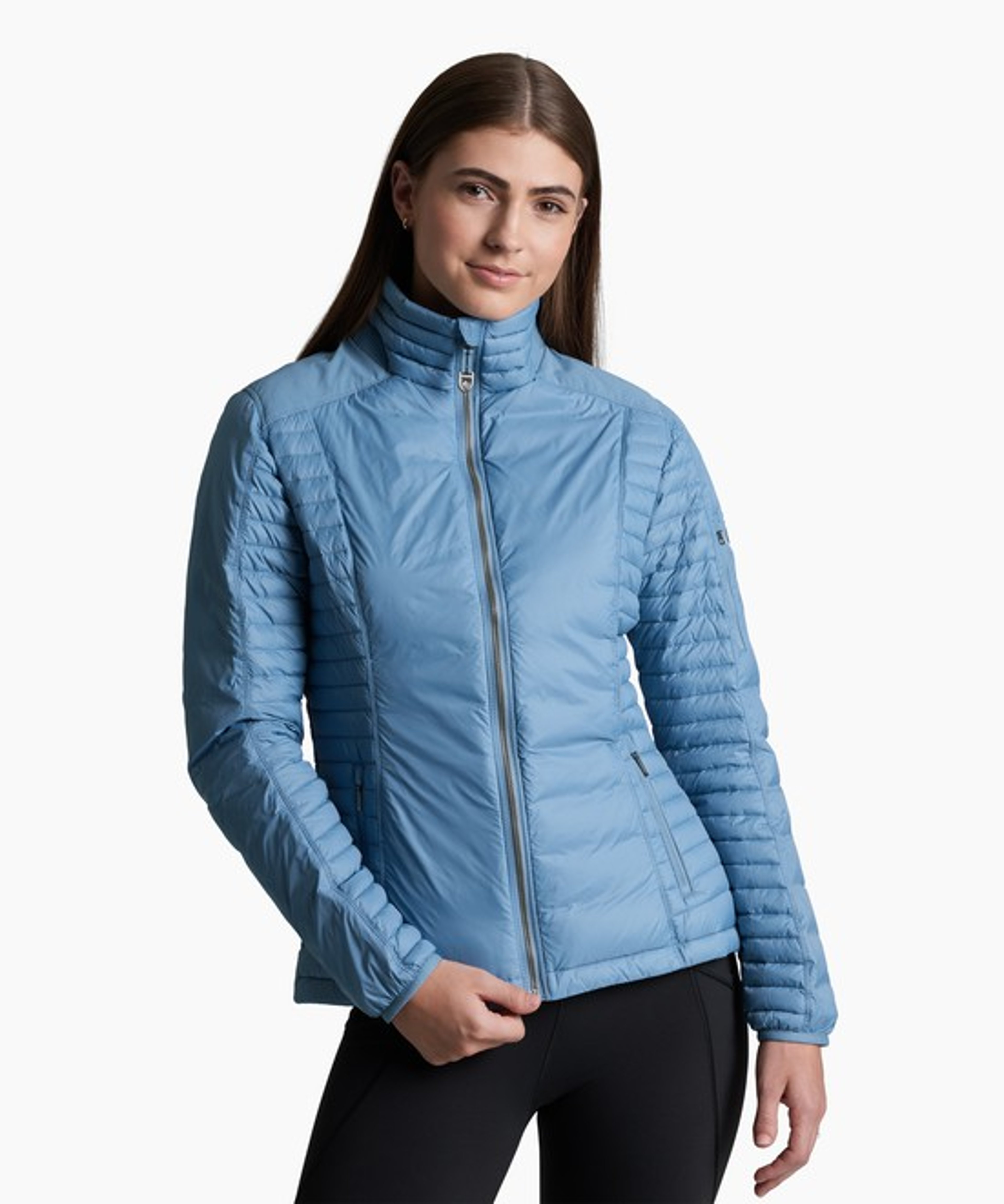
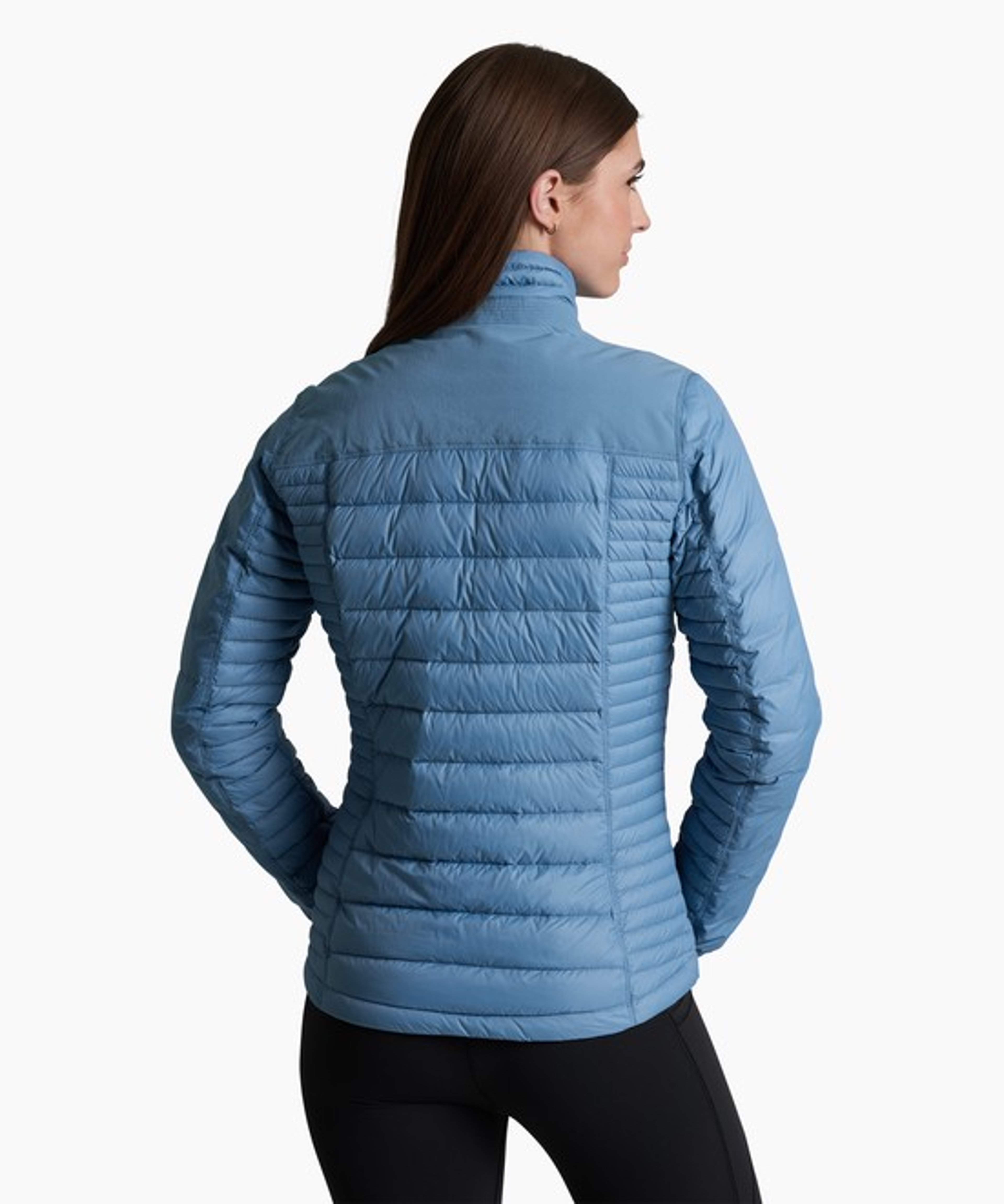
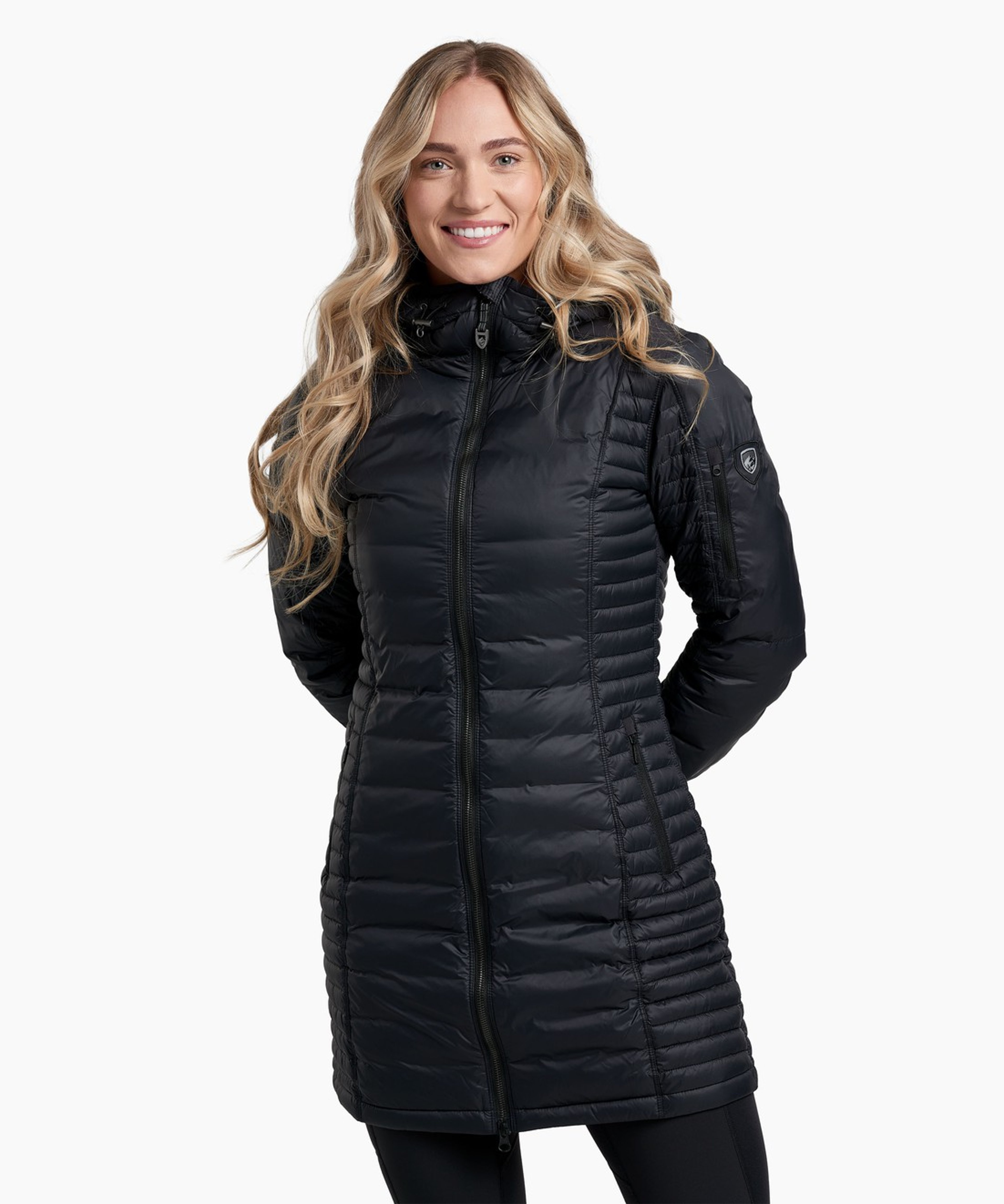
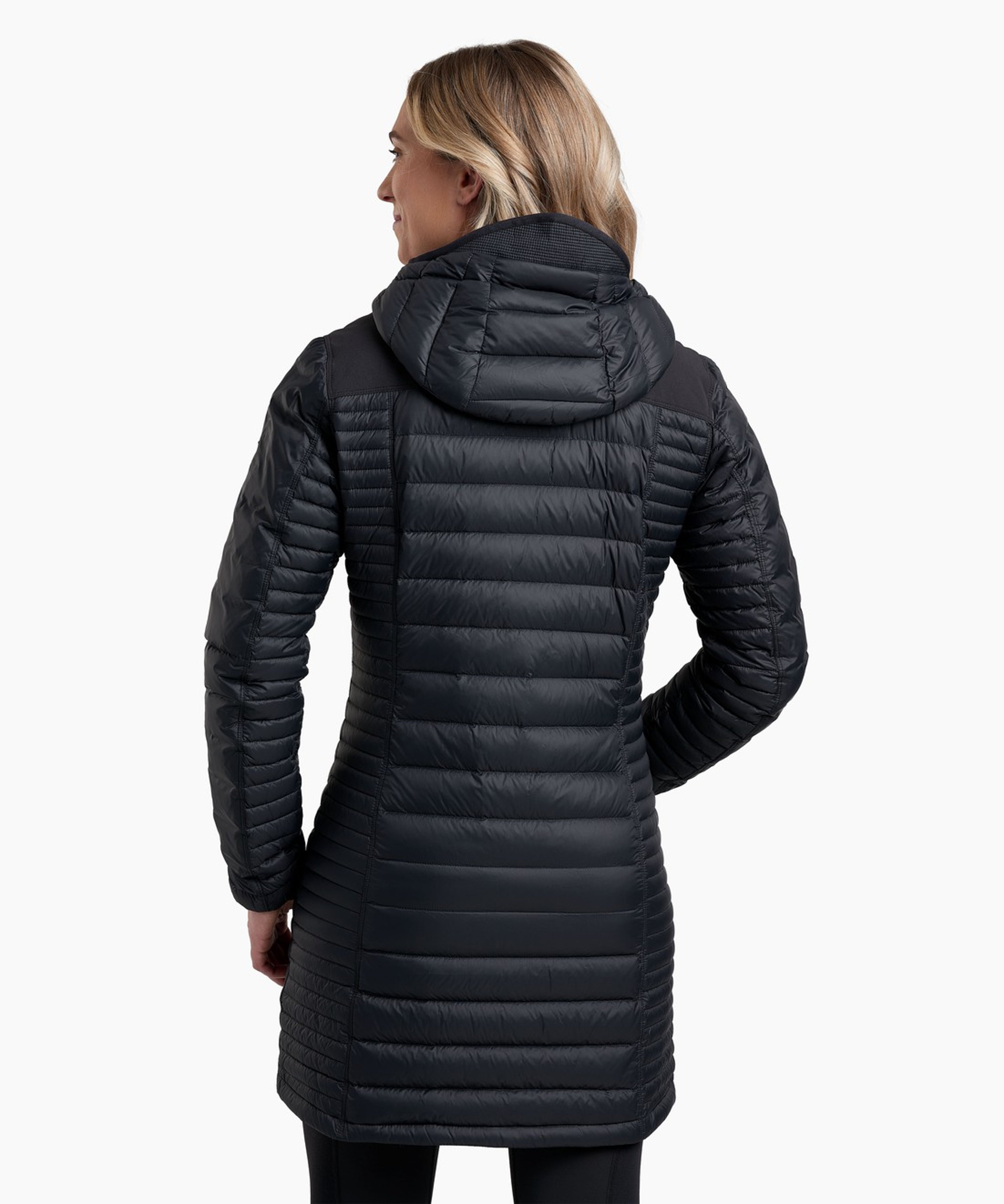
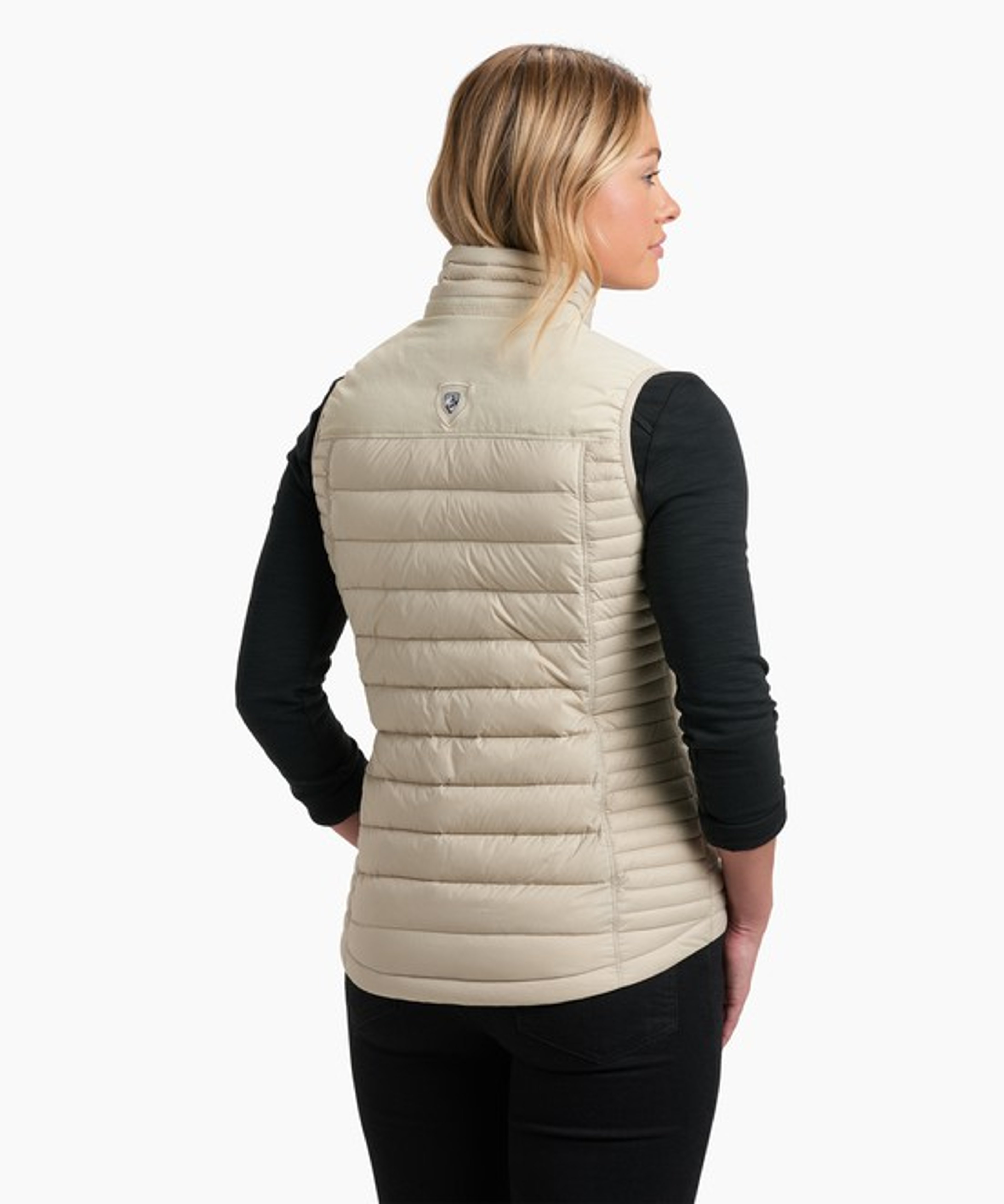
Down Insulation. For the highest warmth-to-weight ratio, look for jackets built around responsibly sourced down with a thermal body-mapped baffle layout: larger baffles at the core for sustained heat retention, leaner construction at the underarms and shoulders so the jacket doesn't bind under a pack. Combined with a ripstop face fabric and DWR finish, these are the pieces that shed light snow, compress small in the pack, and earn their keep on cold-weather alpine days. Browse the broader women's down outerwear range for the lightest options.
Synthetic Insulation. When the forecast turns wet, synthetic fill keeps its loft and continues to insulate even when damp. Body-mapped designs use multiple weights of synthetic in the same garment (heaviest at the core, lighter under the arms) so warmth lands where you actually need it. Pair that with a 4-way stretch face fabric and a DWR finish, and you have a piece that handles damp shoulder-season weather better than down alone.
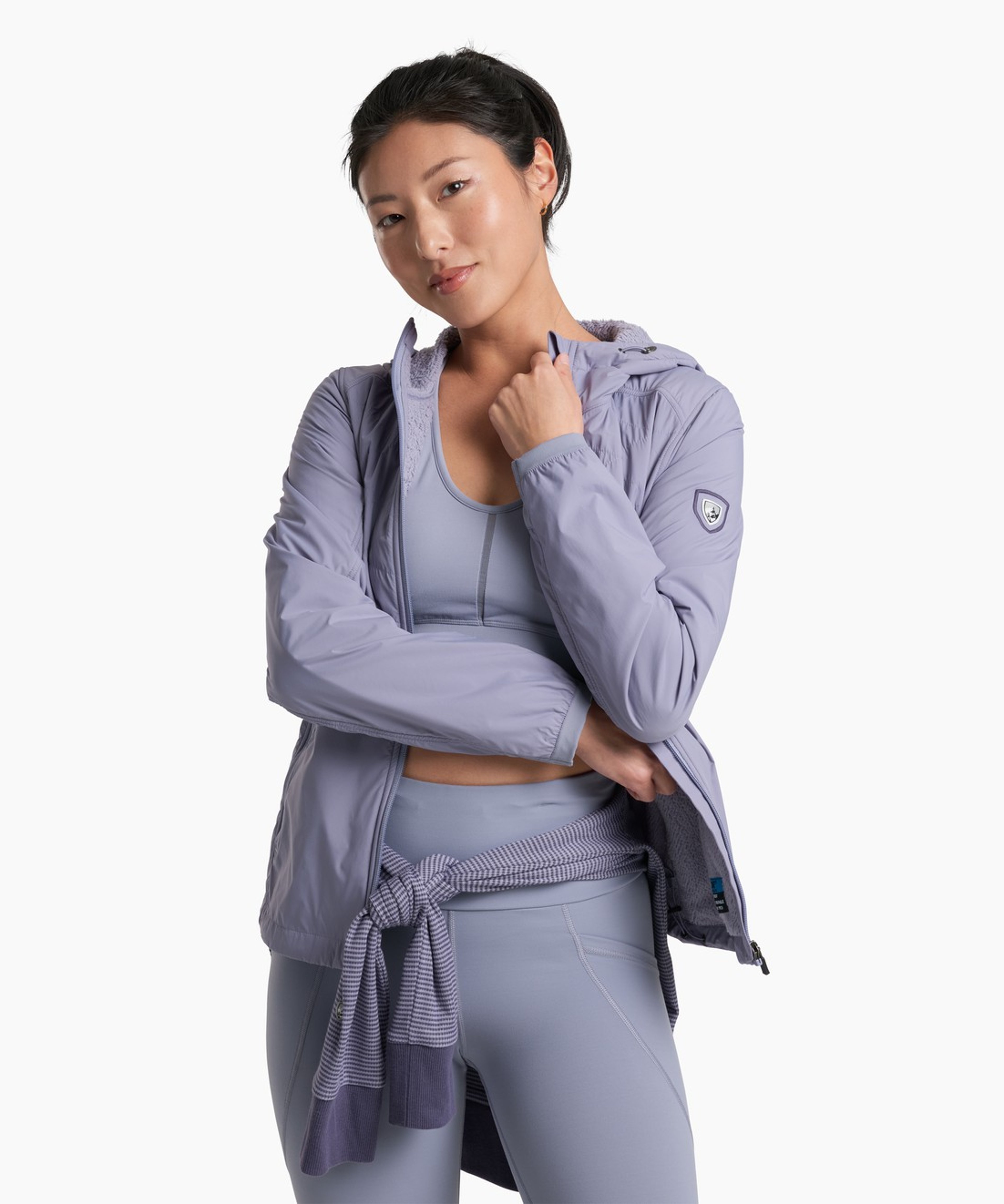
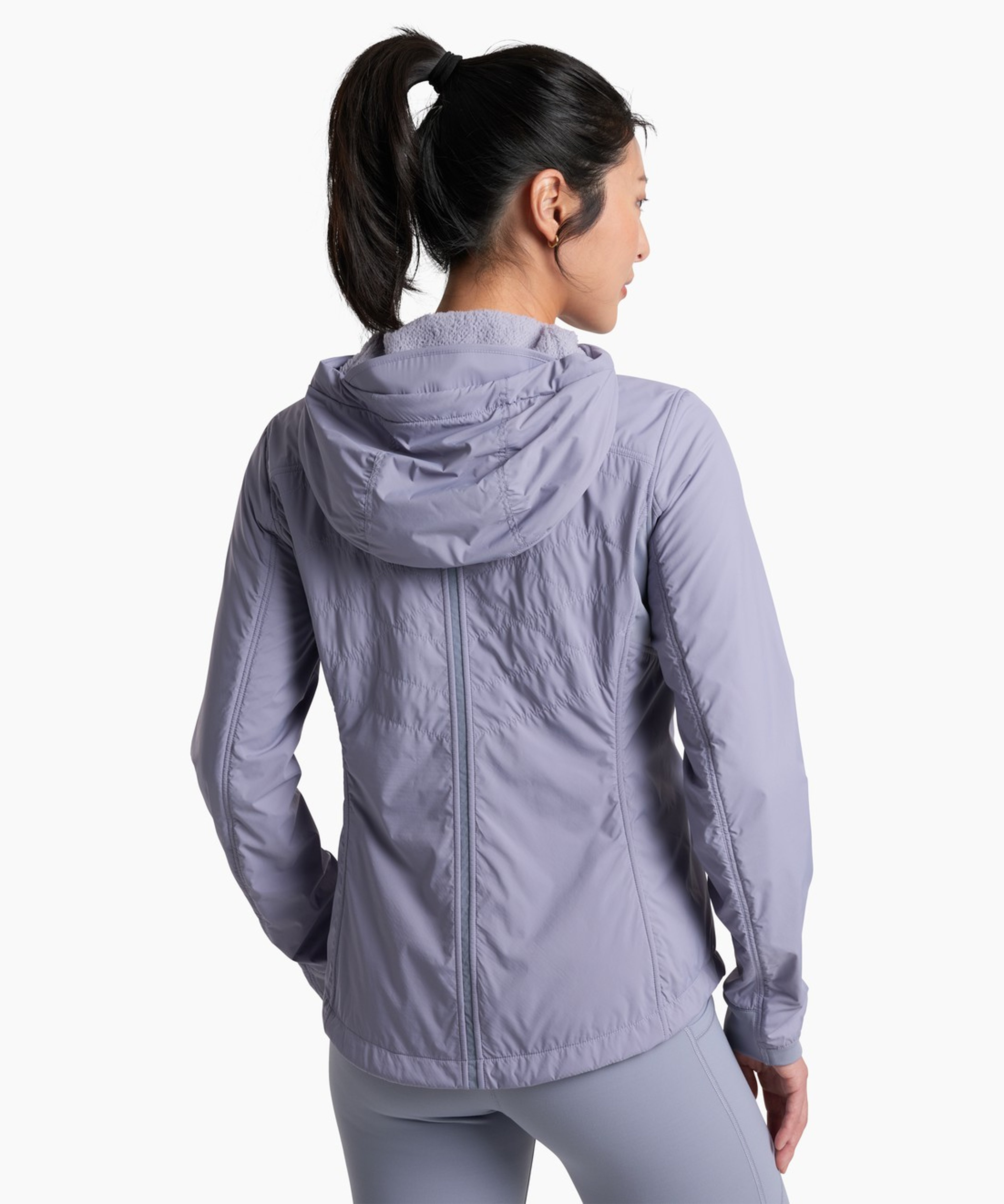
On-the-Move Construction. Active insulation is its own category. Look for windproof, water-resistant face fabrics, knit underarm gussets that vent excess heat on the climb, and articulated sleeves built for reach. A brushed interior at the collar and cuffs takes the edge off cold-weather starts. Reinforced overlays at high-wear zones add durability without adding warmth where you don't want it.
Fit and Layering. Insulation only works as part of a system. Choose a cut with room over a baselayer and a midweight fleece, and pair with a softshell for active days when full insulation runs hot.
Look for signature touches like body-mapped insulation, knit ventilation gussets, articulated sleeves for reach, a helmet-compatible adjustable hood, and reinforced overlays at the shoulders, the construction details that separate a real mountain insulator from a puffer that just looks the part.
Choose from a variety of fabrics, fills, and silhouettes for the women's insulated jacket that's right for you:
Down Insulation. For the highest warmth-to-weight ratio, look for jackets built around responsibly sourced down with a thermal body-mapped baffle layout: larger baffles at the core for sustained heat retention, leaner construction at the underarms and shoulders so the jacket doesn't bind under a pack. Combined with a ripstop face fabric and DWR finish, these are the pieces that shed light snow, compress small in the pack, and earn their keep on cold-weather alpine days. Browse the broader women's down outerwear range for the lightest options.
Synthetic Insulation. When the forecast turns wet, synthetic fill keeps its loft and continues to insulate even when damp. Body-mapped designs use multiple weights of synthetic in the same garment (heaviest at the core, lighter under the arms) so warmth lands where you actually need it. Pair that with a 4-way stretch face fabric and a DWR finish, and you have a piece that handles damp shoulder-season weather better than down alone.
On-the-Move Construction. Active insulation is its own category. Look for windproof, water-resistant face fabrics, knit underarm gussets that vent excess heat on the climb, and articulated sleeves built for reach. A brushed interior at the collar and cuffs takes the edge off cold-weather starts. Reinforced overlays at high-wear zones add durability without adding warmth where you don't want it.
Fit and Layering. Insulation only works as part of a system. Choose a cut with room over a baselayer and a midweight fleece, and pair with a softshell for active days when full insulation runs hot.
Look for signature touches like body-mapped insulation, knit ventilation gussets, articulated sleeves for reach, a helmet-compatible adjustable hood, and reinforced overlays at the shoulders, the construction details that separate a real mountain insulator from a puffer that just looks the part.
Find the right women's insulated jacket: down vs synthetic, shell type, fit for layering, and the features that matter when you're moving in the cold.
What should you look for in women's insulated jackets?
A women's insulated jacket should match the way you'll wear it (active or static) and layer cleanly with the rest of your kit. The fundamentals are fill type (down or synthetic), face-fabric weather protection (DWR finish, windproof construction, ideally with light stretch), and a cut that fits over a baselayer and midlayer without binding. Body-mapped insulation that puts more fill at the core and less under the arms keeps you warm without overheating on the move. Helmet-compatible hoods, articulated sleeves, and reinforced shoulder overlays separate true mountain insulators from casual puffers.
What's the difference between a hardshell, softshell, and insulated jacket?
They solve three different problems. A hardshell is fully waterproof and windproof: built around a taped-seam membrane to handle sustained rain or snow, with little or no insulation of its own. A softshell trades full waterproofing for breathability and 4-way stretch, shedding wind and light moisture while moving easily for high-output activity. An insulated jacket is the warmth layer in the system. It carries down or synthetic fill and is usually water-resistant rather than waterproof. Most cold-weather kits use all three: insulation under a rain shell when the weather turns, or alone on dry cold days.
How do you choose between down and synthetic insulation?
Down wins on warmth-to-weight and packability. Synthetic wins when conditions get wet. Down provides the highest insulation value per ounce and compresses small in a pack, which is why it dominates expedition and ultralight pieces, but it loses loft when soaked and dries slowly. Synthetic fill insulates even when damp, dries faster, and costs less, making it the safer pick for damp shoulder-season trips, sweaty high-output use, or wet climates. Body-mapped designs that combine multiple weights of synthetic deliver more controlled warmth than a single uniform fill.
Are insulated jackets waterproof or just water-resistant?
Most insulated jackets are water-resistant, not waterproof. The DWR finish on the face fabric sheds light precipitation and beads off short showers, but sustained rain will eventually wet through the shell and into the insulation. For wet weather, layer the insulator under a true waterproof shell with taped seams: see our women's rain outerwear for matched options. A handful of insulated jackets are built on a waterproof membrane, but they trade some breathability for that protection.
How should an insulated jacket fit for layering?
It should fit close but not snug, with room for a baselayer and a midlayer underneath without compressing the insulation. Compressed fill loses loft and warmth, so a too-tight fit defeats the point. Look for articulated or gusseted sleeves that reach overhead without lifting the hem, a hood that adjusts down over a beanie or up over a helmet, and a hem that sits below the waistline so it stays sealed under a pack belt.
What features matter most when hiking or backpacking?
Prioritize ventilation, packability, and pocket access under a pack. Knit underarm gussets or pit zips dump excess heat on the climb without forcing you to stop and de-layer. Stuff-into-own-pocket designs save weight and pack volume. Chest pockets stay accessible while hipbelt-mounted hand pockets get buried by a pack. A ripstop face fabric resists snags from brush, and a DWR finish keeps light precipitation off long enough to reach shelter or pull a shell from the pack.