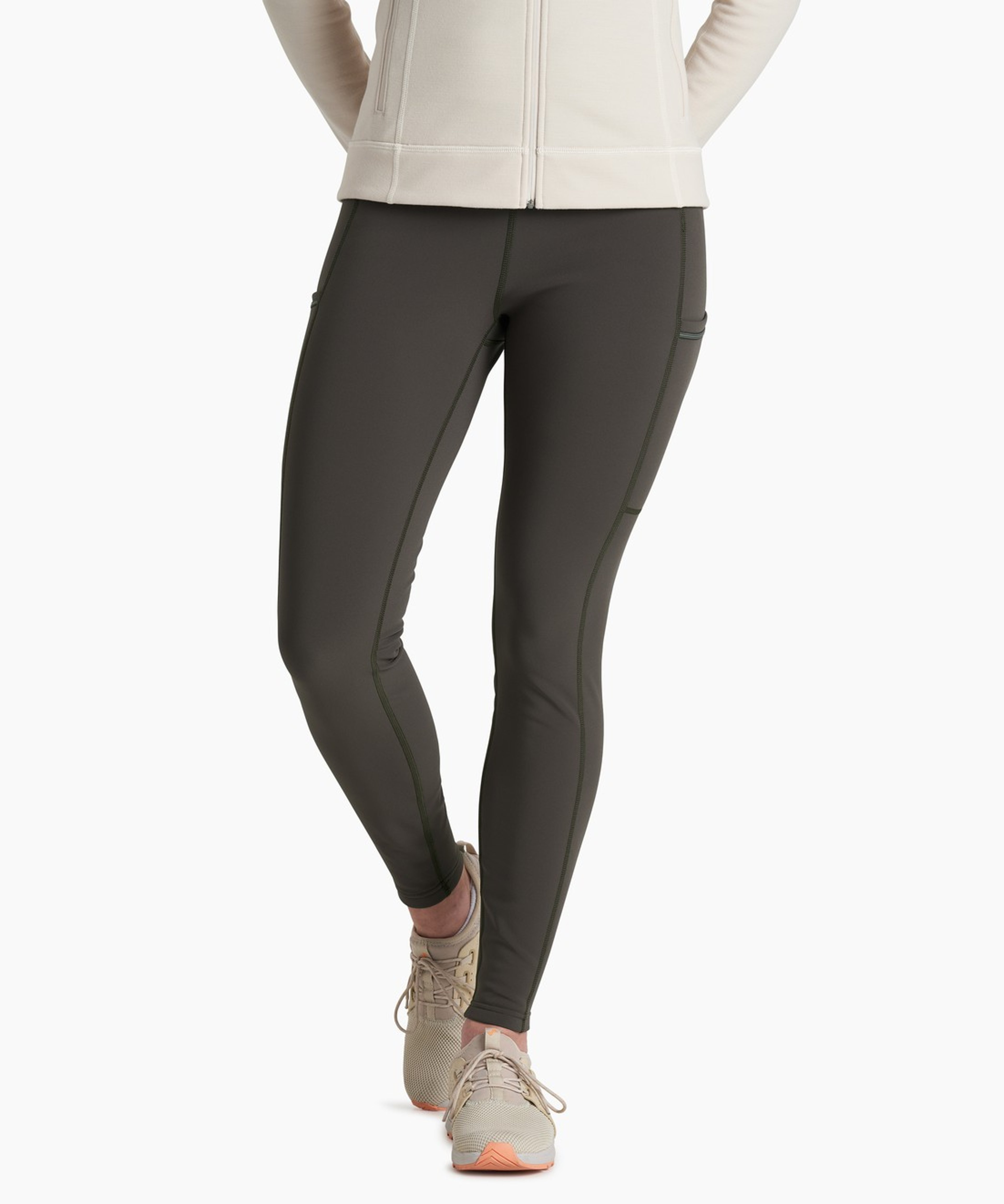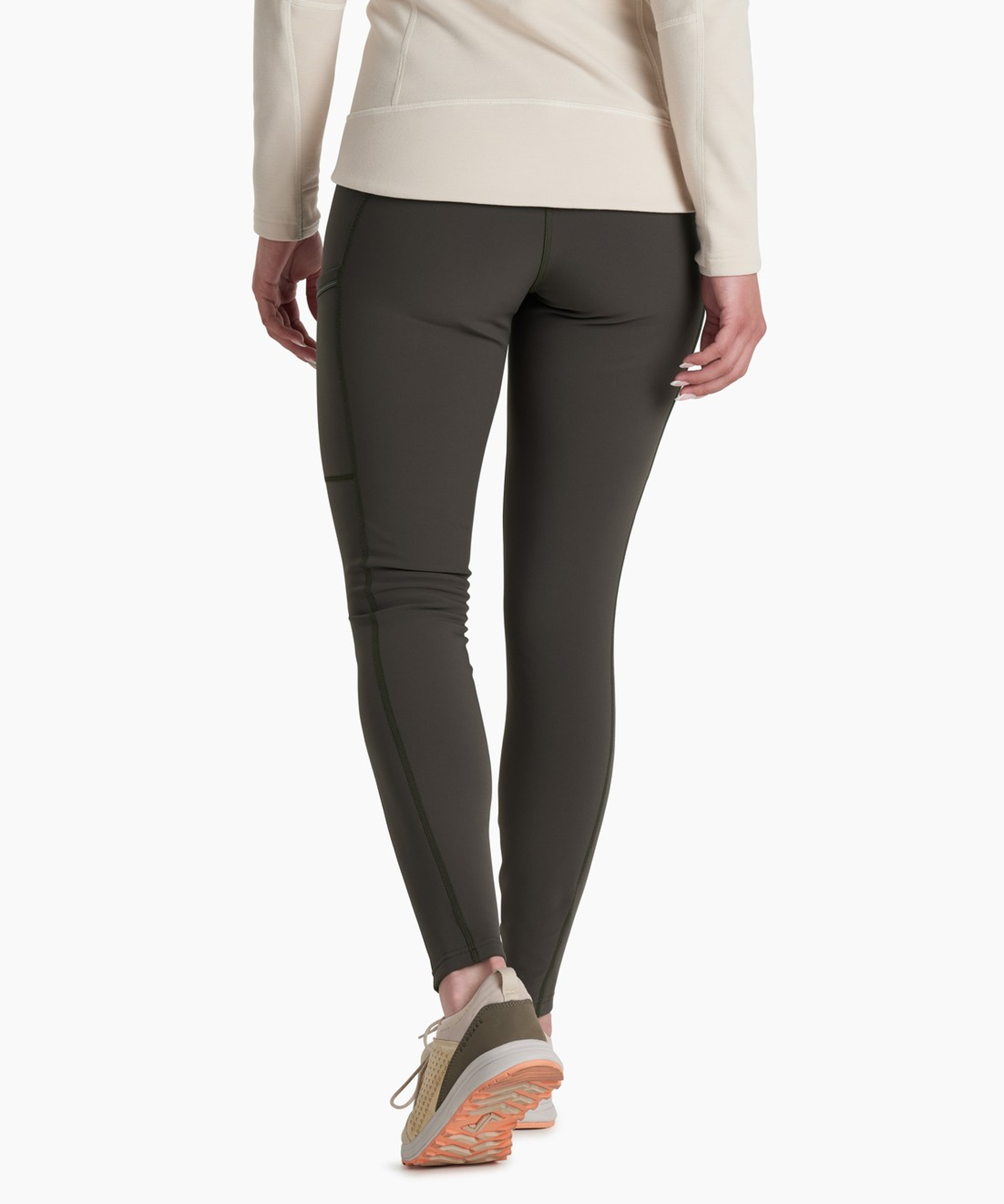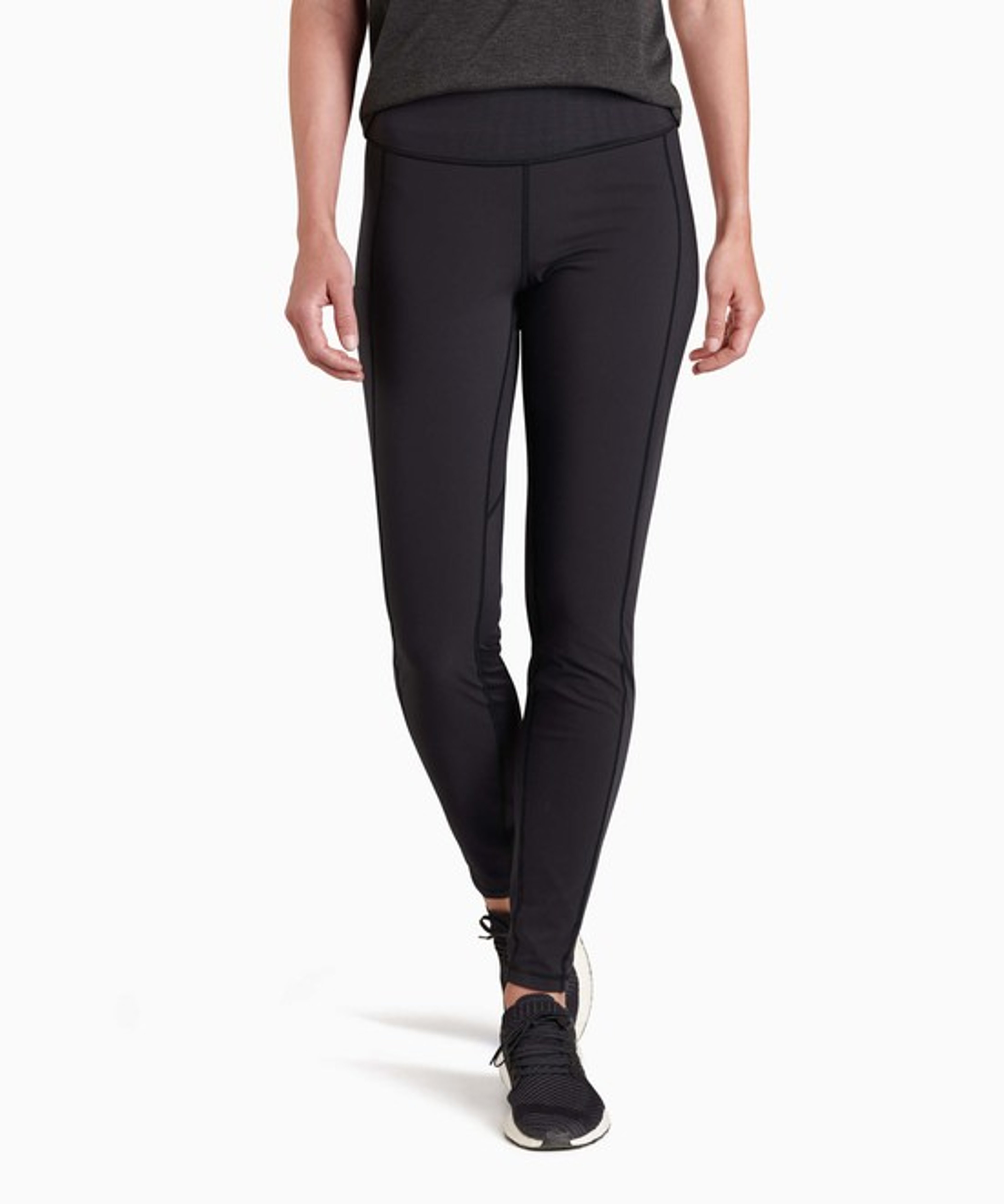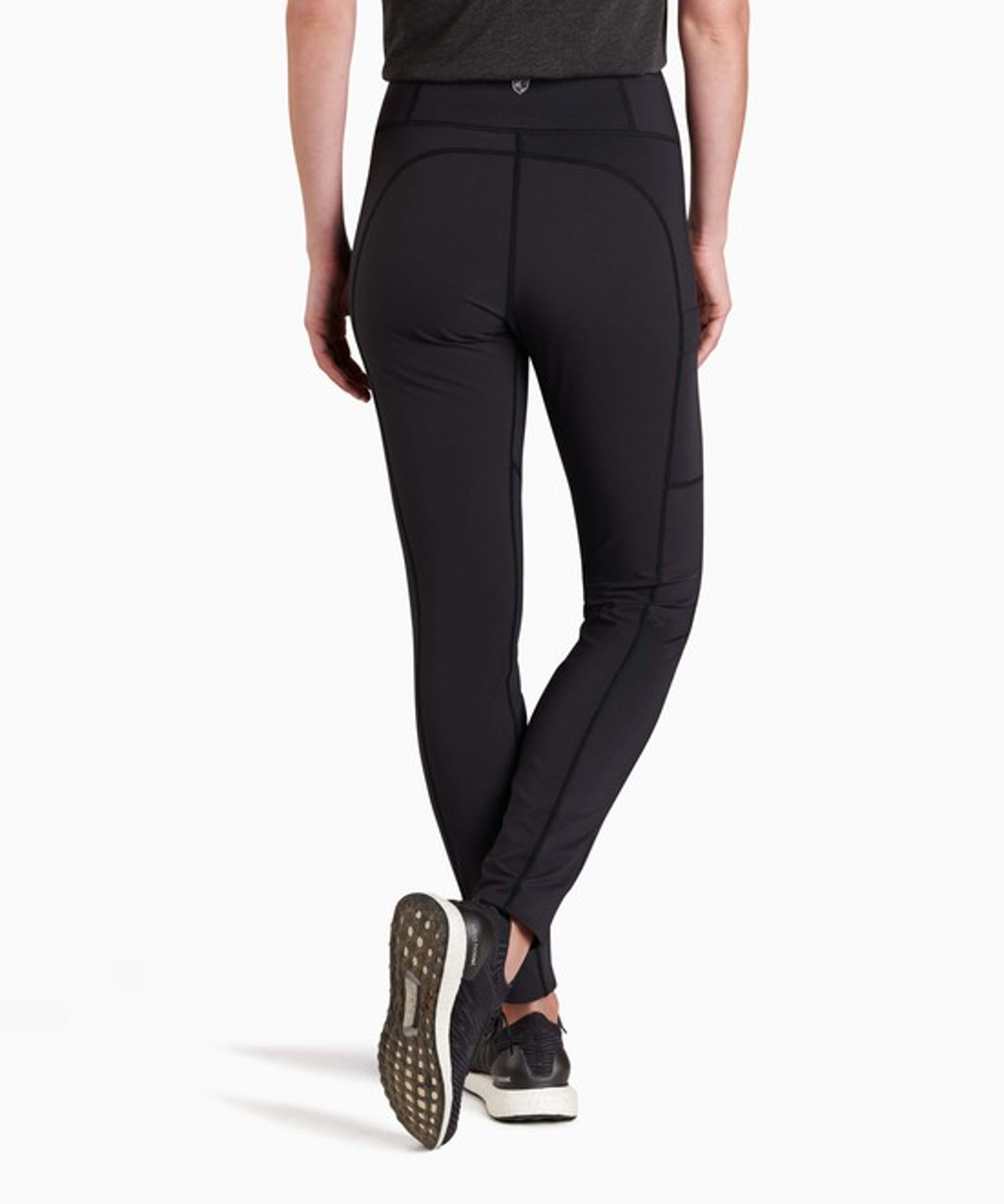



Women's Leggings
Move Freely on Trail and Off in KÜHL Women's Leggings
Choose from a variety of fabrics, weights, and features for the women's leggings that are right for you:
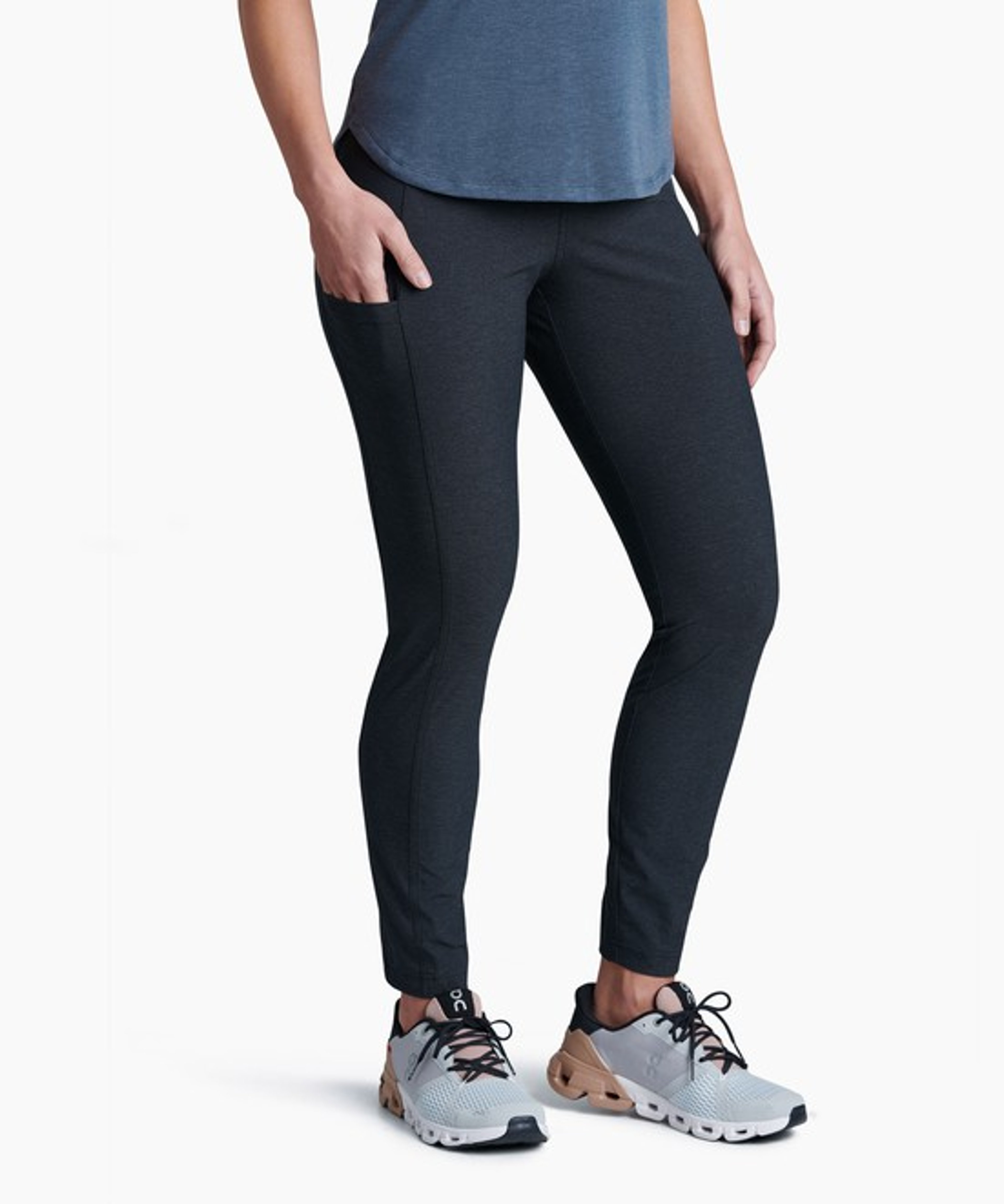
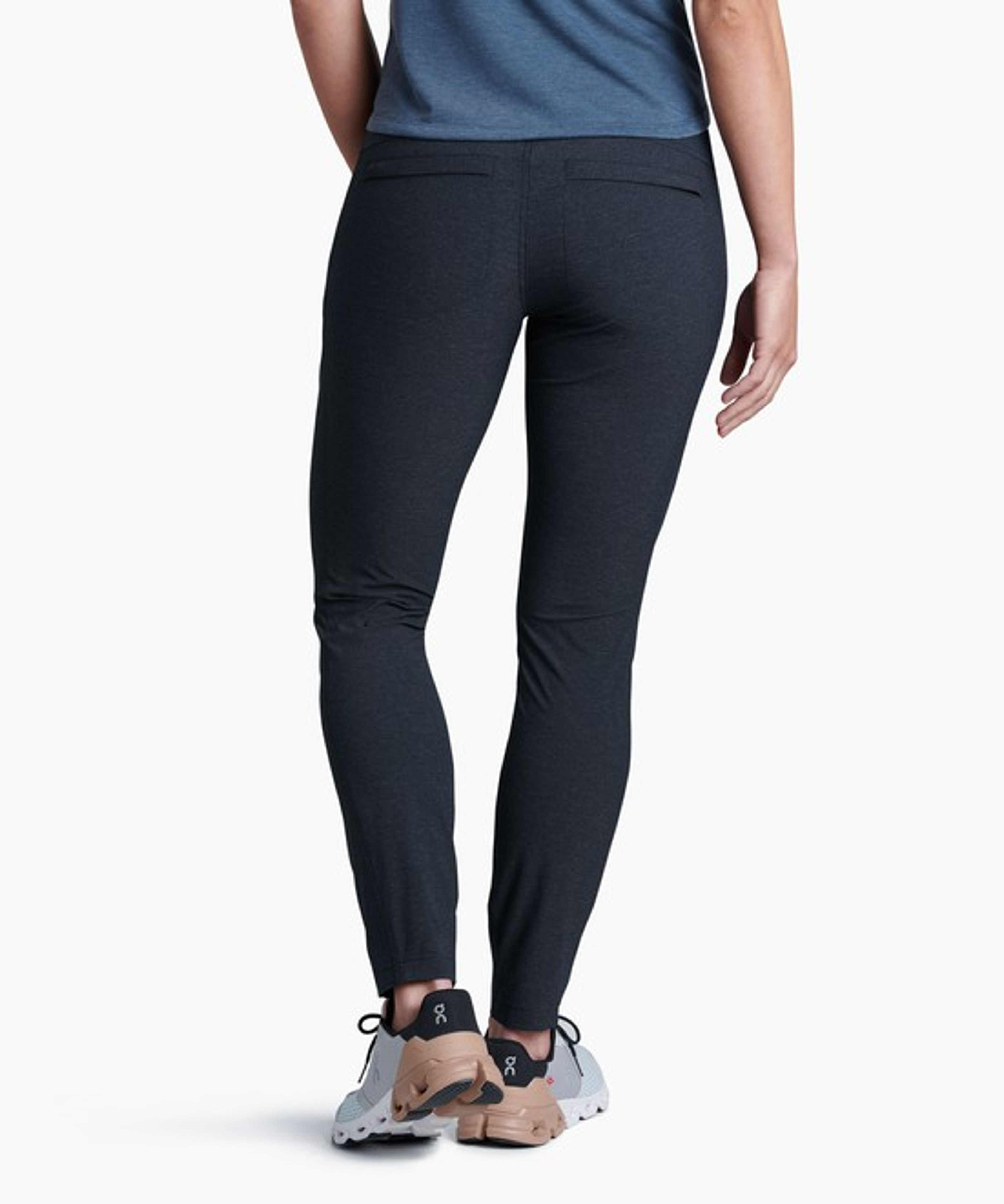
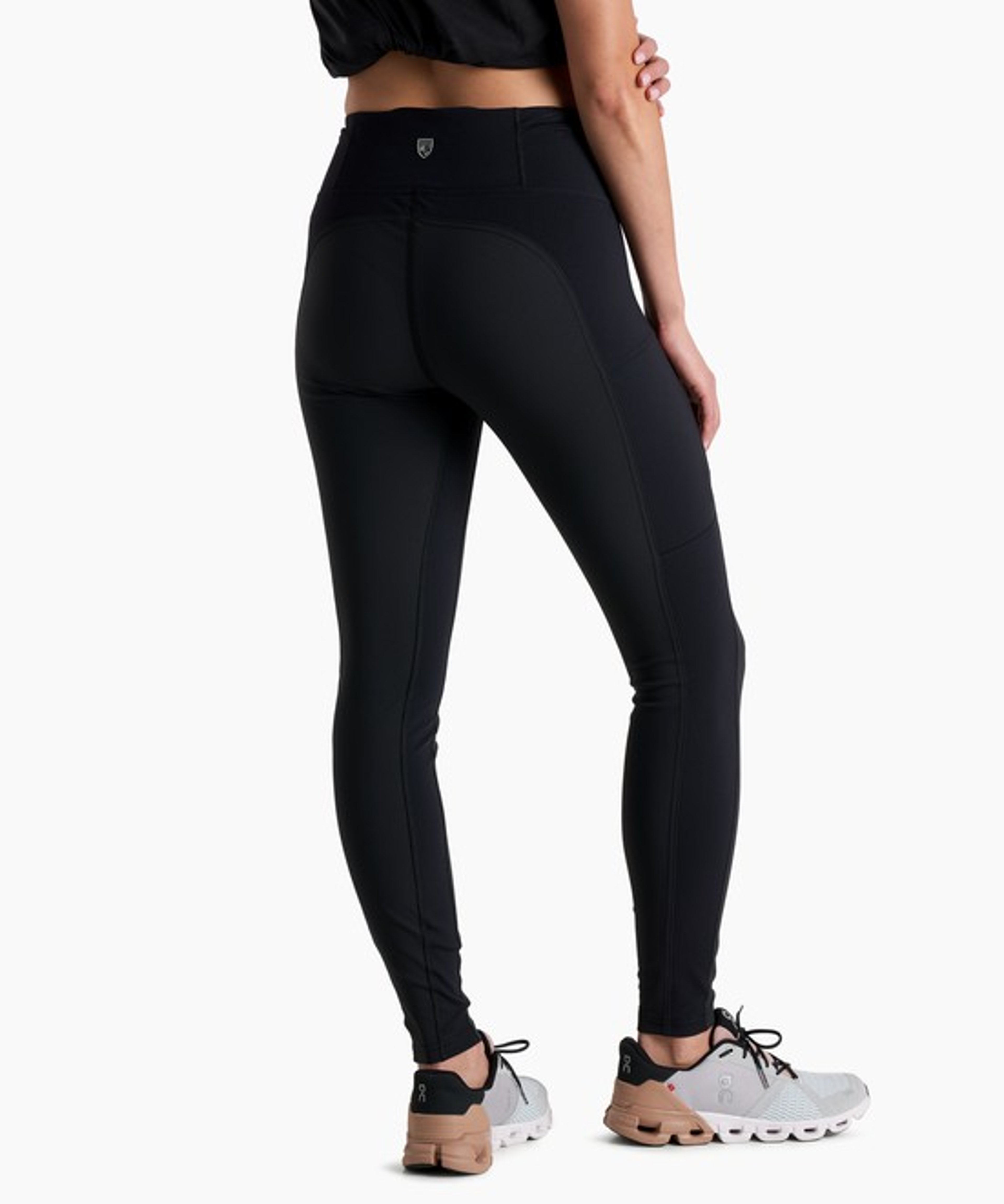
Trail-Ready Stretch. Built for real movement, our leggings pair 4-way stretch with a gusseted crotch and articulated knees so you can clear a switchback or sit cross-legged at camp without binding. Reinforced yarns resist abrasion against rock and brush, and flat seams reduce chafing on long days.
Sun-Blocking Summer Tights. Lightweight knit fabric with UPF 50+ keeps the sun off skin without the weight of a full pant. Moisture-wicking, quick-dry performance pulls sweat away on hot ascents, a strong pairing with our women's hiking pants when shorts feel too exposed and full pants too warm.
Cold-Weather Softshell. When temperatures drop, softshell tights bring a wind- and water-resistant exterior with a brushed interior that traps body heat. The face fabric sheds light precipitation with a DWR finish. The brushed knit holds warmth without bulk under a shell or skirt.
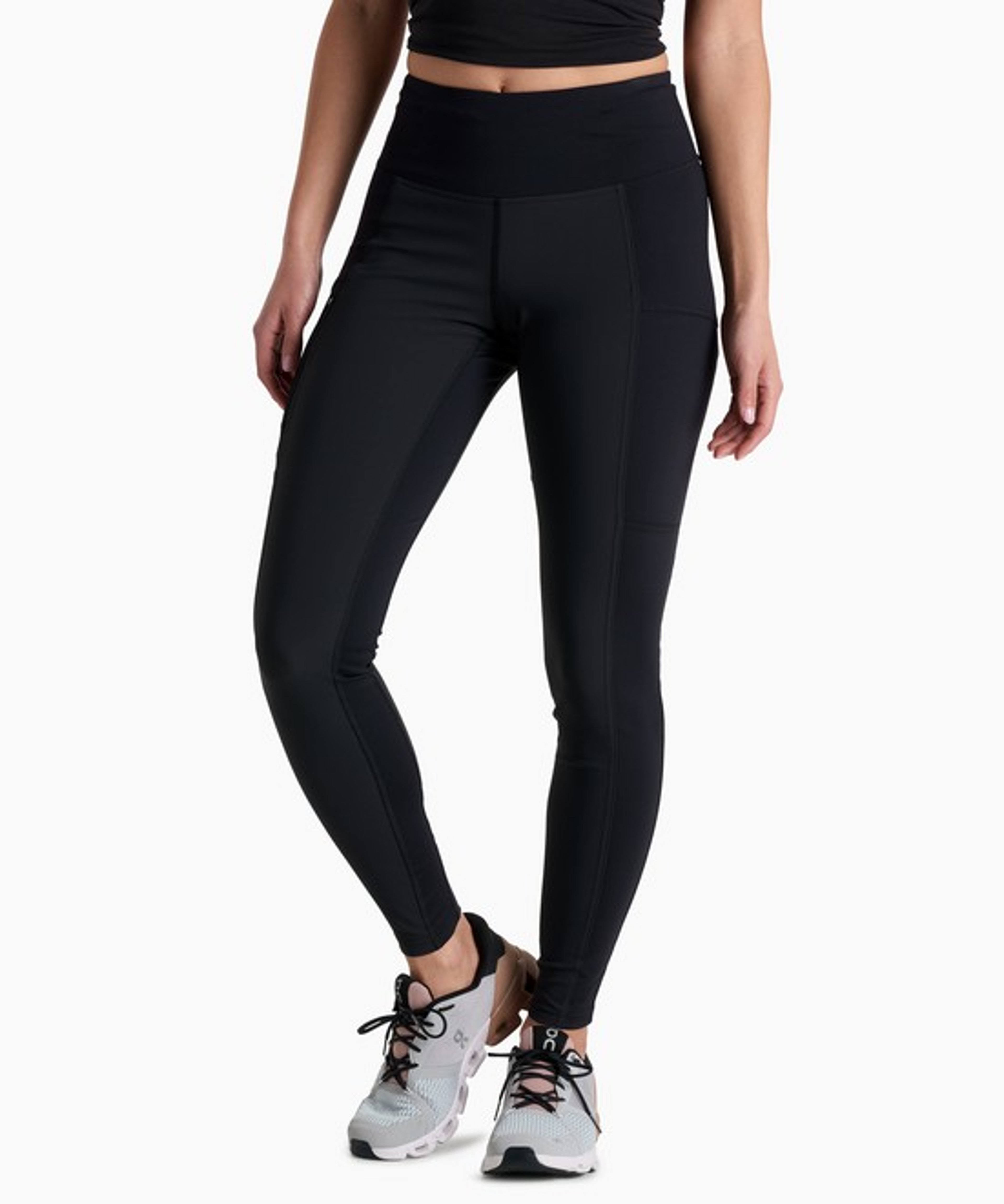
Smart Storage. Look for high-rise, double-layer waistbands with hidden interior pockets that swallow a key or card, zippered thigh pockets for a phone, and secure-fit construction that stays put through every squat, stride, and scramble.
Versatile Wear. From early-morning yoga to alpine day hikes to grocery runs, performance leggings handle the in-between. Pair a heavier softshell tight under a midlayer for shoulder-season trail use, or wear a lightweight knit solo through summer.
When you're selecting the right tight, look for signature touches like a wide soft-knit waistband for freedom of movement, a gusseted crotch for unrestricted stride, an internal waistband pocket for valuables, and a high-rise cut that stays put without digging in.
Choose from a variety of fabrics, weights, and features for the women's leggings that are right for you:
Trail-Ready Stretch. Built for real movement, our leggings pair 4-way stretch with a gusseted crotch and articulated knees so you can clear a switchback or sit cross-legged at camp without binding. Reinforced yarns resist abrasion against rock and brush, and flat seams reduce chafing on long days.
Sun-Blocking Summer Tights. Lightweight knit fabric with UPF 50+ keeps the sun off skin without the weight of a full pant. Moisture-wicking, quick-dry performance pulls sweat away on hot ascents, a strong pairing with our women's hiking pants when shorts feel too exposed and full pants too warm.
Cold-Weather Softshell. When temperatures drop, softshell tights bring a wind- and water-resistant exterior with a brushed interior that traps body heat. The face fabric sheds light precipitation with a DWR finish. The brushed knit holds warmth without bulk under a shell or skirt.
Smart Storage. Look for high-rise, double-layer waistbands with hidden interior pockets that swallow a key or card, zippered thigh pockets for a phone, and secure-fit construction that stays put through every squat, stride, and scramble.
Versatile Wear. From early-morning yoga to alpine day hikes to grocery runs, performance leggings handle the in-between. Pair a heavier softshell tight under a midlayer for shoulder-season trail use, or wear a lightweight knit solo through summer.
When you're selecting the right tight, look for signature touches like a wide soft-knit waistband for freedom of movement, a gusseted crotch for unrestricted stride, an internal waistband pocket for valuables, and a high-rise cut that stays put without digging in.
Choosing the right women's leggings comes down to fabric, fit, and weather. Here's how to pick a pair that fits your day, your trail, and the temperature.
What should you look for in women's leggings?
Look for a stretchy synthetic-blend knit, a gusseted crotch, articulated knees, a secure high-rise waistband, and UPF 50+ sun protection.
The best leggings move with you, not against you. A nylon-spandex blend with 4-way stretch delivers the give you need for switchbacks, scrambles, and yoga. Flat seams reduce chafing on long miles. A gusseted crotch and articulated knees keep the fabric out of your way when you crouch, climb, or step high.
Storage matters more than people expect. A wide, double-layer waistband with a hidden interior pocket holds a key or card. Zippered thigh pockets keep a phone secure. For outdoor wear, a DWR finish sheds light moisture and UPF 50+ blocks direct sun.
The best leggings move with you, not against you. A nylon-spandex blend with 4-way stretch delivers the give you need for switchbacks, scrambles, and yoga. Flat seams reduce chafing on long miles. A gusseted crotch and articulated knees keep the fabric out of your way when you crouch, climb, or step high.
Storage matters more than people expect. A wide, double-layer waistband with a hidden interior pocket holds a key or card. Zippered thigh pockets keep a phone secure. For outdoor wear, a DWR finish sheds light moisture and UPF 50+ blocks direct sun.
Are jeans or cotton pants OK for hiking, working, or traveling in?
No, cotton is the worst choice for active wear because it absorbs sweat and rain, dries slowly, and chafes once wet.
Wet cotton leaches body heat and stays damp for hours, which is uncomfortable on a sunny trail and genuinely dangerous in cold conditions. Jeans add the same problem with extra weight and almost no stretch.
A synthetic-blend knit with moisture-wicking and quick-dry performance solves both issues: sweat moves off skin and the fabric dries fast. For temperature regulation in shoulder seasons, pair leggings with a women's baselayer underneath rather than reaching for cotton.
Wet cotton leaches body heat and stays damp for hours, which is uncomfortable on a sunny trail and genuinely dangerous in cold conditions. Jeans add the same problem with extra weight and almost no stretch.
A synthetic-blend knit with moisture-wicking and quick-dry performance solves both issues: sweat moves off skin and the fabric dries fast. For temperature regulation in shoulder seasons, pair leggings with a women's baselayer underneath rather than reaching for cotton.
What's the difference between hiking, work, and travel pants?
Hiking pants prioritize stretch, breathability, and UPF protection. Work pants lean on heavier, abrasion-resistant fabric built to take punishment. Travel pants emphasize lightweight, packable construction with a slightly dressier silhouette.
Women's work pants use tougher weaves and reinforced panels for jobsite durability. Women's travel pants trade some of that ruggedness for low pack weight, wrinkle resistance, and lines that read at a restaurant. Leggings sit alongside all three as a stretch-first option for trail running, yoga, day hiking, and casual wear, best when you want zero fabric in your way.
Women's work pants use tougher weaves and reinforced panels for jobsite durability. Women's travel pants trade some of that ruggedness for low pack weight, wrinkle resistance, and lines that read at a restaurant. Leggings sit alongside all three as a stretch-first option for trail running, yoga, day hiking, and casual wear, best when you want zero fabric in your way.
What's the best fit for leggings, slim, relaxed, or wide-leg?
Slim is the standard for leggings because the close, contoured silhouette is the point: it's what allows the stretch fabric to actually do its job.
That said, fit isn't the most important variable. A slim leg with a gusseted crotch and articulated knees will outperform a perfectly cut leg without those construction details, because mobility comes from the patterning, not the silhouette label.
Look for a wide, soft-knit waistband that doesn't dig at the hip, and a rise that matches how you actually move. High-rise stays put through bending and squatting. Mid-rise feels less restrictive on long sedentary stretches like travel days.
That said, fit isn't the most important variable. A slim leg with a gusseted crotch and articulated knees will outperform a perfectly cut leg without those construction details, because mobility comes from the patterning, not the silhouette label.
Look for a wide, soft-knit waistband that doesn't dig at the hip, and a rise that matches how you actually move. High-rise stays put through bending and squatting. Mid-rise feels less restrictive on long sedentary stretches like travel days.
What should you wear in hot vs cold weather?
For hot weather, choose a lightweight knit legging with UPF 50+ and moisture-wicking performance. For cold weather, choose a softshell tight with a brushed interior and a wind- and water-resistant face.
In summer, a thin technical knit feels cooler than bare skin under direct sun and keeps bugs and brush off. UPF 50+ blocks the sun without constant sunscreen reapplication. Quick-dry fabric handles sweat through the hottest miles.
In winter, softshell tights with a brushed microfleece interior trap body heat without the bulk of a full pant. Layer them over a baselayer for skiing, snowshoeing, or sub-freezing dog walks. A DWR finish sheds snow and light precipitation.
In summer, a thin technical knit feels cooler than bare skin under direct sun and keeps bugs and brush off. UPF 50+ blocks the sun without constant sunscreen reapplication. Quick-dry fabric handles sweat through the hottest miles.
In winter, softshell tights with a brushed microfleece interior trap body heat without the bulk of a full pant. Layer them over a baselayer for skiing, snowshoeing, or sub-freezing dog walks. A DWR finish sheds snow and light precipitation.
Are leggings waterproof, or just water-resistant?
Most performance leggings are water-resistant, not waterproof: a DWR finish sheds light rain and snow but won't keep you dry in sustained downpours.
DWR (durable water repellent) is a coating that beads moisture off the face fabric for a window of light exposure. It's the right amount of protection for surprise showers, mist, and wet brush on the trail.
For genuine waterproofing in sustained rain, layer a hardshell pant on top. Leggings aren't designed to replace dedicated rain gear. The DWR-treated face fabric pairs well underneath, drying fast once the weather passes.
DWR (durable water repellent) is a coating that beads moisture off the face fabric for a window of light exposure. It's the right amount of protection for surprise showers, mist, and wet brush on the trail.
For genuine waterproofing in sustained rain, layer a hardshell pant on top. Leggings aren't designed to replace dedicated rain gear. The DWR-treated face fabric pairs well underneath, drying fast once the weather passes.