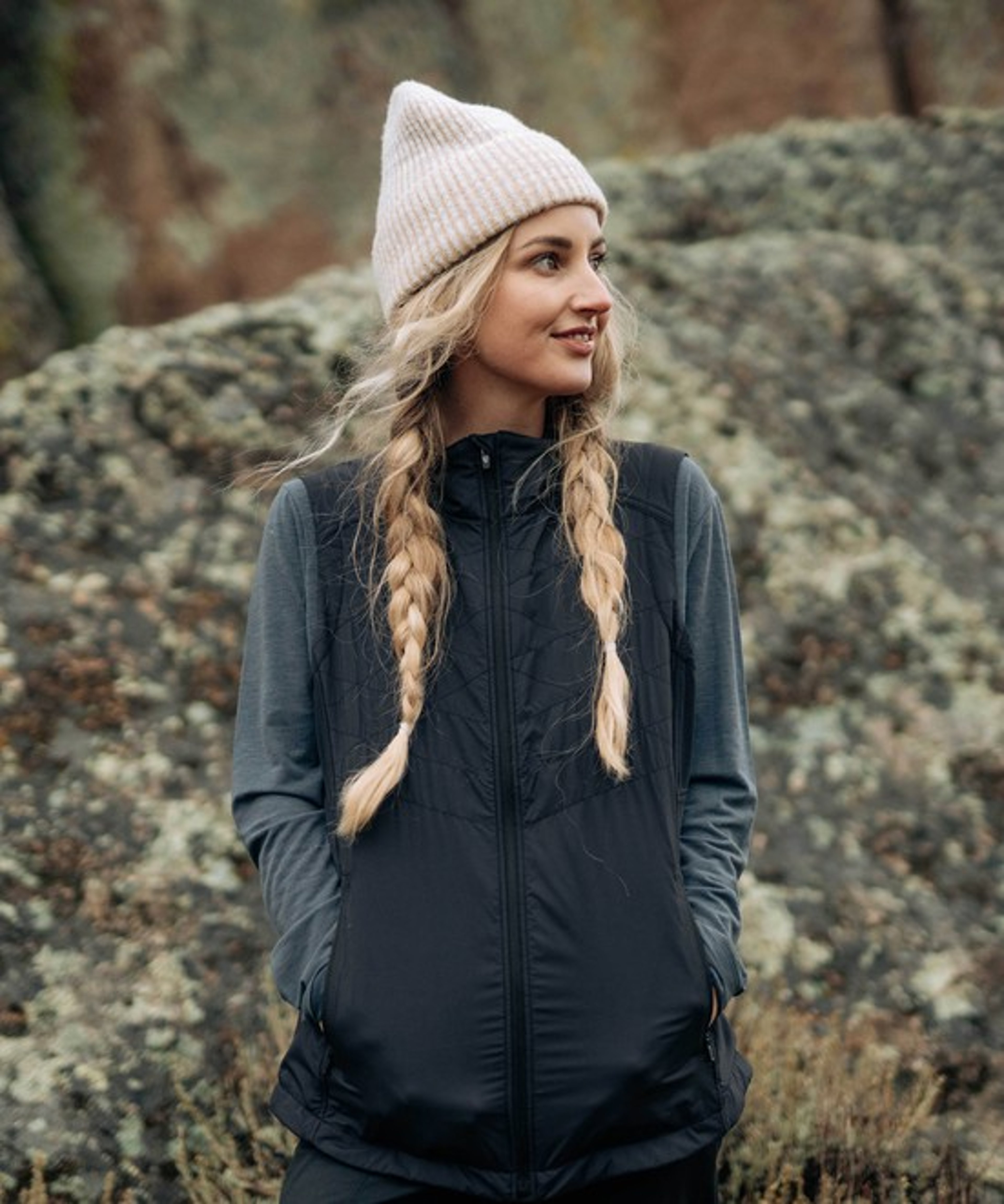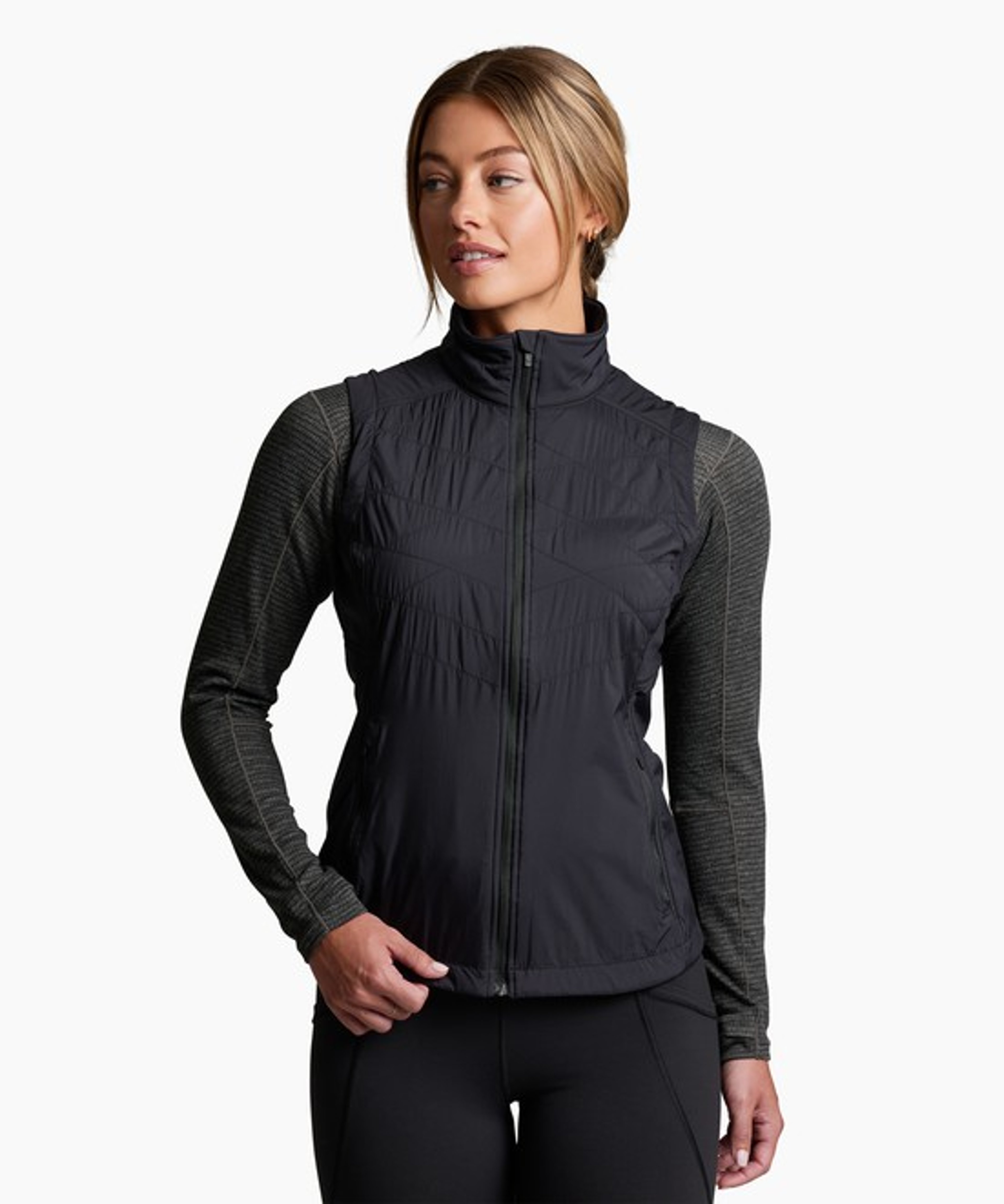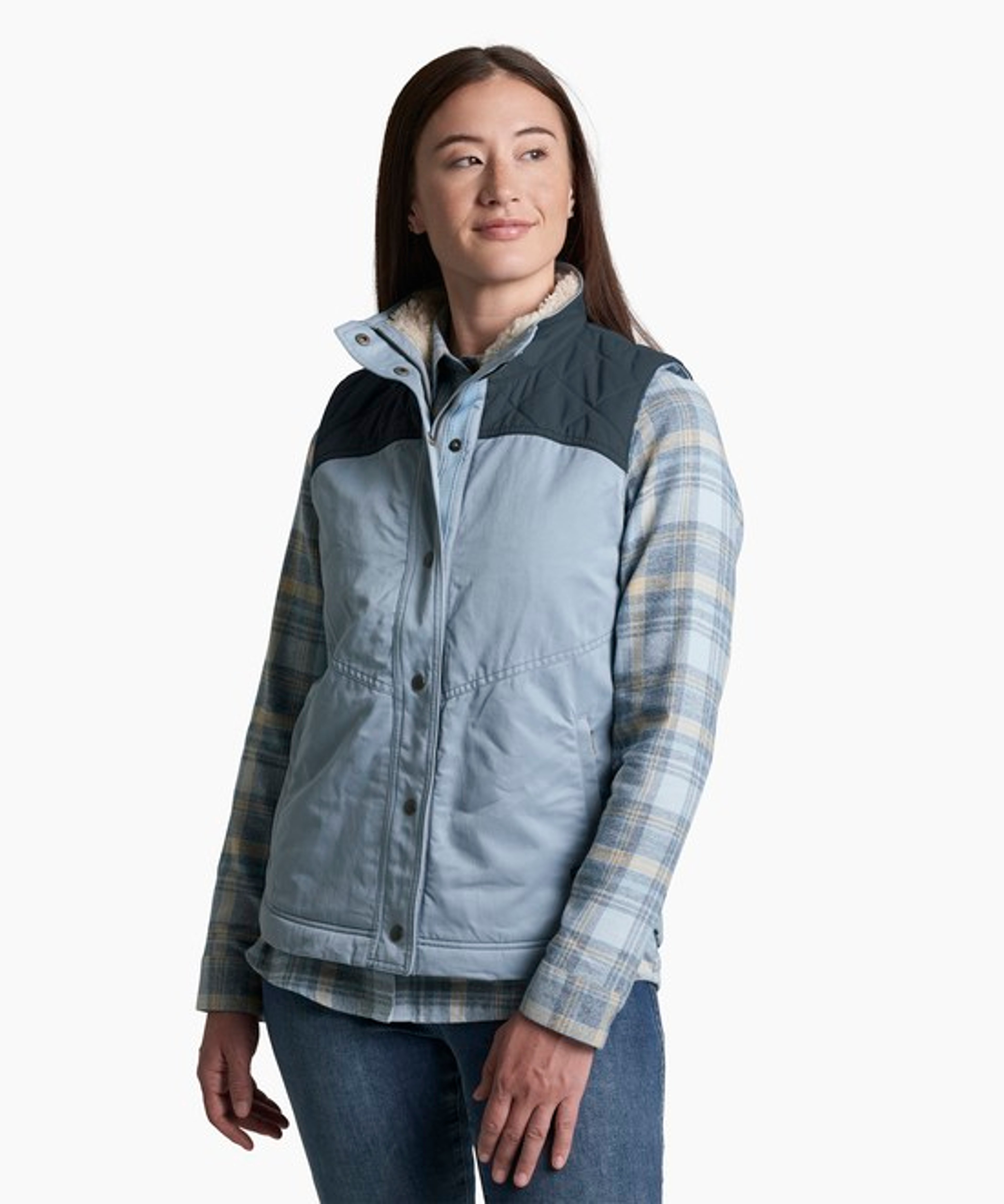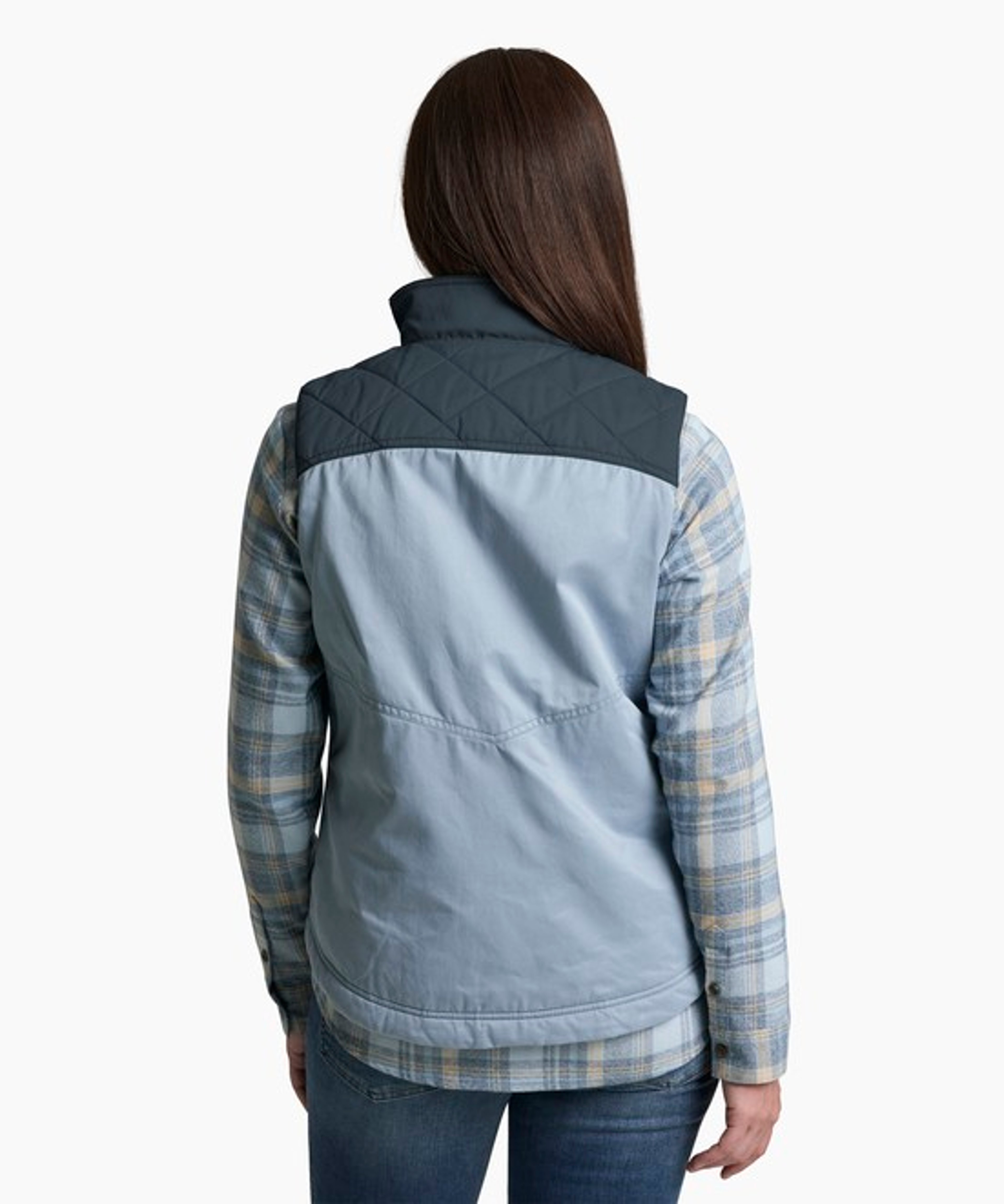








Women's Vests
Layer Up Without Bulking Up in KÜHL Women's Vests
Worn over a baselayer, under a shell, or alone on a crisp morning, a well-built vest delivers core warmth without sleeve bulk and keeps your arms free to move.
Choose from a variety of fabrics, weights, and silhouettes for the women's vest that's right for you:
Italian Fleece Warmth. Mid-weight Italian fleece anchors our most popular vests, delivering plush softness and reliable warmth across a wide temperature range. Stowaway hoods and zippered hand pockets add functional details for chilly evenings around a campfire or a long drive into the trailhead.
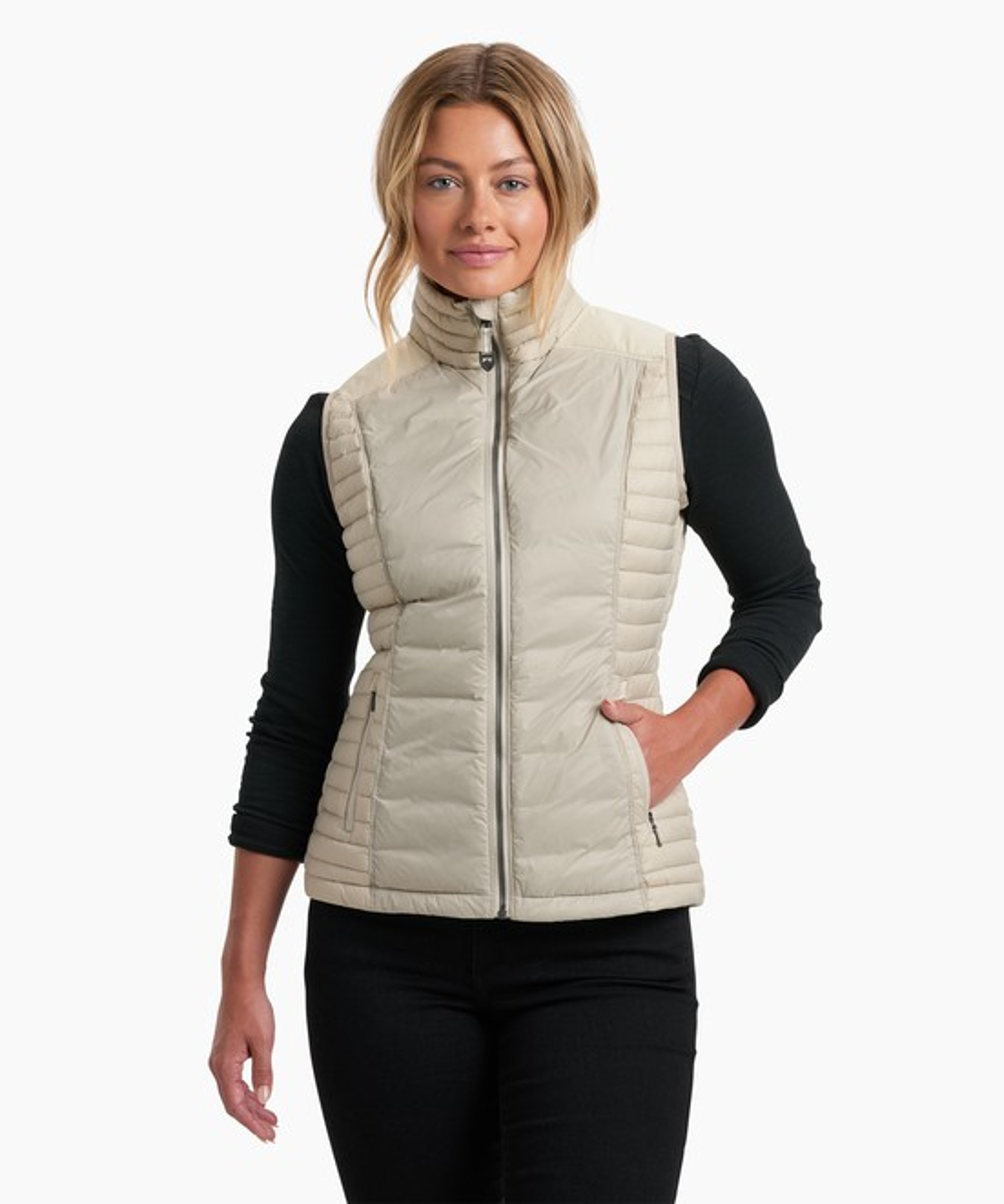
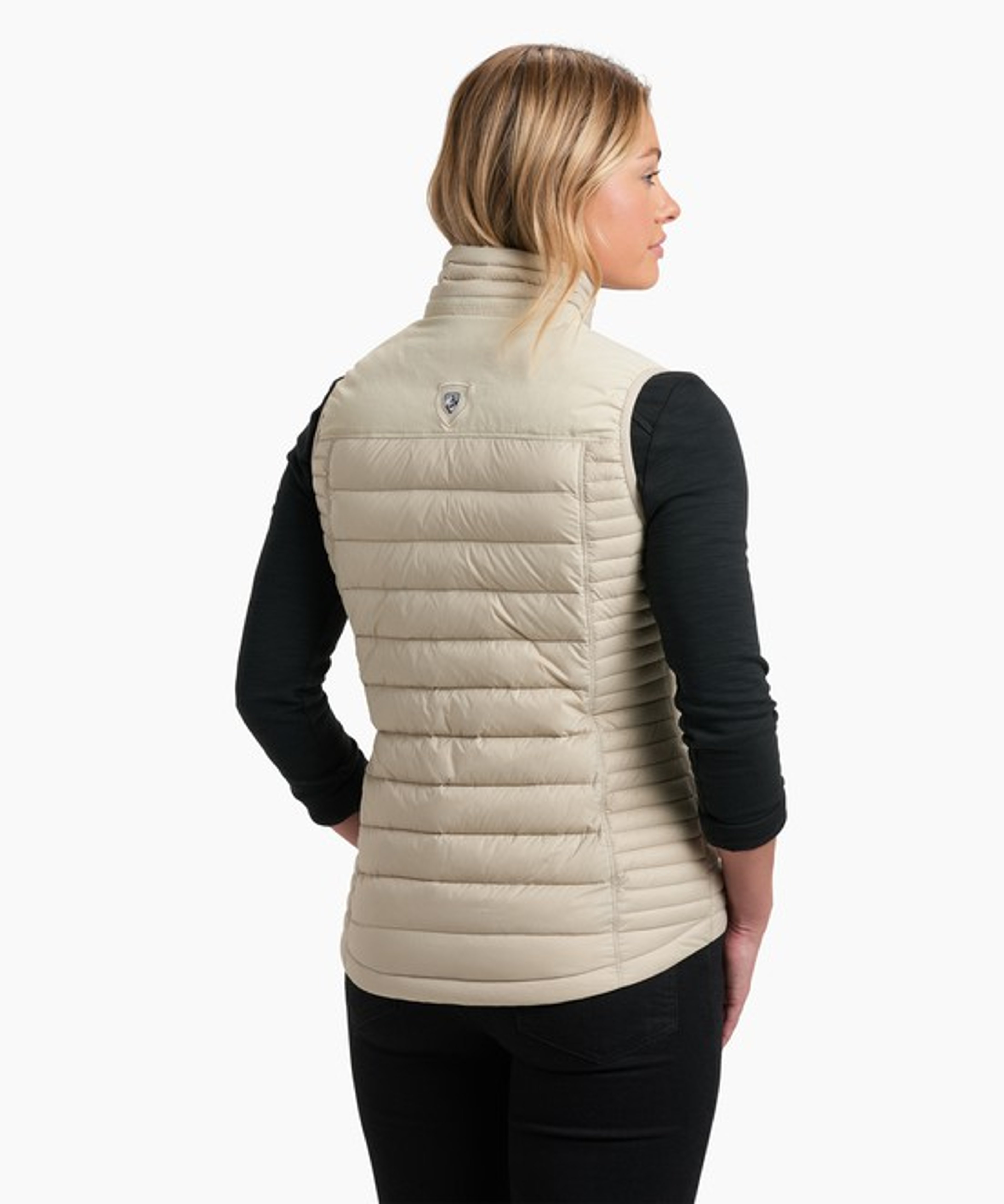
Premium Down Insulation. For warmth-to-weight you can stuff into a daypack, look for vests with RDS-certified 800-fill goose down placed in body-mapped panels: more loft where you lose heat fastest, less where you don't need it. Ripstop face fabrics with a DWR finish shrug off light moisture and resist snags from packs, brush, and gear. See more goose-down options in our women's down outerwear collection.
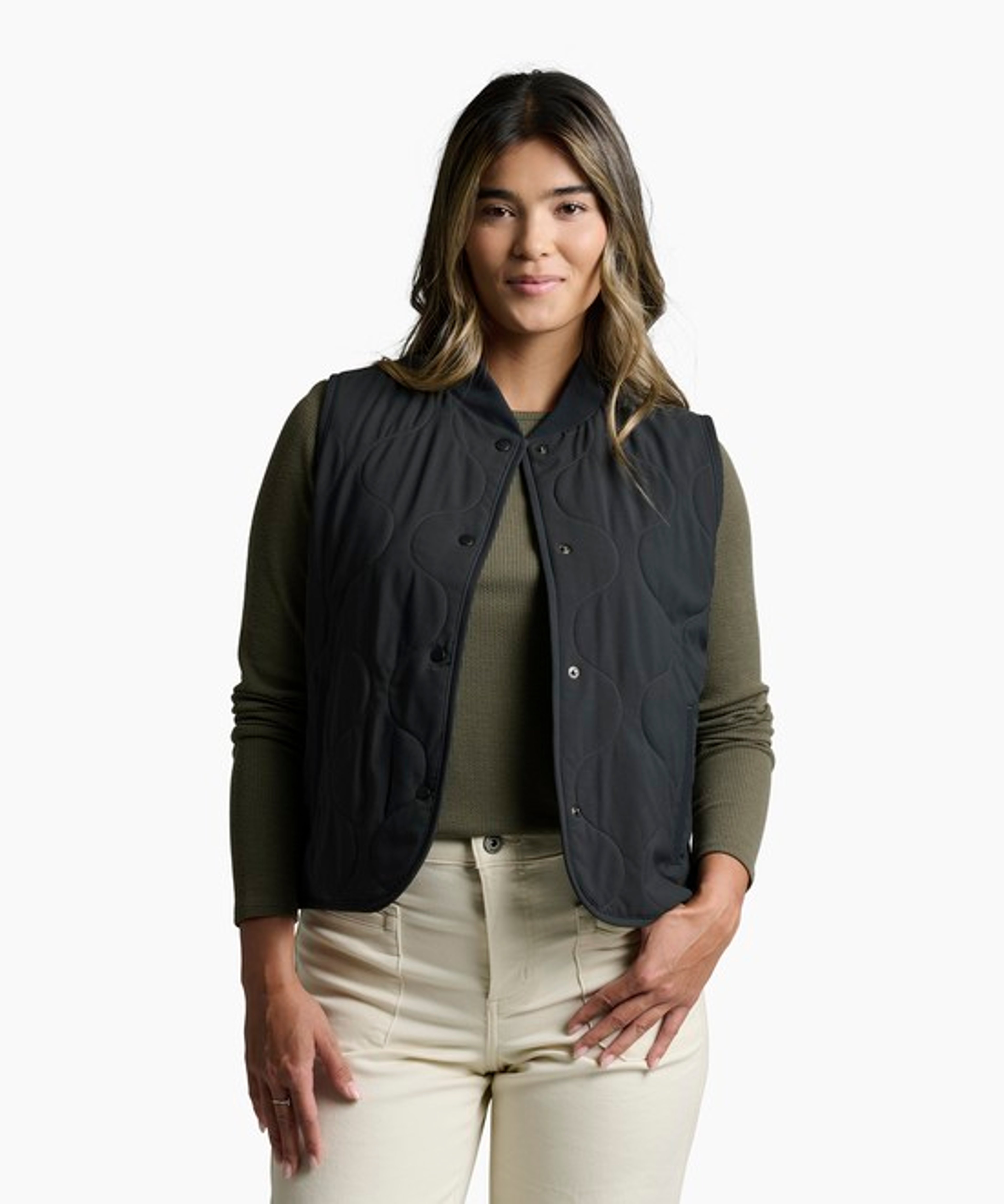
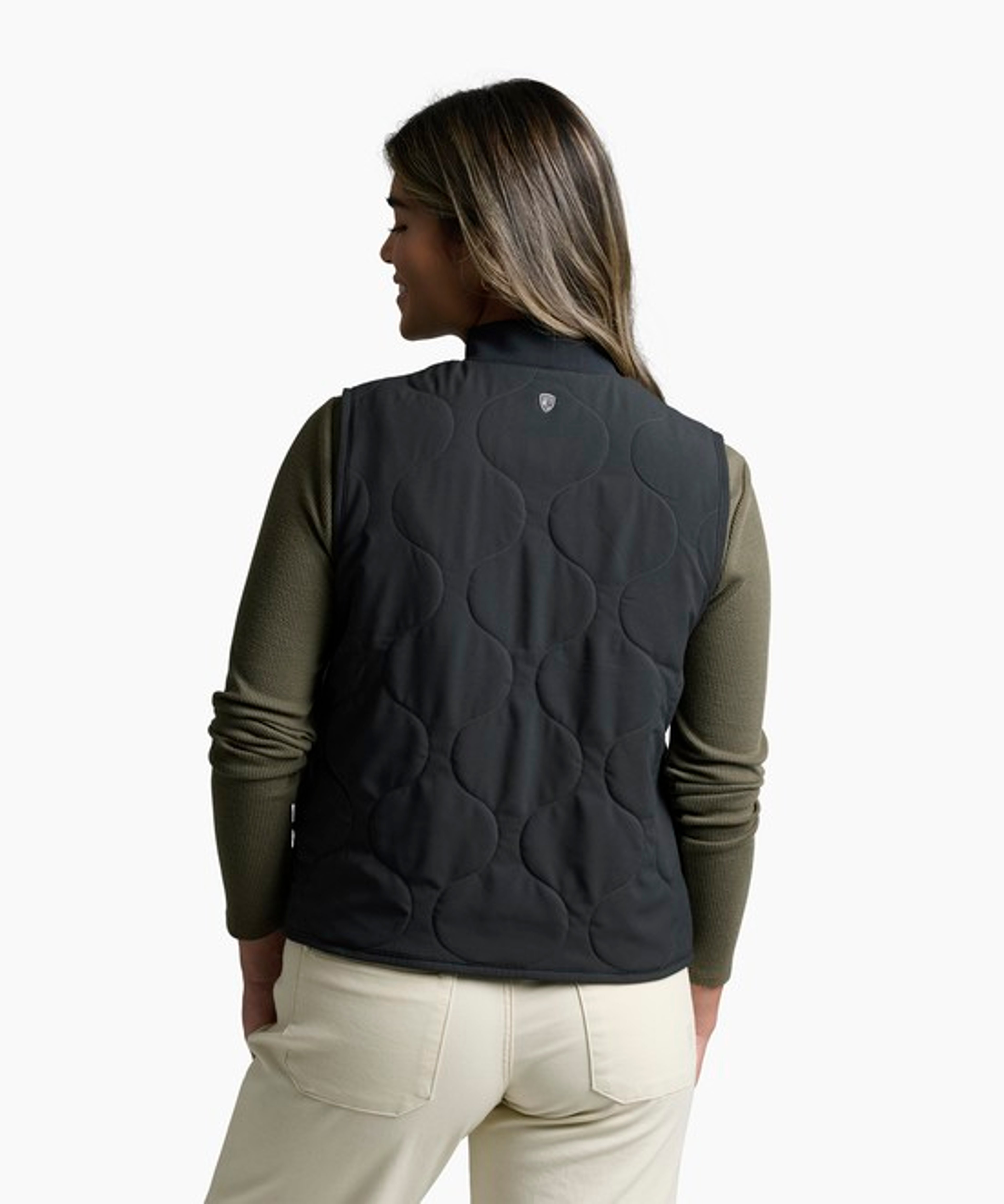
Sherpa & Microsuede Comfort. Bonded microsuede outers paired with premium Italian sherpa fleece linings turn a vest into a daily-driver layer for school runs, dog walks, and weekend errands. Pair the cozy weight of sherpa with a long sleeve or a women's fleece baselayer for a complete cold-weather kit.
Softshell Hybrids for Active Use. Softshell shoulders, 4-way stretch panels, and a quick-dry interior create vests that breathe on the climb and block wind on the ridge. These hybrids transition smoothly from trail to town and layer cleanly under a hardshell when weather closes in.
Wax-Coated Lined Vests. A coated wax exterior with a luxurious Italian fleece lining delivers rugged wind and water resistance with a heritage look, at home around a fire pit, in a mountain town, or under a heavier mid-layer when the temperature drops.
Look for signature touches like multiple zippered hand and chest pockets for secure storage, stowaway hoods that disappear into the collar, articulated paneling for unrestricted reach, and a DWR finish that beads off light rain and snow.
Worn over a baselayer, under a shell, or alone on a crisp morning, a well-built vest delivers core warmth without sleeve bulk and keeps your arms free to move.
Choose from a variety of fabrics, weights, and silhouettes for the women's vest that's right for you:
Italian Fleece Warmth. Mid-weight Italian fleece anchors our most popular vests, delivering plush softness and reliable warmth across a wide temperature range. Stowaway hoods and zippered hand pockets add functional details for chilly evenings around a campfire or a long drive into the trailhead.
Premium Down Insulation. For warmth-to-weight you can stuff into a daypack, look for vests with RDS-certified 800-fill goose down placed in body-mapped panels: more loft where you lose heat fastest, less where you don't need it. Ripstop face fabrics with a DWR finish shrug off light moisture and resist snags from packs, brush, and gear. See more goose-down options in our women's down outerwear collection.
Sherpa & Microsuede Comfort. Bonded microsuede outers paired with premium Italian sherpa fleece linings turn a vest into a daily-driver layer for school runs, dog walks, and weekend errands. Pair the cozy weight of sherpa with a long sleeve or a women's fleece baselayer for a complete cold-weather kit.
Softshell Hybrids for Active Use. Softshell shoulders, 4-way stretch panels, and a quick-dry interior create vests that breathe on the climb and block wind on the ridge. These hybrids transition smoothly from trail to town and layer cleanly under a hardshell when weather closes in.
Wax-Coated Lined Vests. A coated wax exterior with a luxurious Italian fleece lining delivers rugged wind and water resistance with a heritage look, at home around a fire pit, in a mountain town, or under a heavier mid-layer when the temperature drops.
Look for signature touches like multiple zippered hand and chest pockets for secure storage, stowaway hoods that disappear into the collar, articulated paneling for unrestricted reach, and a DWR finish that beads off light rain and snow.
KÜHL women's vests deliver core warmth without sleeve bulk, from Italian fleece and sherpa to body-mapped goose down. Here's how to pick yours.
What should you look for in women's vests?
The best women's vests match insulation type to your use case, layer cleanly under shells or over baselayers, and offer pockets you can actually reach with a pack on.
Focus on four things: warmth source (down, synthetic, fleece, sherpa), shell behavior (wind-blocking, water-resistant, breathable), fit through the chest and torso for clean layering, and pocket placement that doesn't clash with a hipbelt. A vest that nails all four becomes the layer you reach for first.
For active days, look for a quick-dry interior and 4-way stretch panels at the shoulders. For lifestyle wear, sherpa or Italian fleece will run softer and warmer. See the broader women's outerwear lineup for shell options that pair well.
Focus on four things: warmth source (down, synthetic, fleece, sherpa), shell behavior (wind-blocking, water-resistant, breathable), fit through the chest and torso for clean layering, and pocket placement that doesn't clash with a hipbelt. A vest that nails all four becomes the layer you reach for first.
For active days, look for a quick-dry interior and 4-way stretch panels at the shoulders. For lifestyle wear, sherpa or Italian fleece will run softer and warmer. See the broader women's outerwear lineup for shell options that pair well.
What's the difference between a hardshell, softshell, and insulated jacket?
A hardshell blocks sustained rain with a waterproof membrane and taped seams. A softshell trades waterproof protection for breathability, stretch, and wind resistance. An insulated jacket adds loft from down or synthetic fill for warmth. Each solves a different problem, and a complete kit usually includes more than one.
A vest layers under all three. Wear an insulated vest under a hardshell to add core warmth on a wet ridge, over a baselayer beneath a softshell for breathable shoulder-season warmth, or alone on a clear day with a long sleeve.
A vest layers under all three. Wear an insulated vest under a hardshell to add core warmth on a wet ridge, over a baselayer beneath a softshell for breathable shoulder-season warmth, or alone on a clear day with a long sleeve.
How do you choose between down and synthetic insulation?
Choose down when warmth-to-weight and packability matter most. Choose synthetic when you'll be wet or sweating hard.
Down lofts higher per gram than any synthetic and stuffs smaller, but it loses warmth when soaked. Synthetic holds warmth even when damp and dries faster, with a small weight penalty.
For most three-season hiking, RDS-certified 800-fill goose down in a ripstop shell with a DWR finish is the sweet spot, light, packable, and resilient under intermittent moisture. For wet-climate use or high-output activity where you'll sweat through layers, synthetic earns its keep.
Down lofts higher per gram than any synthetic and stuffs smaller, but it loses warmth when soaked. Synthetic holds warmth even when damp and dries faster, with a small weight penalty.
For most three-season hiking, RDS-certified 800-fill goose down in a ripstop shell with a DWR finish is the sweet spot, light, packable, and resilient under intermittent moisture. For wet-climate use or high-output activity where you'll sweat through layers, synthetic earns its keep.
Are vests waterproof or just water-resistant?
Most vests are water-resistant, not waterproof. A DWR finish on a ripstop or softshell face fabric will bead off light rain, snow, and condensation, but in sustained downpours moisture will eventually wet through.
True waterproof protection requires a taped-seam membrane, which most insulated vests don't carry. If you need to stay dry in real weather, layer a vest under a shell from our women's rain outerwear collection. That combination keeps the core dry and warm while the shell handles the elements. Vests insulate. They aren't the final barrier against sustained rain.
True waterproof protection requires a taped-seam membrane, which most insulated vests don't carry. If you need to stay dry in real weather, layer a vest under a shell from our women's rain outerwear collection. That combination keeps the core dry and warm while the shell handles the elements. Vests insulate. They aren't the final barrier against sustained rain.
How should a vest fit for layering?
A vest should fit close enough through the torso to layer cleanly under a shell, but with enough room across the chest for a baselayer and a mid-layer underneath. The hem should sit at the hip, long enough to seal warmth in, short enough not to bunch under a pack hipbelt.
Check the armhole and shoulder cut: too narrow and a vest will restrict reach over a thicker mid-layer. Well-articulated paneling solves that. If you plan to wear a vest mostly alone, size for your usual layer weight, not for a maximalist winter stack.
Check the armhole and shoulder cut: too narrow and a vest will restrict reach over a thicker mid-layer. Well-articulated paneling solves that. If you plan to wear a vest mostly alone, size for your usual layer weight, not for a maximalist winter stack.
What features matter most when hiking or backpacking?
For hiking and backpacking, prioritize pocket access above the hipbelt, a packable design that stuffs into its own pocket, body-mapped insulation that puts warmth where you lose heat, and a face fabric tough enough to survive pack straps and brush.
Ripstop nylon with a DWR finish resists snags and sheds light moisture. Zippered chest and hand pockets keep essentials secure on the move. And a vest that compresses to the size of a water bottle earns its place in your pack the first time the wind picks up at a summit.
Ripstop nylon with a DWR finish resists snags and sheds light moisture. Zippered chest and hand pockets keep essentials secure on the move. And a vest that compresses to the size of a water bottle earns its place in your pack the first time the wind picks up at a summit.