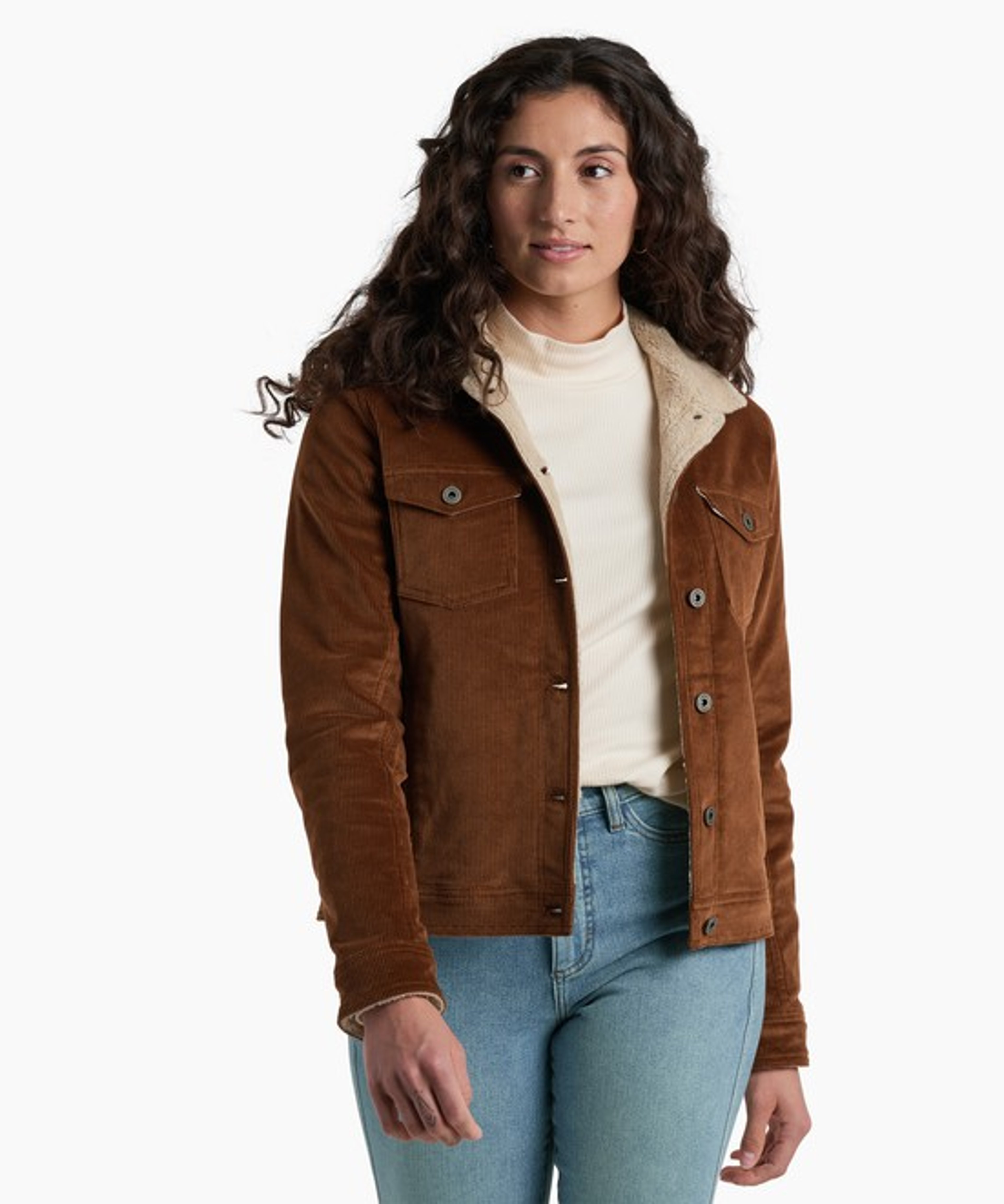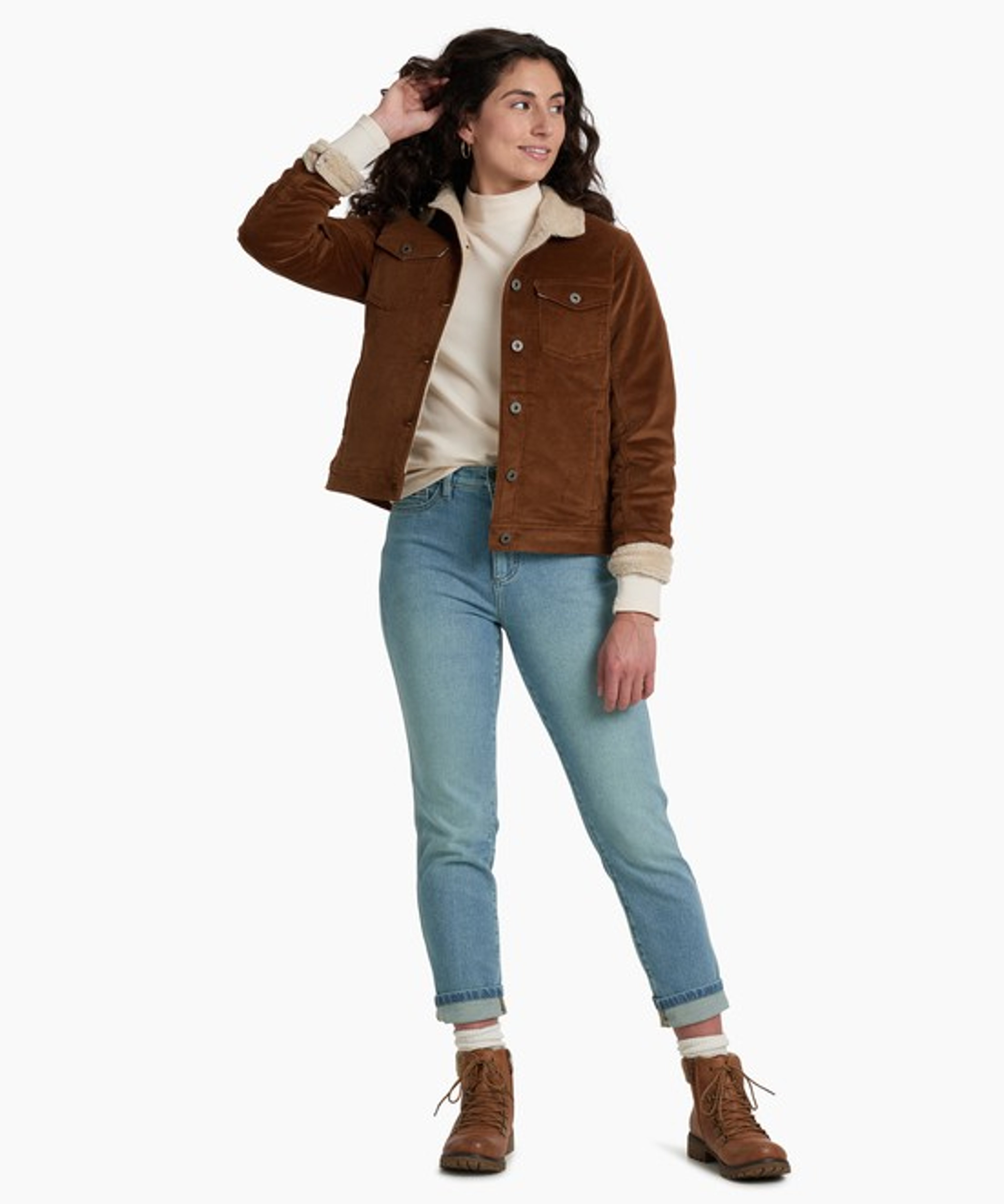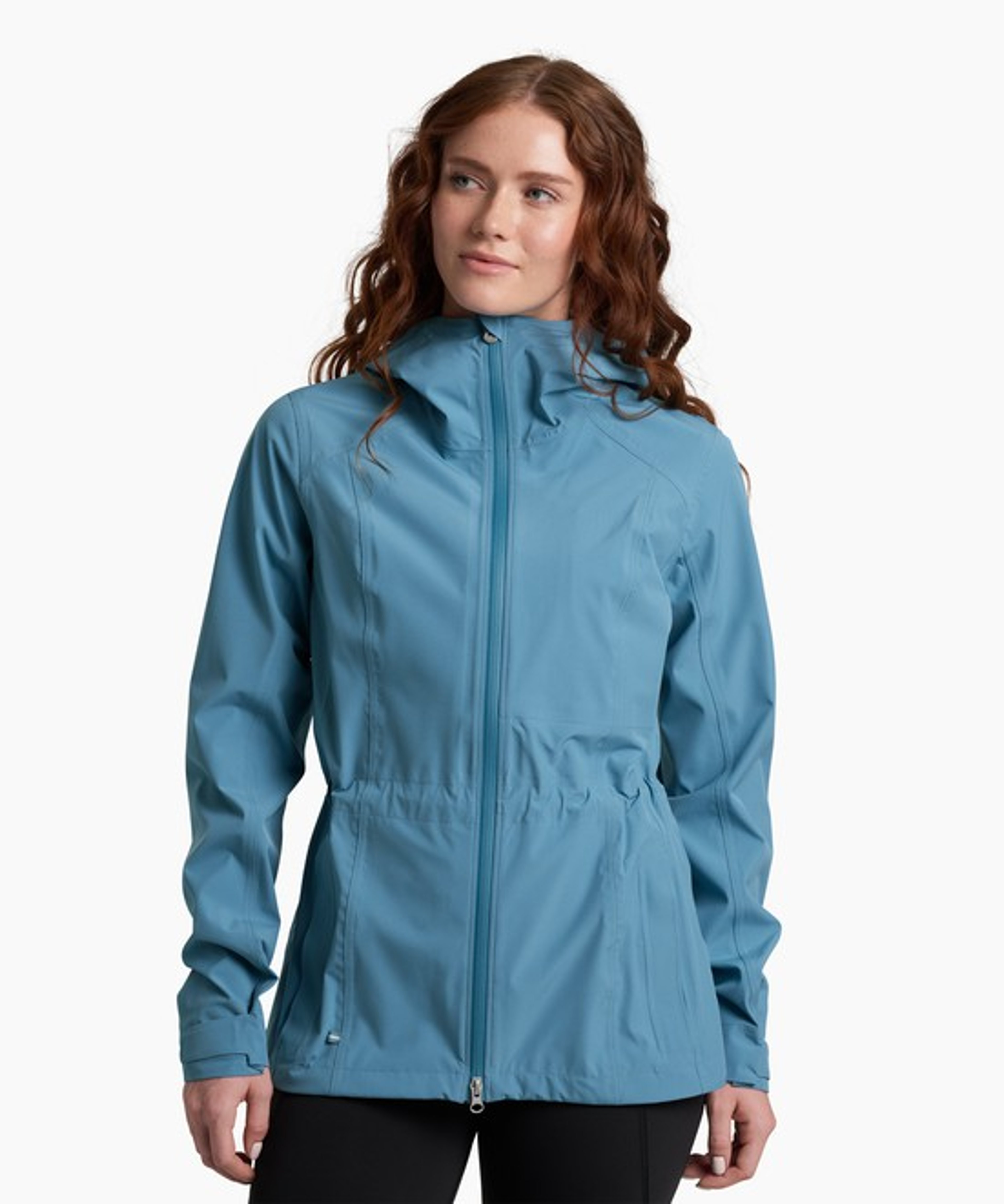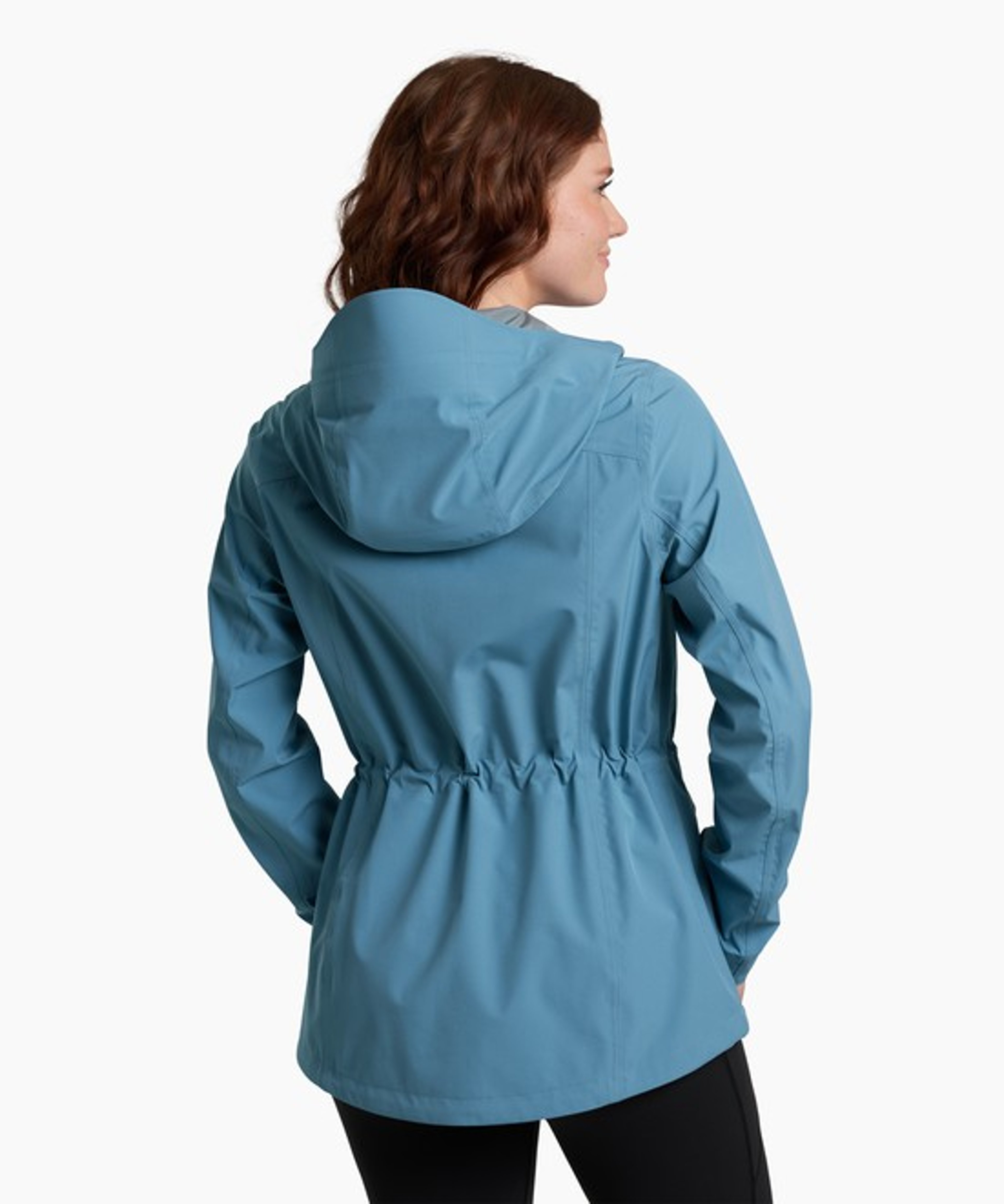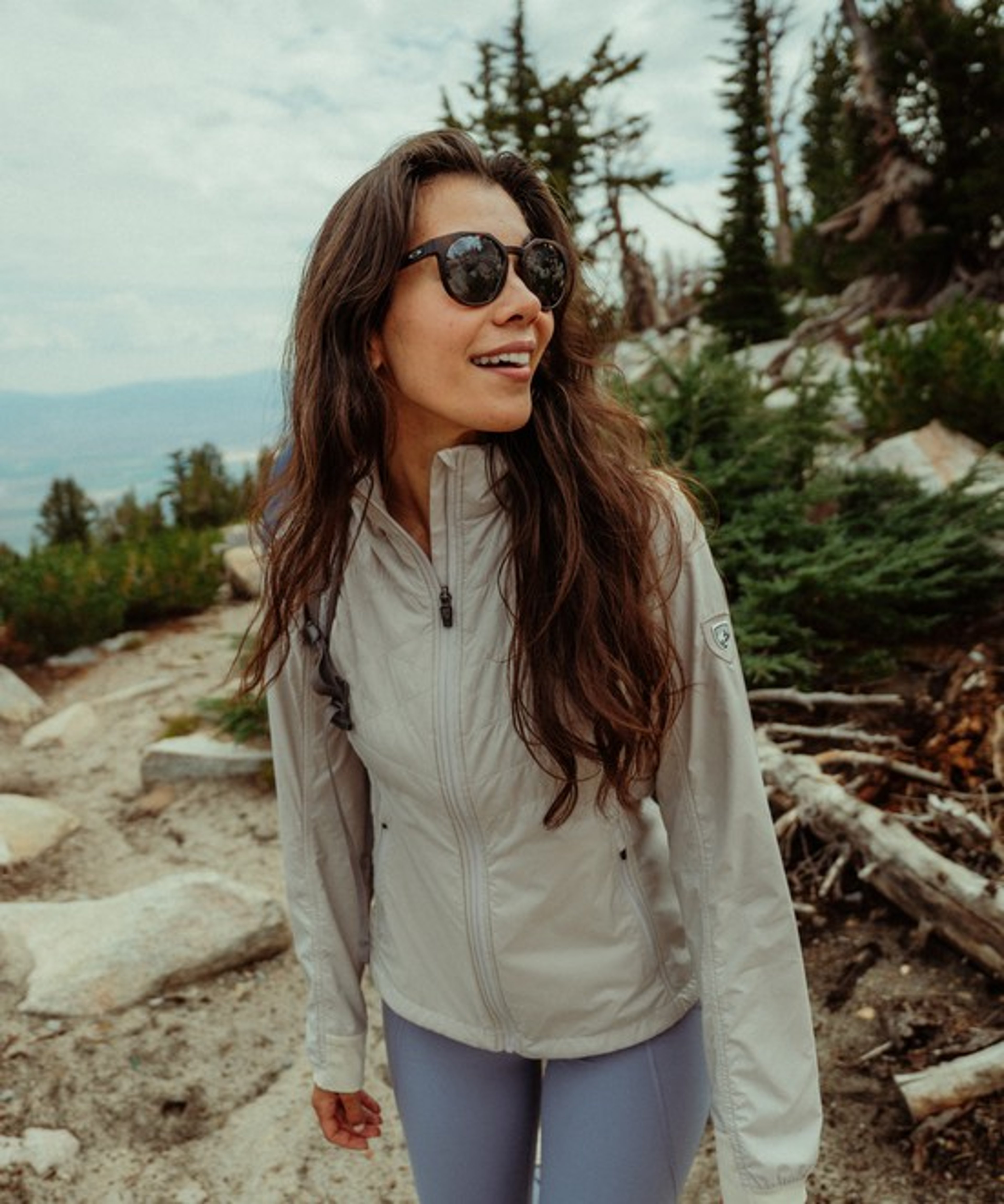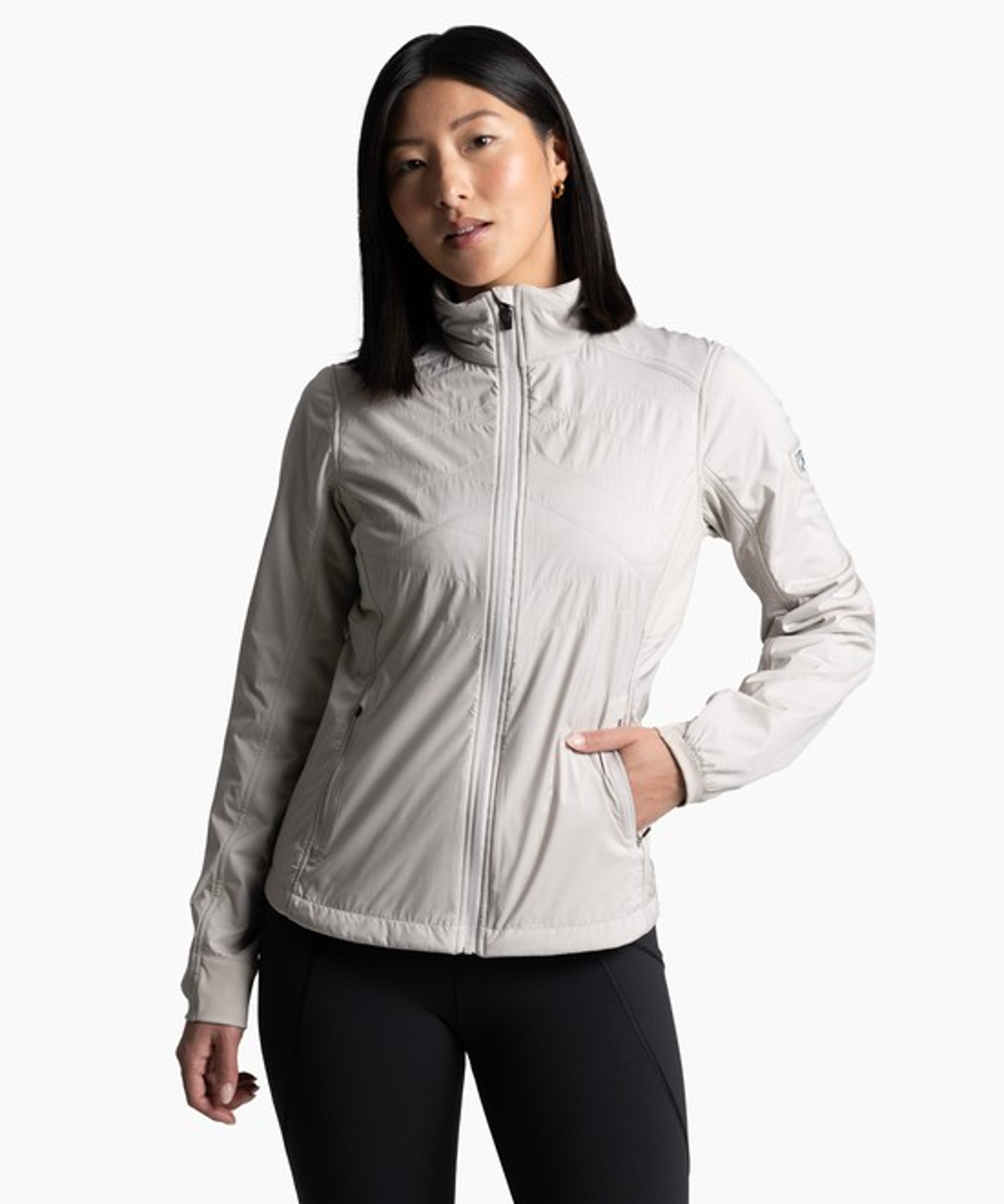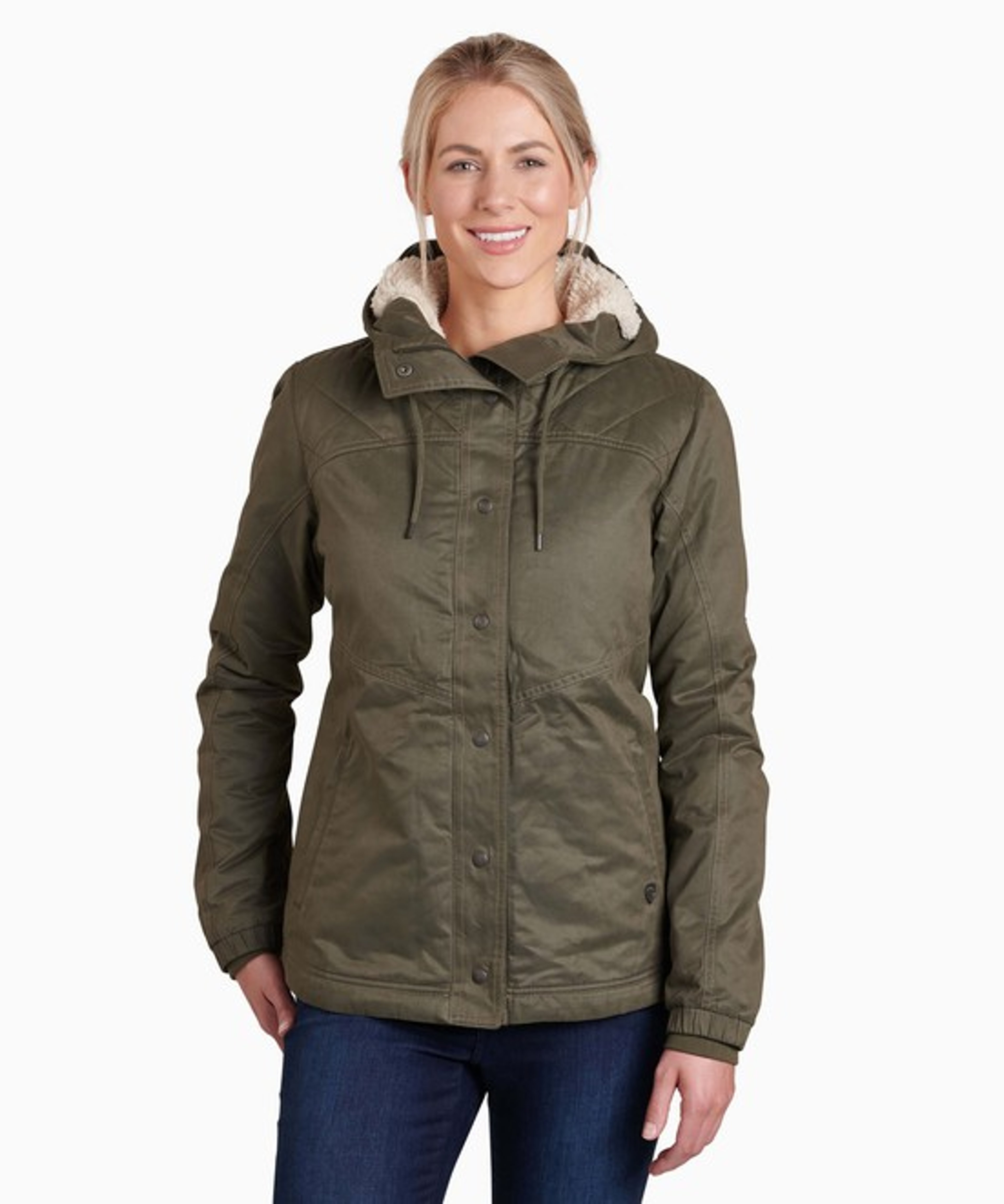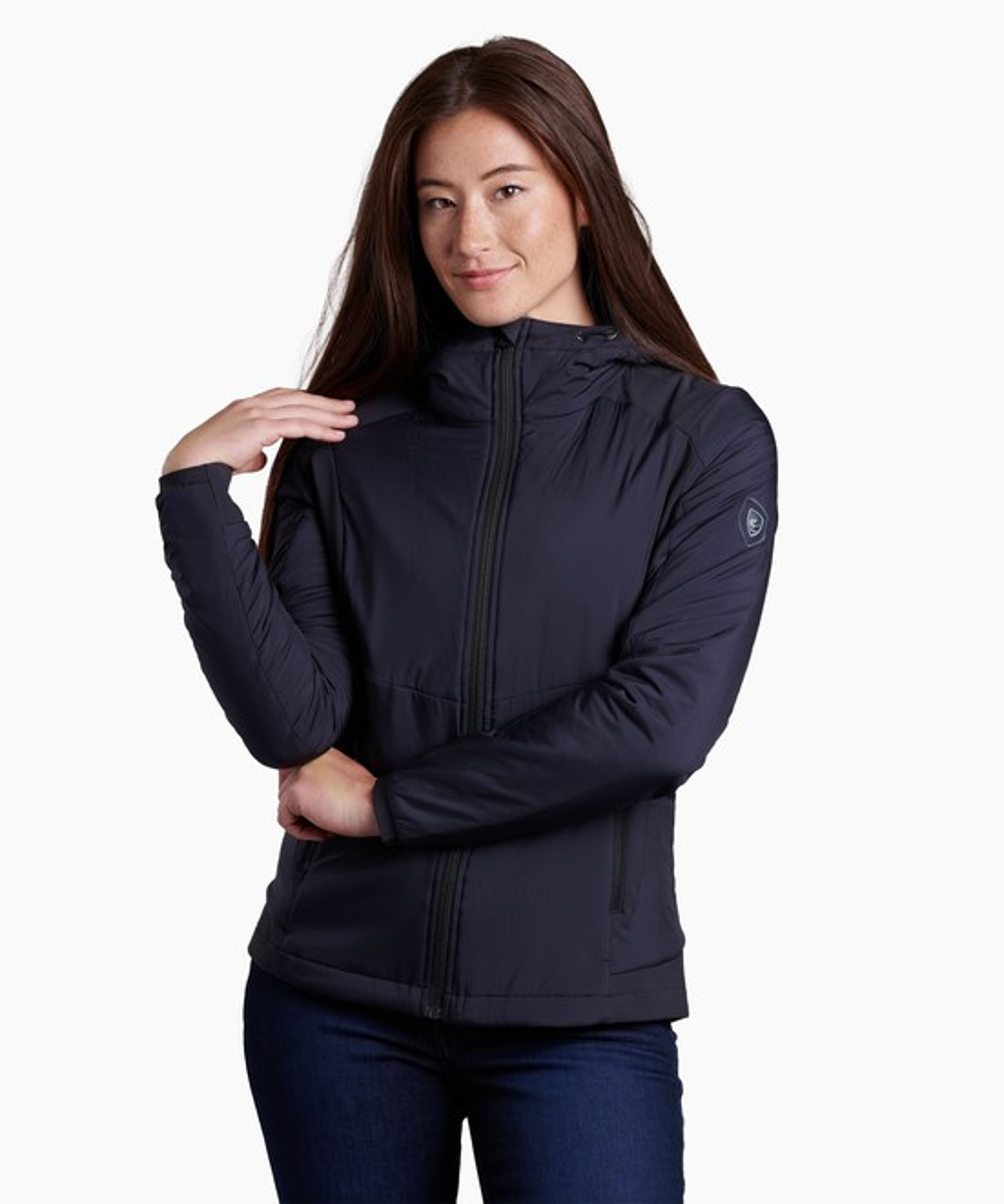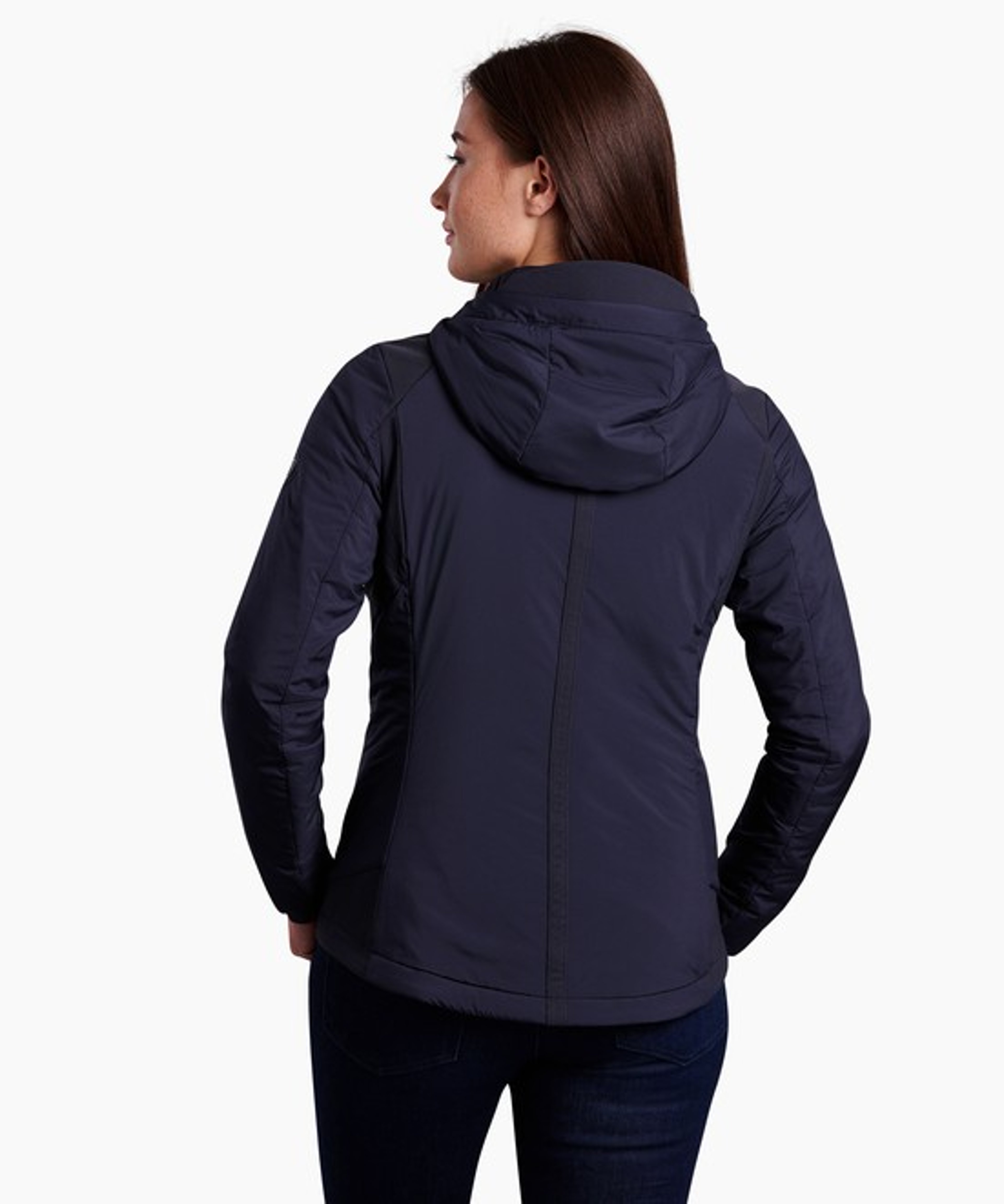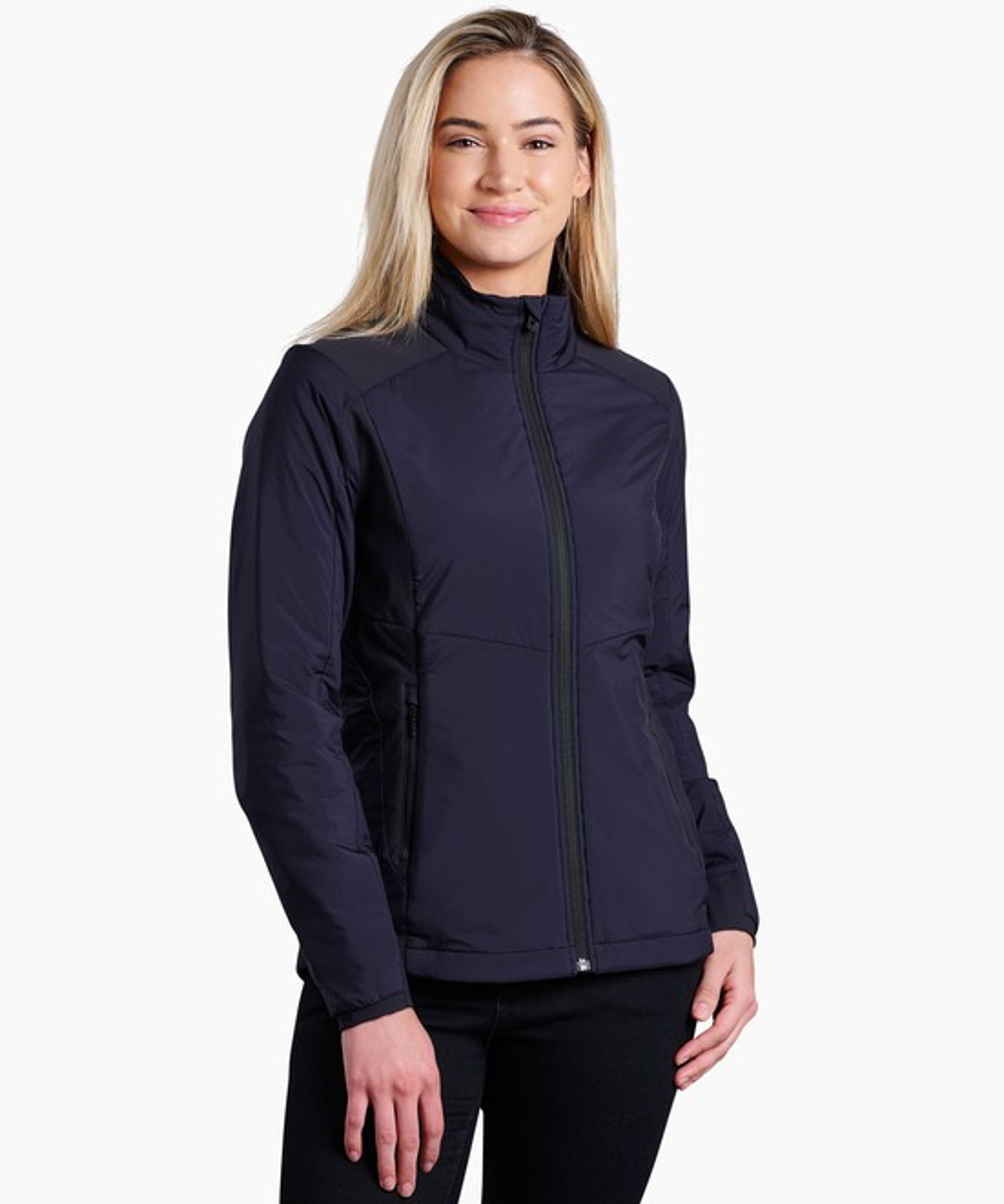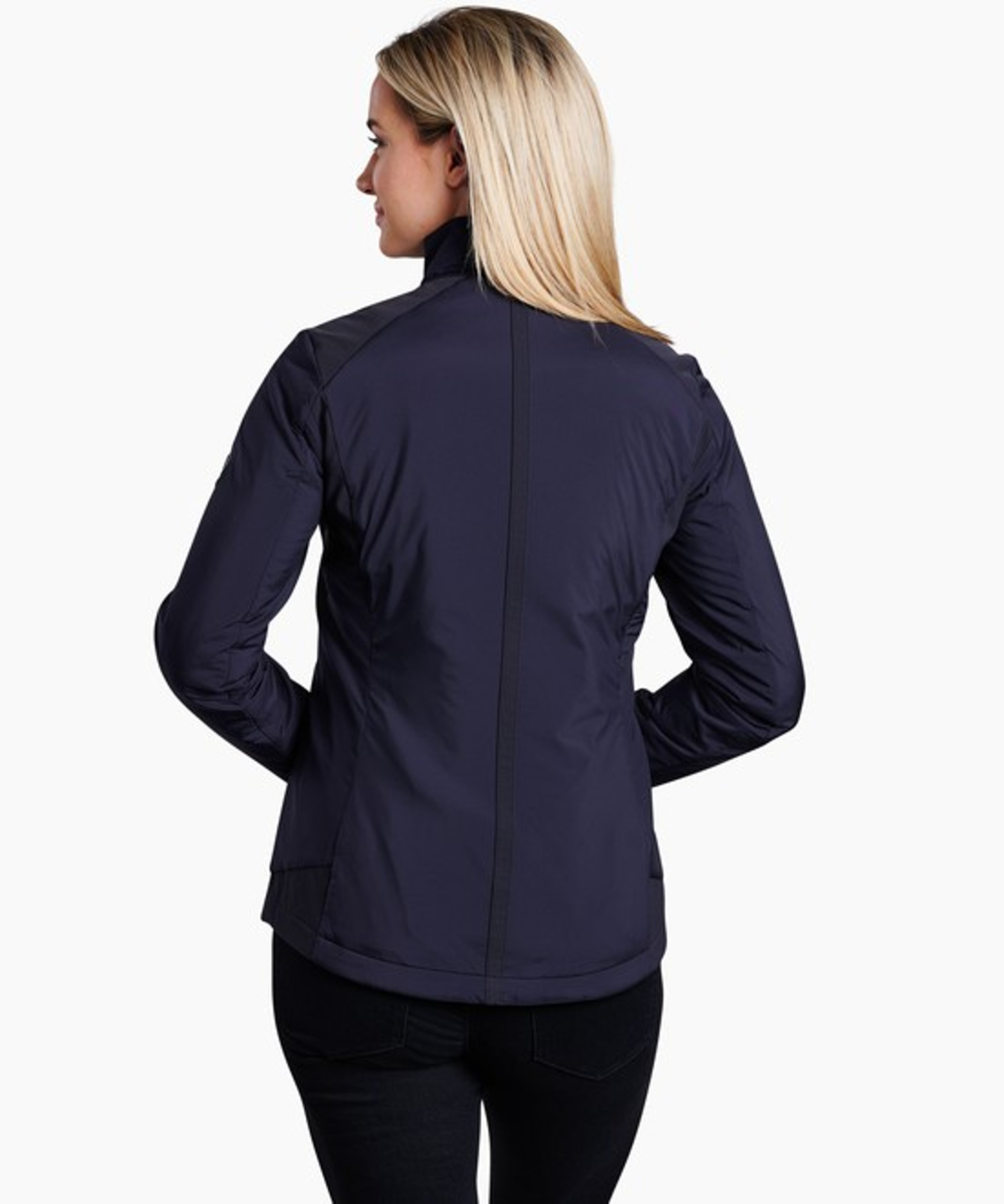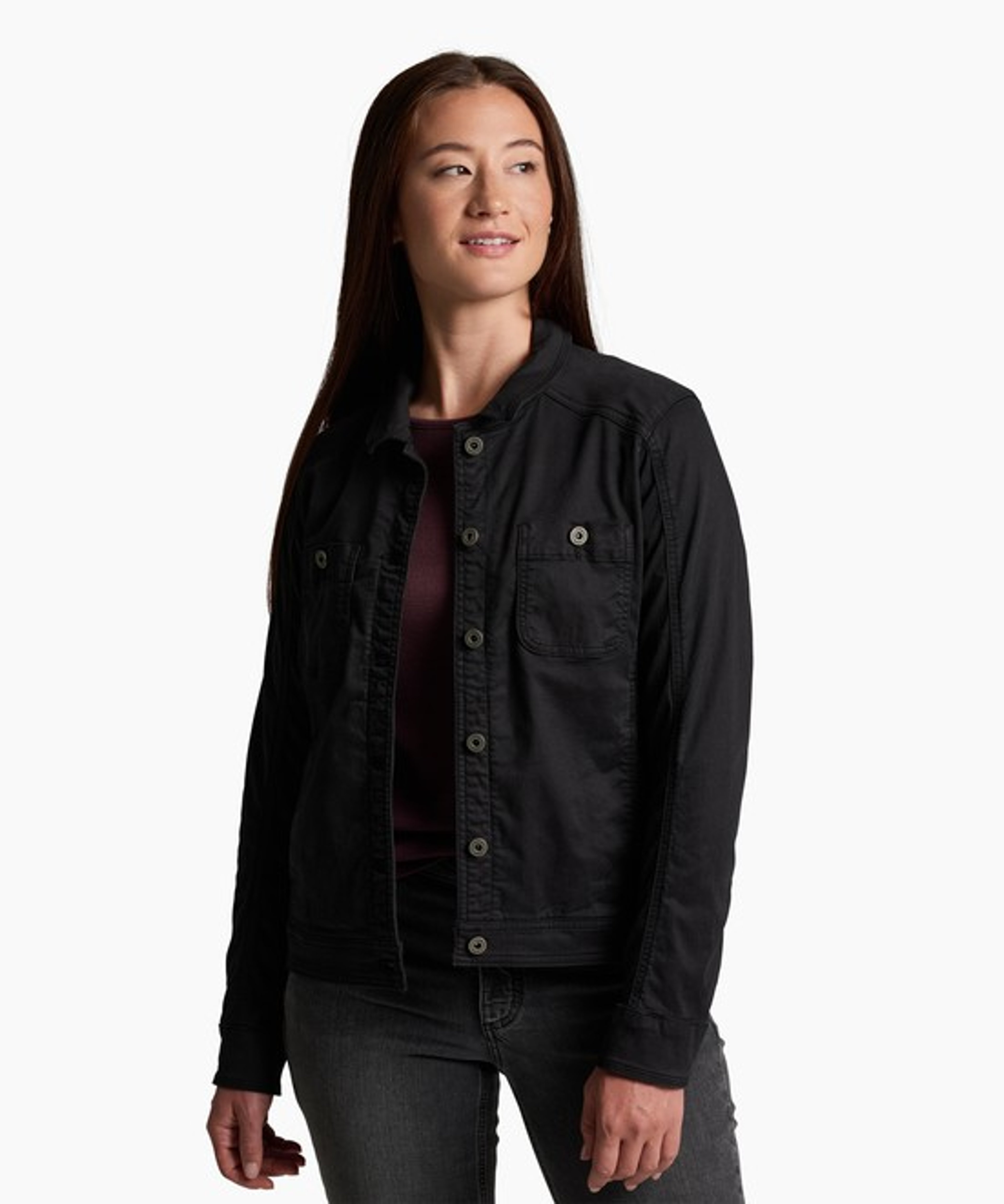




Women's Coats and Jackets
Layer Up for the Long Days Outside in KÜHL Women's Coats and Jackets
Choose from a variety of fabrics, styles, and features for the women's jacket that fits how, and where, you move:
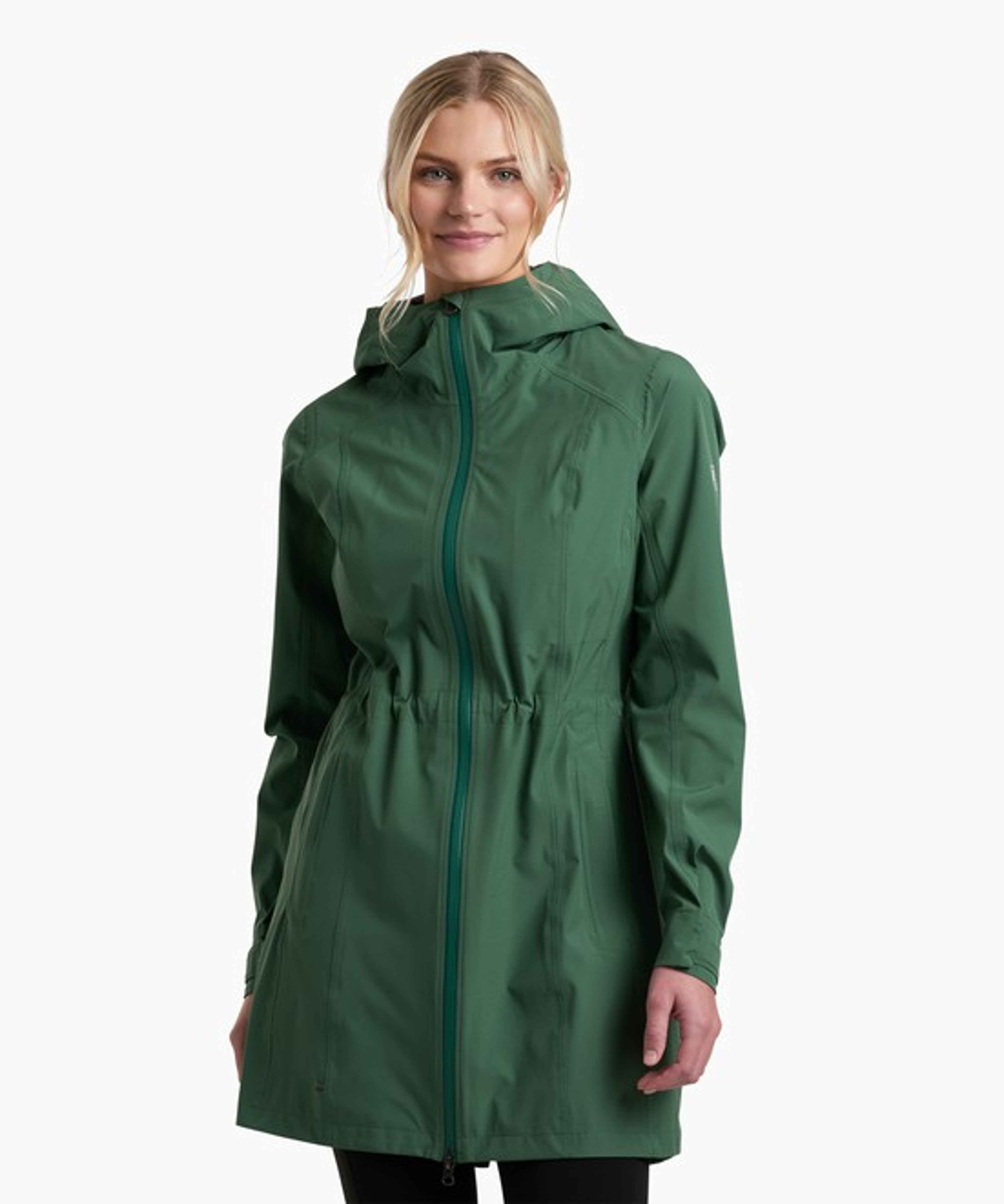
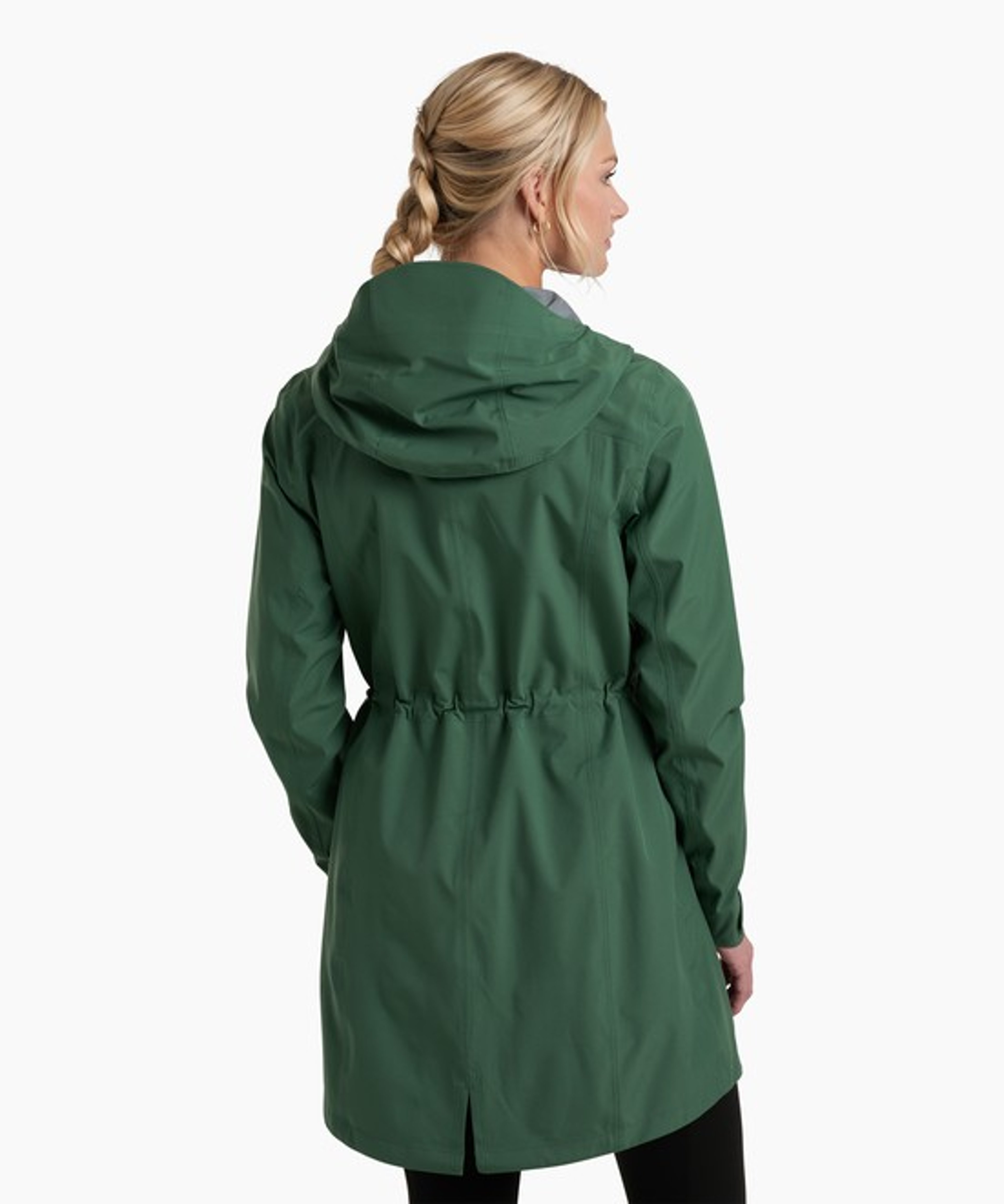
Hardshell Protection. When the forecast turns wet, a waterproof hardshell with a DWR finish, taped seams, and a helmet-compatible hood keeps sustained rain off your base and mid layers. Look for pit zips for fast venting on the climb and water-resistant zippers at the pockets, so you can stow gloves or a map without inviting moisture in. For dedicated storm coverage, see our women's rain jackets.
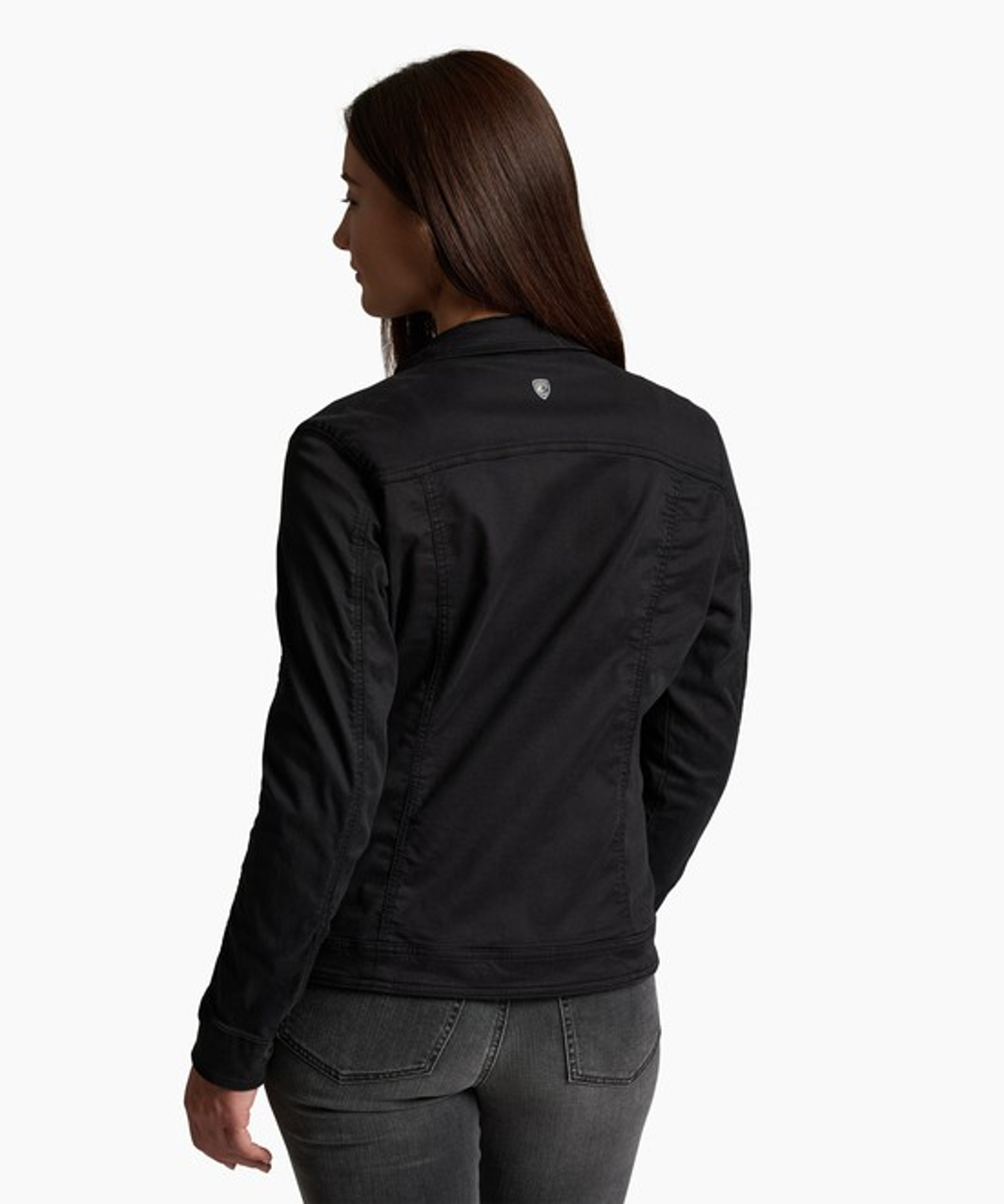
Softshell Versatility. A brushed-interior softshell with 4-way stretch handles wind, light moisture, and aerobic output without overheating. The fabric breathes on the climb and blocks gusts at the ridge, making it the layer you reach for more days than not, the everyday workhorse for shoulder seasons.
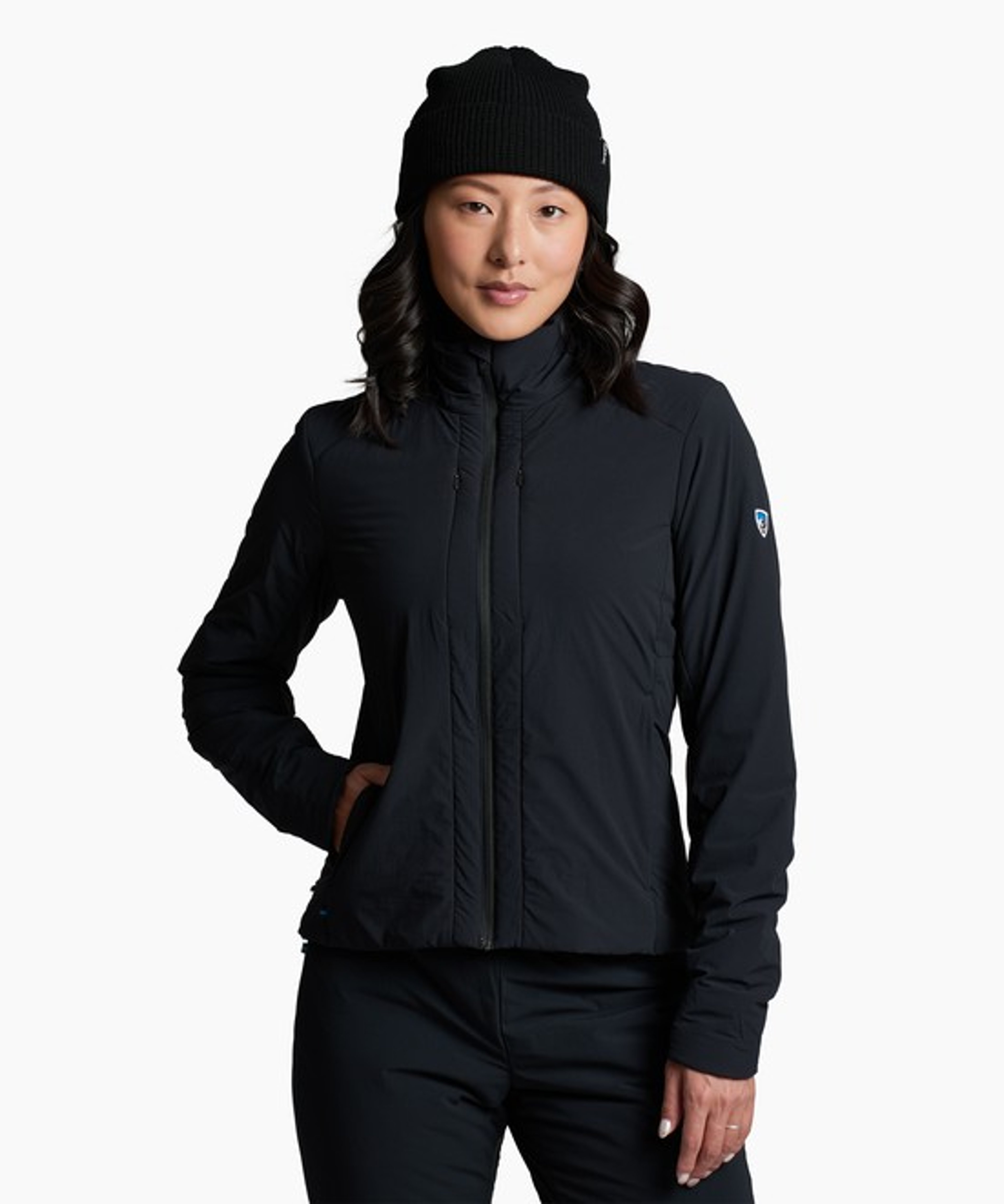
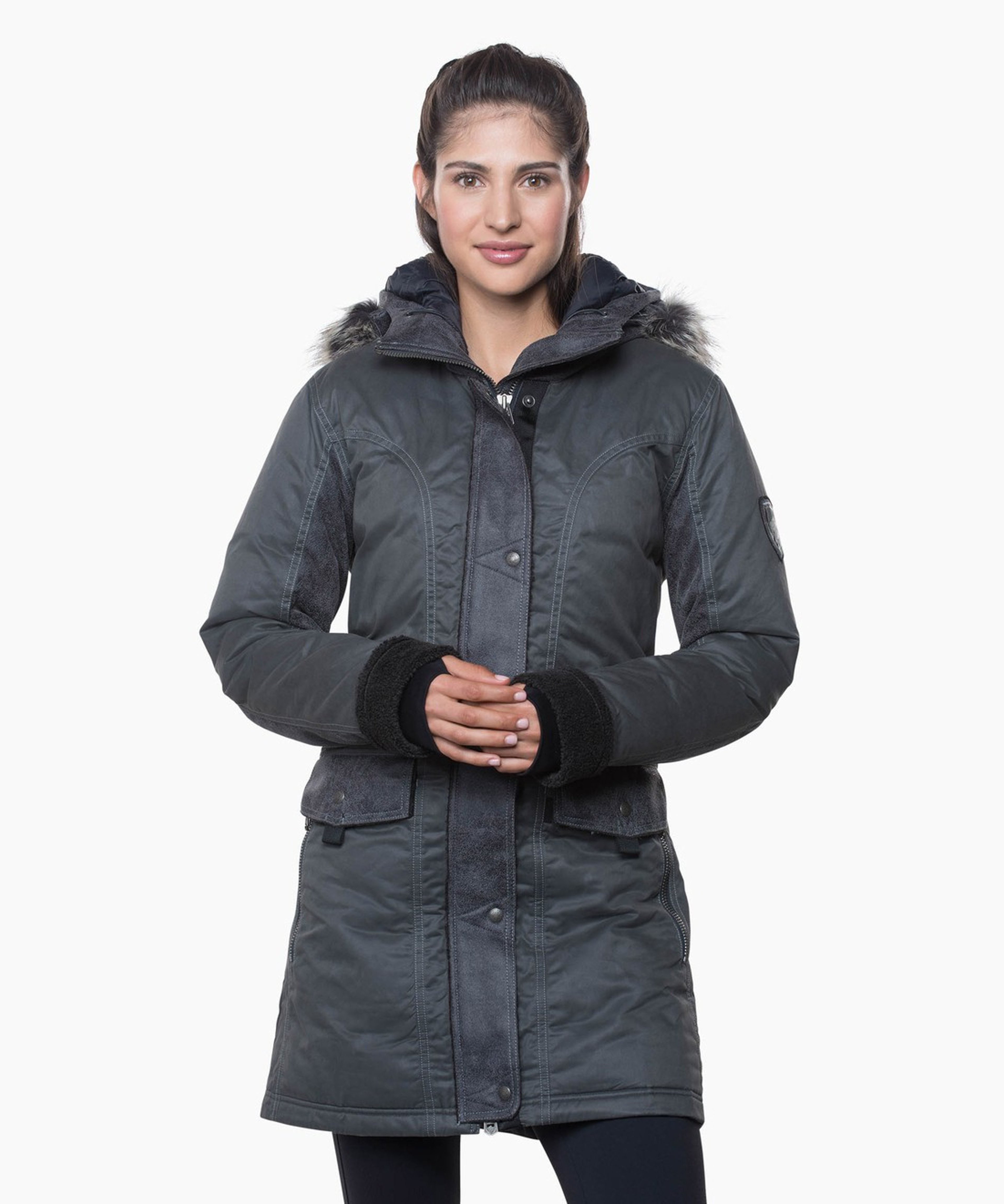
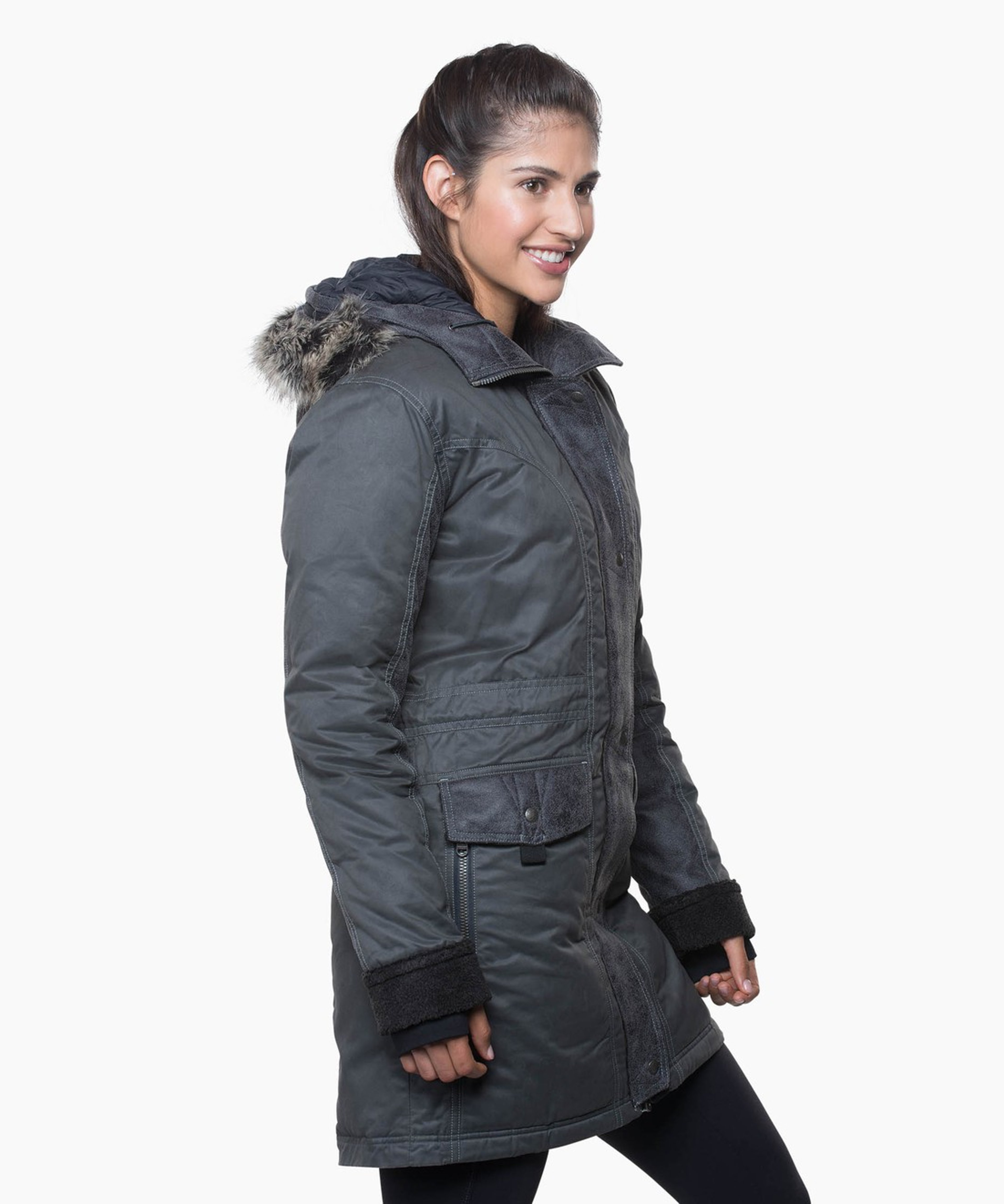
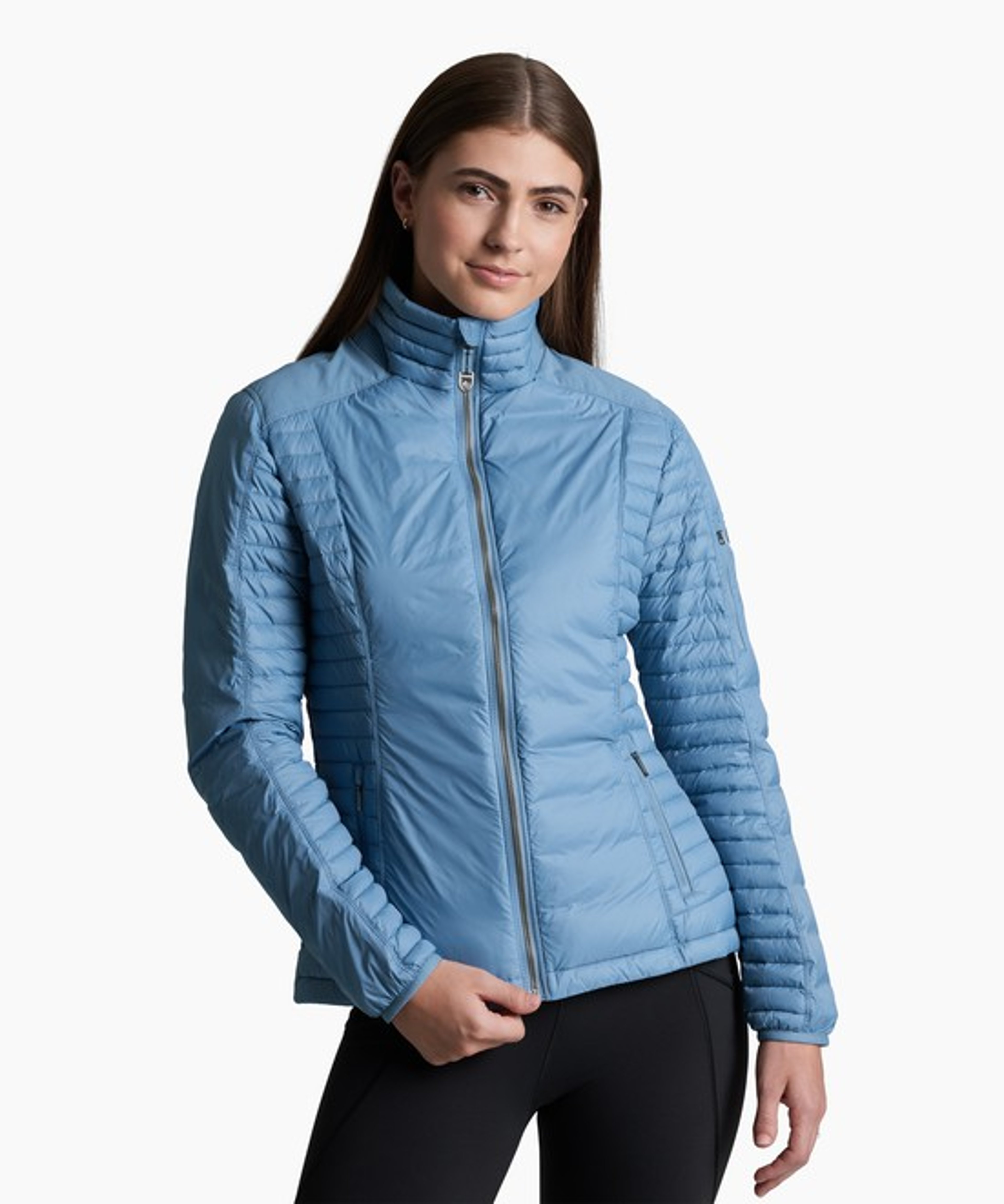
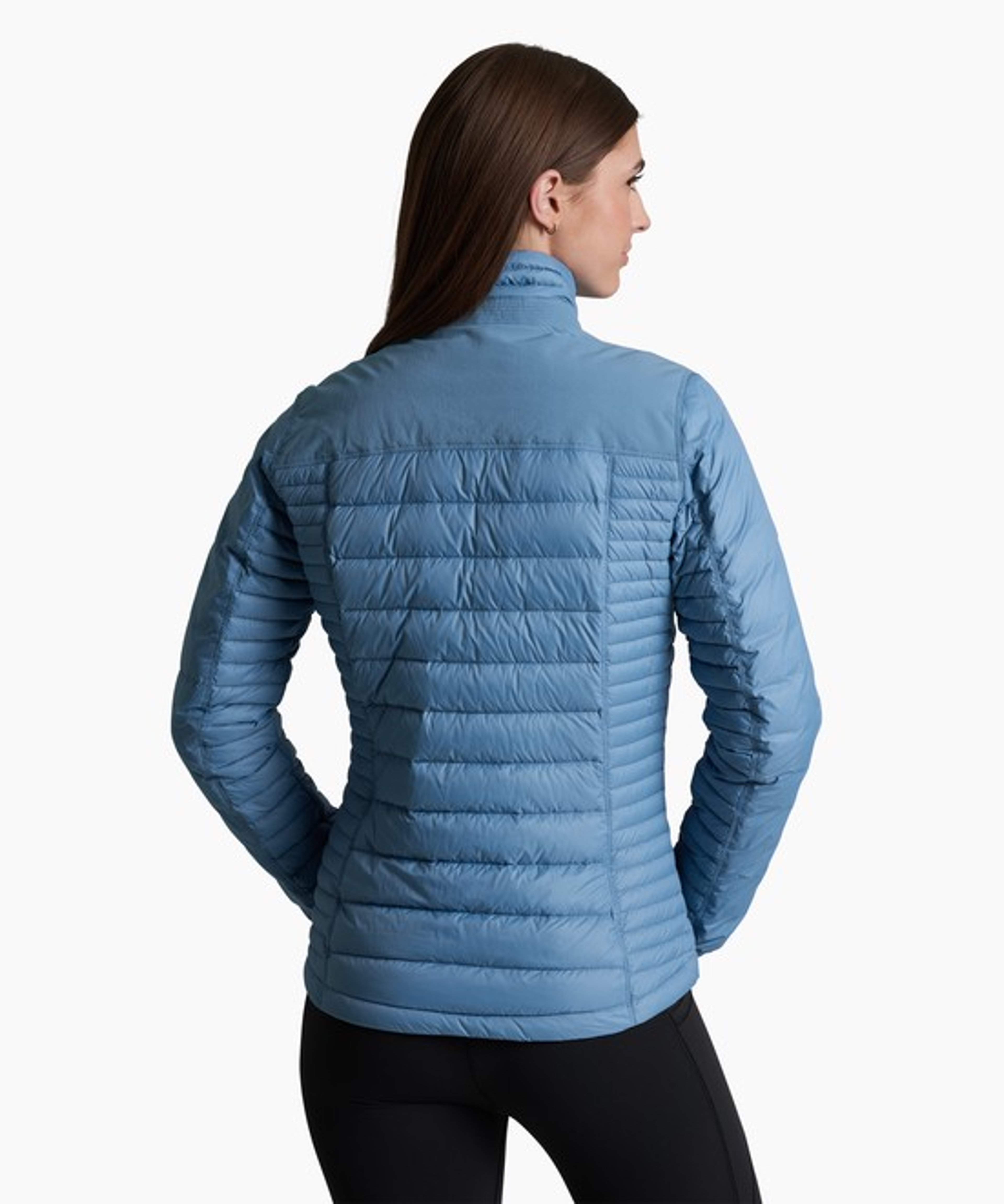
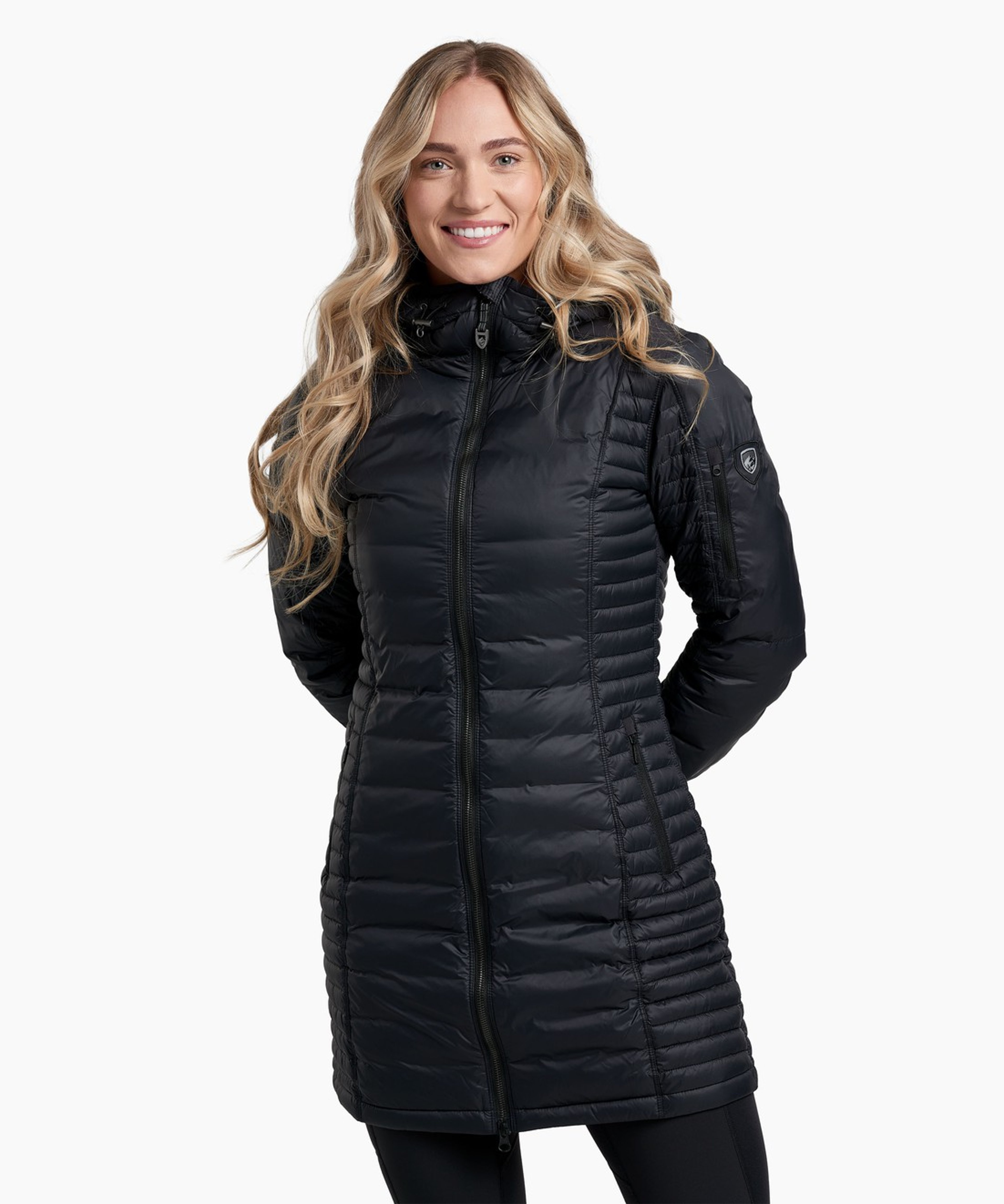
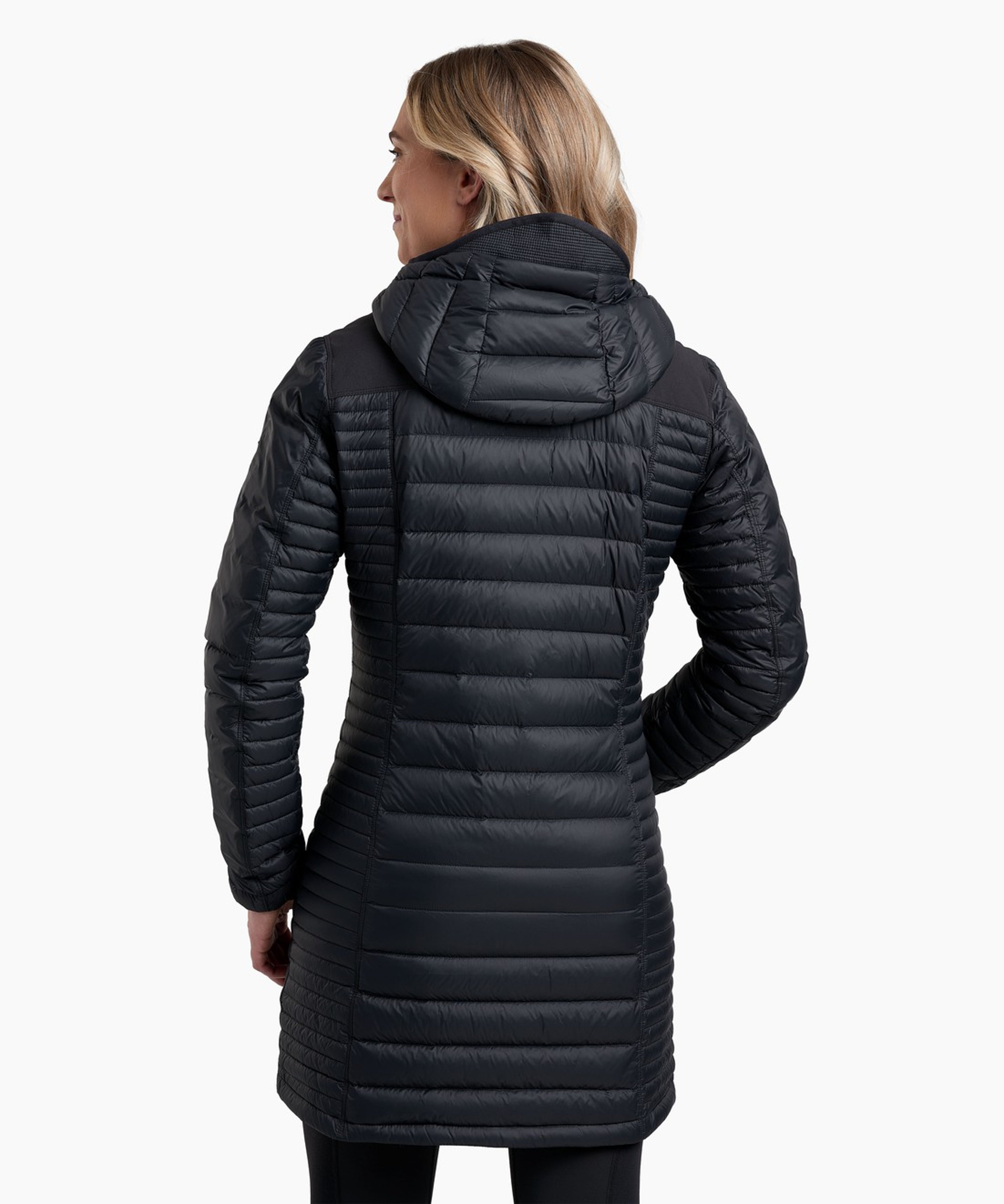
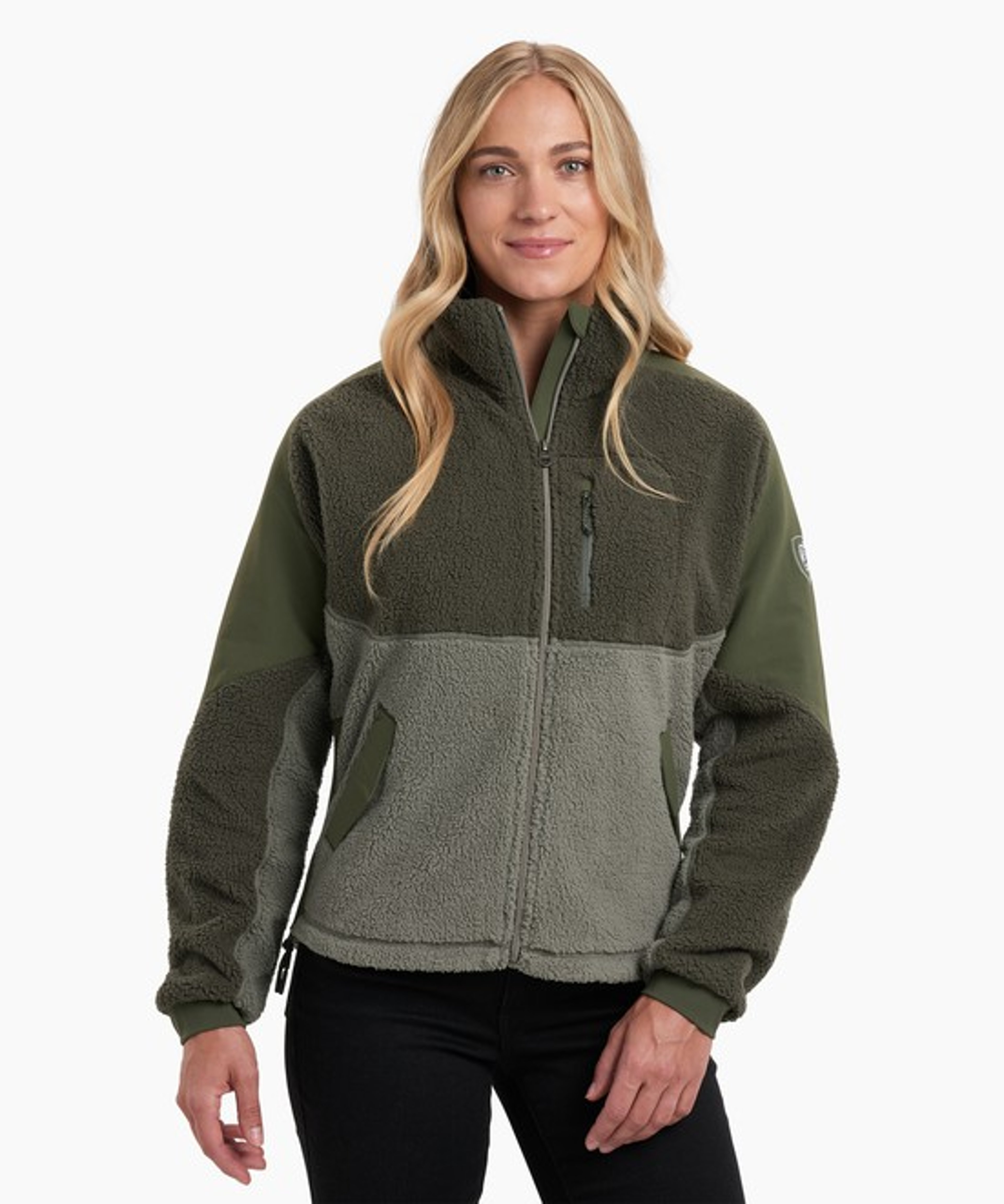
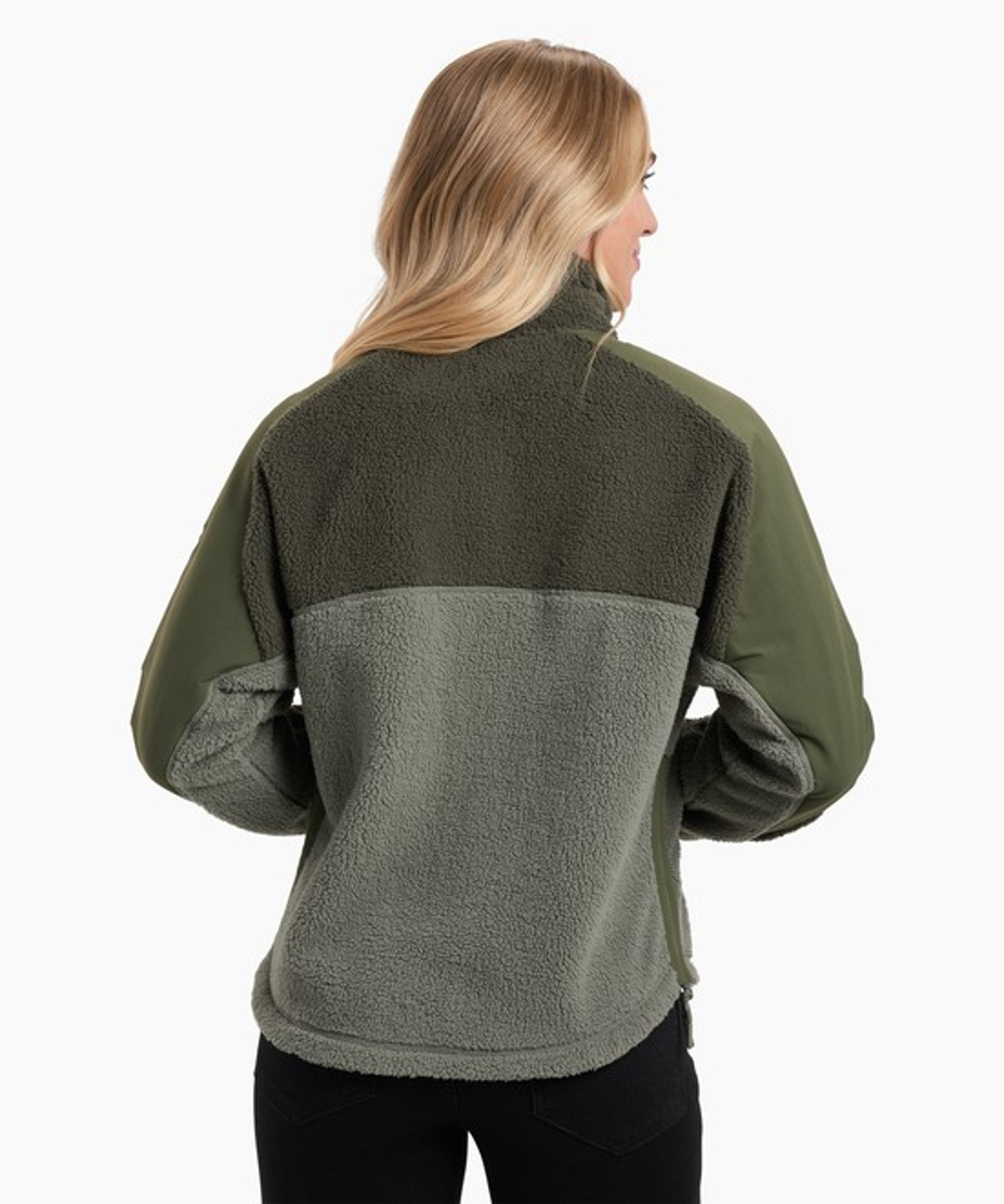
Insulated Warmth. When the temperature drops, an insulated jacket carries the system. Down delivers the best warmth-to-weight and packs tight. Synthetic fill keeps lofting when wet and dries quickly after a sweaty climb. For deeper-winter loft and packability, browse our women's down jackets.
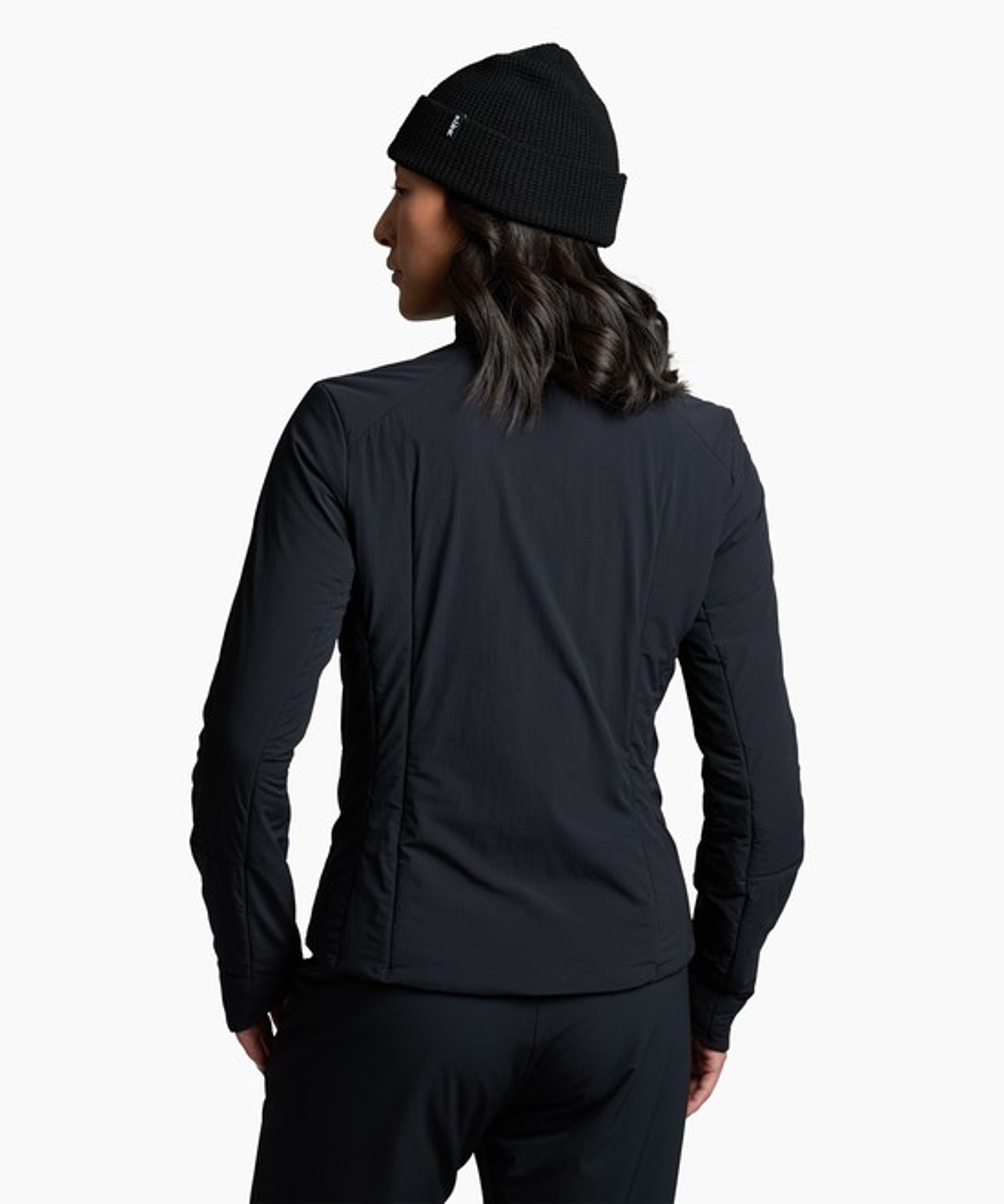
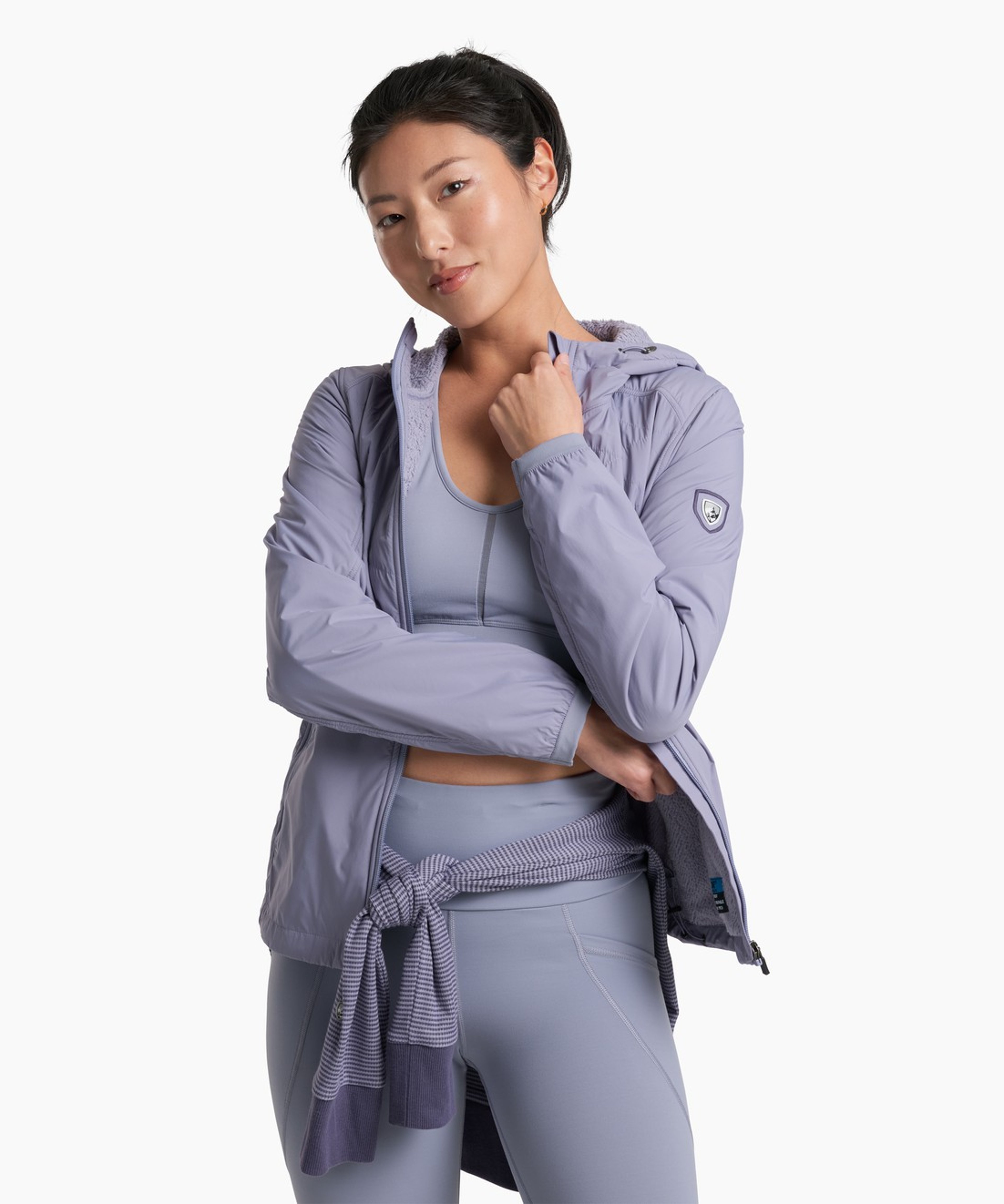
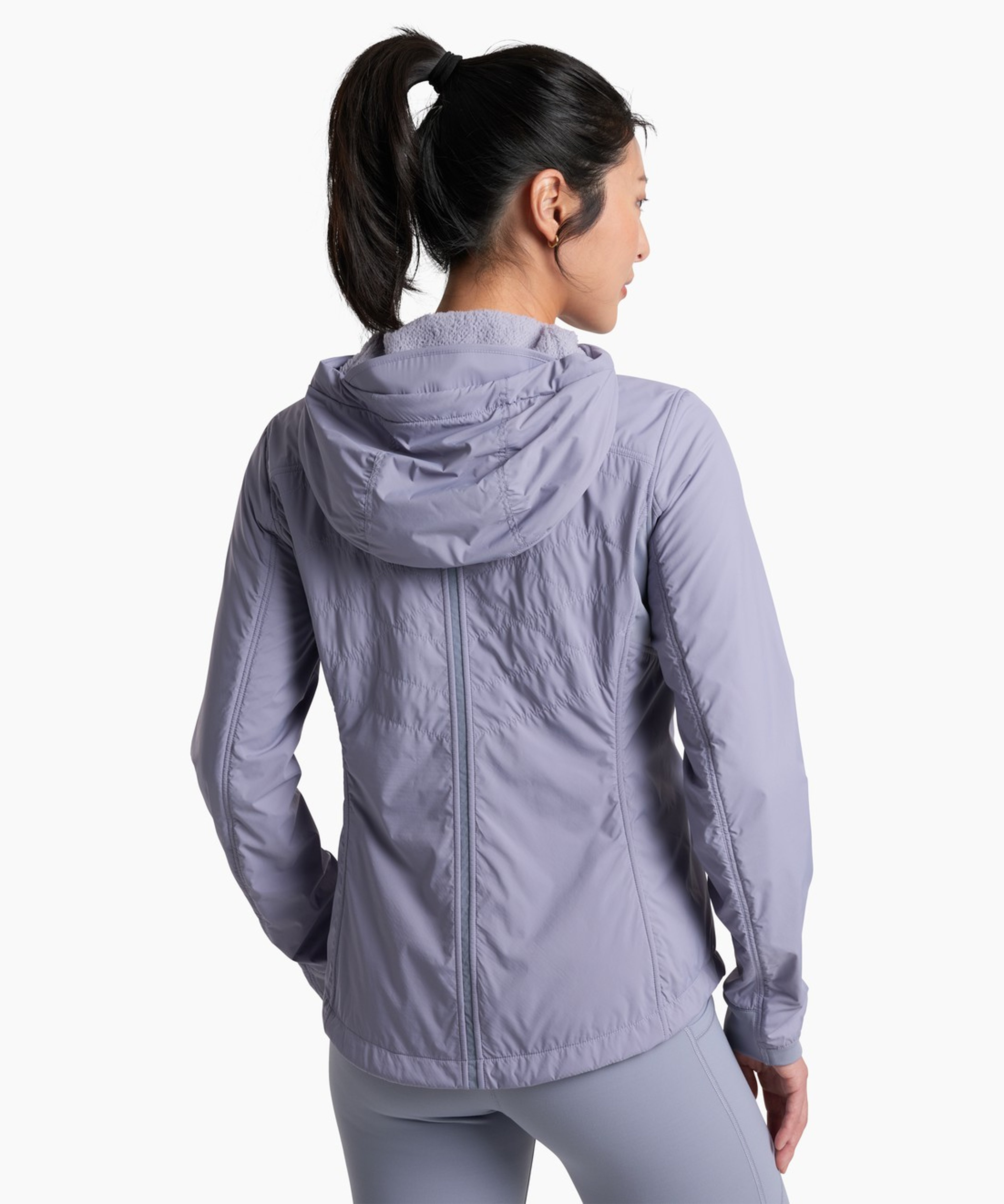
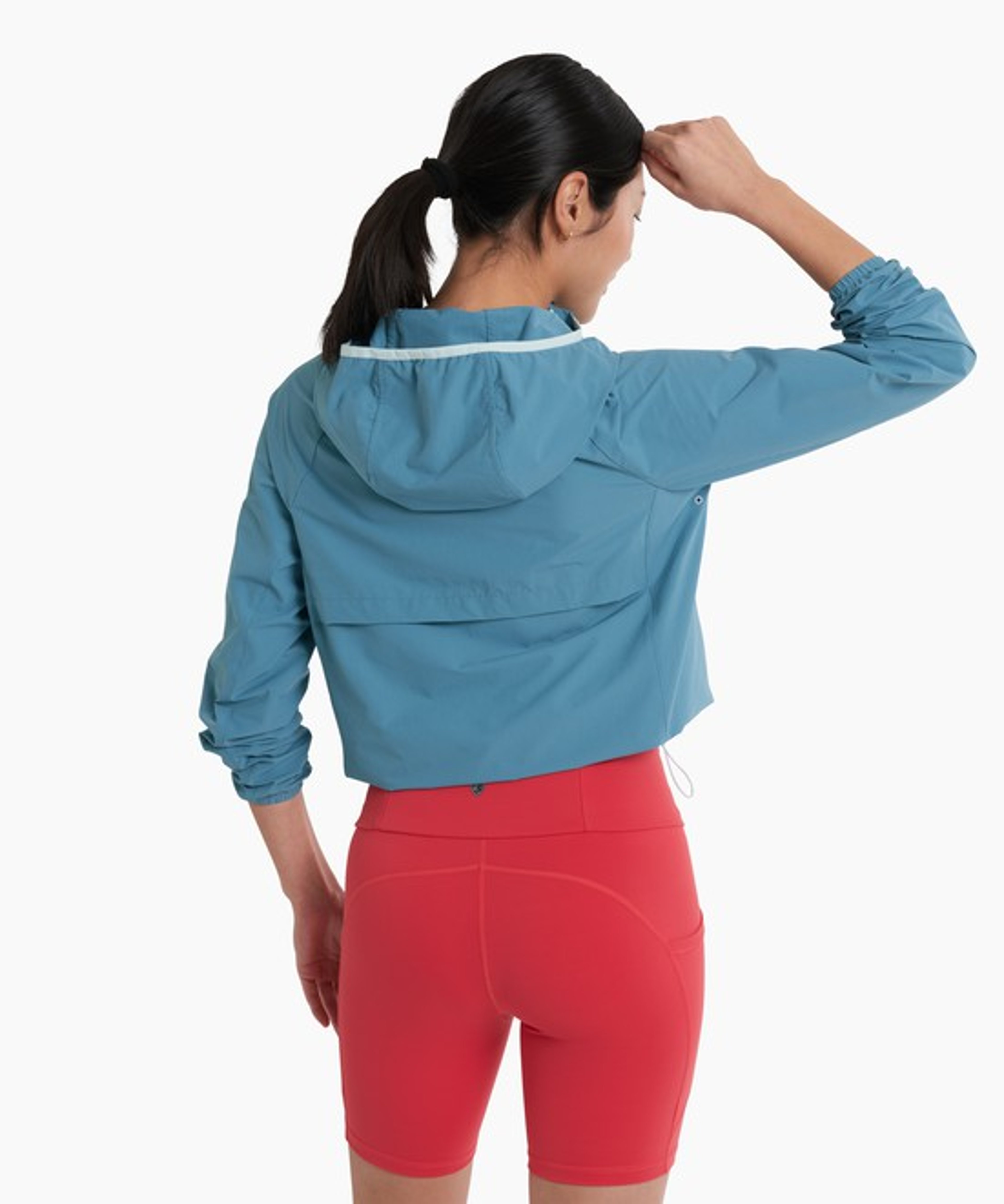
Active Layering. Cut closer to the body with articulated sleeves and thumb loops, lightweight active jackets move between the trail and the gym without restricting your reach. Quick-dry, moisture-wicking face fabrics mean a midday downpour or a hard push uphill doesn't end the day.
When choosing your jacket, look for signature touches like an adjustable, stowable hood with a laminated visor, articulated sleeves for full overhead reach, hand pockets positioned above a hipbelt, and a hem cinch to seal out wind. Pair with a women's fleece mid-layer for cold-weather systems that flex from trailhead to summit.
Choose from a variety of fabrics, styles, and features for the women's jacket that fits how, and where, you move:
Hardshell Protection. When the forecast turns wet, a waterproof hardshell with a DWR finish, taped seams, and a helmet-compatible hood keeps sustained rain off your base and mid layers. Look for pit zips for fast venting on the climb and water-resistant zippers at the pockets, so you can stow gloves or a map without inviting moisture in. For dedicated storm coverage, see our women's rain jackets.
Softshell Versatility. A brushed-interior softshell with 4-way stretch handles wind, light moisture, and aerobic output without overheating. The fabric breathes on the climb and blocks gusts at the ridge, making it the layer you reach for more days than not, the everyday workhorse for shoulder seasons.
Insulated Warmth. When the temperature drops, an insulated jacket carries the system. Down delivers the best warmth-to-weight and packs tight. Synthetic fill keeps lofting when wet and dries quickly after a sweaty climb. For deeper-winter loft and packability, browse our women's down jackets.
Active Layering. Cut closer to the body with articulated sleeves and thumb loops, lightweight active jackets move between the trail and the gym without restricting your reach. Quick-dry, moisture-wicking face fabrics mean a midday downpour or a hard push uphill doesn't end the day.
When choosing your jacket, look for signature touches like an adjustable, stowable hood with a laminated visor, articulated sleeves for full overhead reach, hand pockets positioned above a hipbelt, and a hem cinch to seal out wind. Pair with a women's fleece mid-layer for cold-weather systems that flex from trailhead to summit.
Find the right women's jacket for hike, climb, or commute: hardshell, softshell, insulated, or active layer, with the fabrics and features that matter.
What should you look for in women's coats and jackets?
Start with weather protection, then breathability, layering compatibility, and fit. The right jacket matches the day's conditions and the work you'll do in it: a packable wind layer for fast hikes, a waterproof shell for sustained rain, an insulated mid-layer for the chairlift or the campsite.
Beyond the category, the details decide it: an adjustable hood, pit zips or knit underarm gussets for ventilation, articulated sleeves that don't ride up when you reach, and pocket placement that still works under a pack hipbelt. Trim-to-regular through the body, with room for a base and a mid layer underneath, is the fit most active women want.
Beyond the category, the details decide it: an adjustable hood, pit zips or knit underarm gussets for ventilation, articulated sleeves that don't ride up when you reach, and pocket placement that still works under a pack hipbelt. Trim-to-regular through the body, with room for a base and a mid layer underneath, is the fit most active women want.
What's the difference between a hardshell, softshell, and insulated jacket?
Hardshells are fully waterproof, softshells are wind- and weather-resistant with stretch, and insulated jackets are built for warmth.
A hardshell uses a waterproof membrane, taped seams, and a DWR finish on the face fabric to block sustained rain and snow, your top layer when the weather turns. A softshell trades full waterproofing for breathability, stretch, and a brushed interior. It handles wind, light moisture, and high-output movement on cool days. An insulated jacket carries down or synthetic fill to trap warmth, worn as a mid-layer under a shell or as a standalone piece in dry cold. Many active women own one of each.
A hardshell uses a waterproof membrane, taped seams, and a DWR finish on the face fabric to block sustained rain and snow, your top layer when the weather turns. A softshell trades full waterproofing for breathability, stretch, and a brushed interior. It handles wind, light moisture, and high-output movement on cool days. An insulated jacket carries down or synthetic fill to trap warmth, worn as a mid-layer under a shell or as a standalone piece in dry cold. Many active women own one of each.
How do you choose between down and synthetic insulation?
Choose down for the best warmth-to-weight and packability, and synthetic when you expect wet, sweaty, or unpredictable conditions.
Higher fill-power down delivers more loft per gram than any synthetic and compresses smaller in a pack, which is why it dominates cold, dry alpine and winter use. The trade-off is wet performance: traditional down loses loft when soaked. Synthetic insulation keeps insulating when damp and dries faster, making it the smarter choice for shoulder-season hiking, climbing, or anywhere humidity and sweat are a factor. If you want a single piece that covers most days, a hybrid build (down at the core, synthetic at the underarms and cuffs) is hard to beat.
Higher fill-power down delivers more loft per gram than any synthetic and compresses smaller in a pack, which is why it dominates cold, dry alpine and winter use. The trade-off is wet performance: traditional down loses loft when soaked. Synthetic insulation keeps insulating when damp and dries faster, making it the smarter choice for shoulder-season hiking, climbing, or anywhere humidity and sweat are a factor. If you want a single piece that covers most days, a hybrid build (down at the core, synthetic at the underarms and cuffs) is hard to beat.
Are coats and jackets waterproof or just water-resistant?
It depends on the construction. A DWR finish handles light moisture. A taped-seam waterproof membrane handles sustained rain.
Most softshell, fleece, and insulated jackets carry a DWR (durable water repellent) finish that beads off drizzle and brief showers but isn't built for a steady downpour. Dedicated rain protection uses a 2.5- or 3-layer waterproof membrane with fully taped seams and water-resistant zippers, the construction you want when the storm doesn't quit. Check the spec: if it doesn't list seam taping and a membrane, treat the piece as water-resistant only and pair it with a true rain shell when the forecast calls for it.
Most softshell, fleece, and insulated jackets carry a DWR (durable water repellent) finish that beads off drizzle and brief showers but isn't built for a steady downpour. Dedicated rain protection uses a 2.5- or 3-layer waterproof membrane with fully taped seams and water-resistant zippers, the construction you want when the storm doesn't quit. Check the spec: if it doesn't list seam taping and a membrane, treat the piece as water-resistant only and pair it with a true rain shell when the forecast calls for it.
How should a coats and jackets fit for layering?
A layering-friendly jacket fits trim through the torso but leaves room for a base and a mid layer without binding at the shoulders or arms.
When you try one on, wear what you'd actually wear underneath, a base top and a fleece or insulator, and check three things: can you reach straight overhead without the hem riding above your hipbelt, can you cross your arms at the chest without pulling, and does the hood adjust over a hat or a helmet without blocking vision. Articulated sleeves and a slightly dropped hem are the construction details that make all three work. A jacket that fits perfectly over a t-shirt is the wrong jacket. It'll bind the moment the weather makes you layer up.
When you try one on, wear what you'd actually wear underneath, a base top and a fleece or insulator, and check three things: can you reach straight overhead without the hem riding above your hipbelt, can you cross your arms at the chest without pulling, and does the hood adjust over a hat or a helmet without blocking vision. Articulated sleeves and a slightly dropped hem are the construction details that make all three work. A jacket that fits perfectly over a t-shirt is the wrong jacket. It'll bind the moment the weather makes you layer up.
What features matter most when hiking or backpacking?
Ventilation, hood adjustability, and pocket placement above a hipbelt are the three features that decide whether a jacket works on a long day under load.
Pit zips matter more than fabric weight on steep climbs. They dump heat fast without forcing you to stop and strip a layer. An adjustable, stowable hood with a laminated visor keeps rain off your face on exposed ridges and tucks away when the sky clears. Chest and bicep pockets stay reachable when a pack hipbelt covers the lower pockets, and a packable build that stuffs into its own pocket or pack lid means you'll actually carry the jacket on a maybe-rain day. For active days that don't need a full storm shell, layer one of our women's softshell jackets under a packable wind layer.
Pit zips matter more than fabric weight on steep climbs. They dump heat fast without forcing you to stop and strip a layer. An adjustable, stowable hood with a laminated visor keeps rain off your face on exposed ridges and tucks away when the sky clears. Chest and bicep pockets stay reachable when a pack hipbelt covers the lower pockets, and a packable build that stuffs into its own pocket or pack lid means you'll actually carry the jacket on a maybe-rain day. For active days that don't need a full storm shell, layer one of our women's softshell jackets under a packable wind layer.
New Colors