



Waterproof Breathable
Shut Out the Weather Without Sealing In the Sweat
KÜHL men's waterproof breathable jackets are built for storm protection that still lets you climb, hike, and move at pace. Choose from a variety of constructions, weights, and features for the men's waterproof breathable jacket that's right for you:
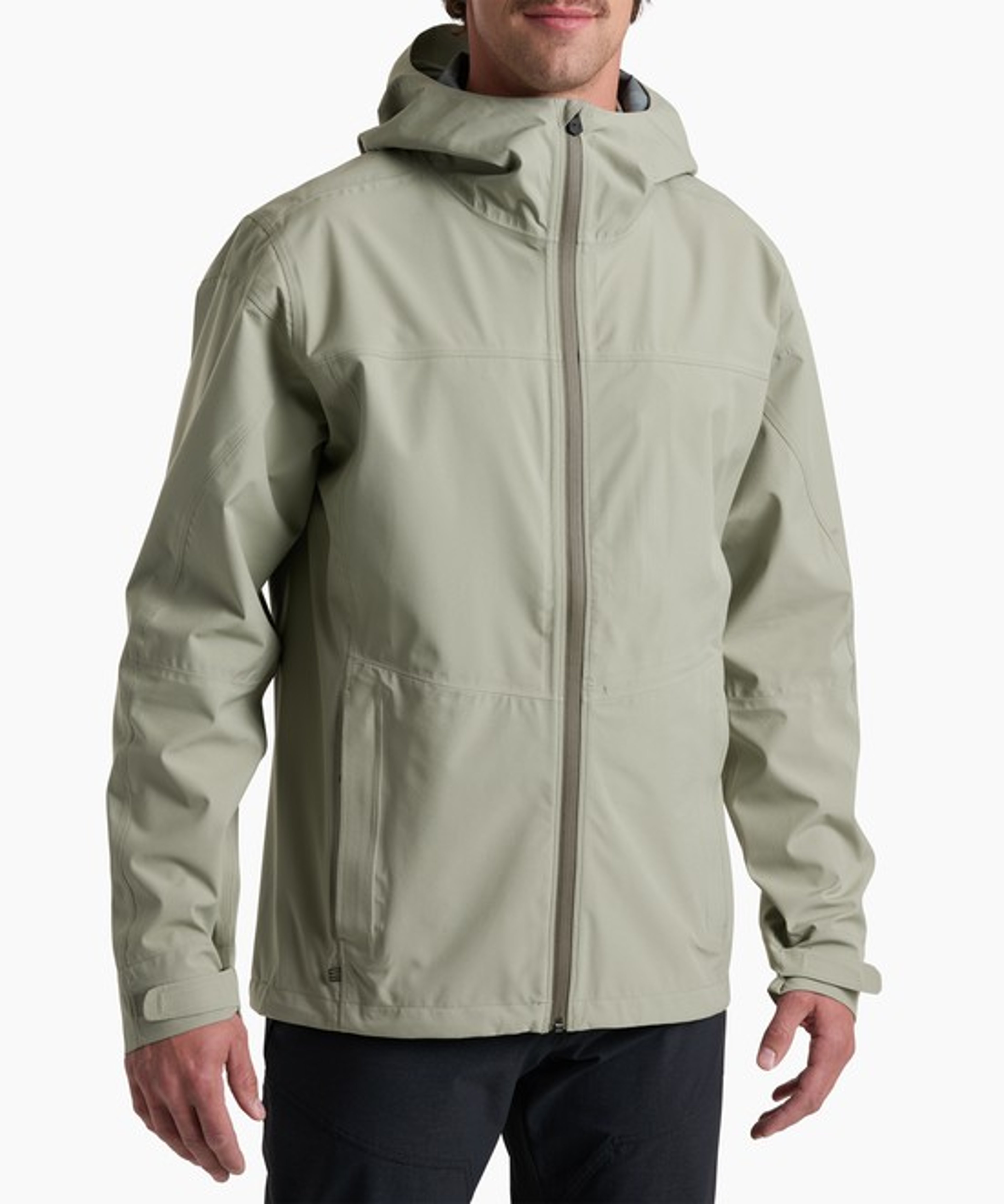
Hardshell Storm Protection. When the forecast turns serious, a fully waterproof hardshell with taped seams and a water-repellent zipper is the difference between a long day out and a forced retreat. Look for 3-layer construction, a DWR finish that beads off light rain before the membrane has to work, and a helmet-compatible hood with a laminated visor that holds its shape in wind-driven rain.
Lightweight Stretch Shell. Not every wet day calls for full armor. A lightweight shell built with 4-way stretch and a soft, quiet face fabric layers easily under a pack and stuffs down small for spring and shoulder-season hikes. The right one shrugs off passing showers and breathes hard on long climbs without ever feeling clammy. For drier, breezier conditions where a full membrane is overkill, our men's windbreakers cover the same packable territory.
Insulated Wet-Weather Performance. For cold, wet days where standing still turns miserable fast, a waterproof breathable shell with synthetic insulation holds warmth even when conditions push moisture through every layer. Synthetic fill keeps insulating when damp, the right call for variable winter weather where a men's down jacket would lose loft in sustained rain.
Alpine-Ready Durability. Ripstop face fabrics resist brush and pack abrasion on rough trails, while articulated sleeves and gusseted underarm panels let you reach overhead without the hem riding up. Pit zips dump heat fast on steep climbs. Adjustable cuffs and a drawcord hem seal out wind when the weather closes in.
When choosing the right shell, look for signature touches like taped seams at every join, water-repellent zippers, a stowable adjustable hood, and pockets positioned high enough to clear a hip belt. For drier, more flexible everyday wear, our men's softshell jackets deliver stretch and breathability without the full membrane.
KÜHL men's waterproof breathable jackets are built for storm protection that still lets you climb, hike, and move at pace. Choose from a variety of constructions, weights, and features for the men's waterproof breathable jacket that's right for you:
Hardshell Storm Protection. When the forecast turns serious, a fully waterproof hardshell with taped seams and a water-repellent zipper is the difference between a long day out and a forced retreat. Look for 3-layer construction, a DWR finish that beads off light rain before the membrane has to work, and a helmet-compatible hood with a laminated visor that holds its shape in wind-driven rain.
Lightweight Stretch Shell. Not every wet day calls for full armor. A lightweight shell built with 4-way stretch and a soft, quiet face fabric layers easily under a pack and stuffs down small for spring and shoulder-season hikes. The right one shrugs off passing showers and breathes hard on long climbs without ever feeling clammy. For drier, breezier conditions where a full membrane is overkill, our men's windbreakers cover the same packable territory.
Insulated Wet-Weather Performance. For cold, wet days where standing still turns miserable fast, a waterproof breathable shell with synthetic insulation holds warmth even when conditions push moisture through every layer. Synthetic fill keeps insulating when damp, the right call for variable winter weather where a men's down jacket would lose loft in sustained rain.
Alpine-Ready Durability. Ripstop face fabrics resist brush and pack abrasion on rough trails, while articulated sleeves and gusseted underarm panels let you reach overhead without the hem riding up. Pit zips dump heat fast on steep climbs. Adjustable cuffs and a drawcord hem seal out wind when the weather closes in.
When choosing the right shell, look for signature touches like taped seams at every join, water-repellent zippers, a stowable adjustable hood, and pockets positioned high enough to clear a hip belt. For drier, more flexible everyday wear, our men's softshell jackets deliver stretch and breathability without the full membrane.
Find a men's waterproof breathable jacket that holds up to sustained rain, breathes on the climb, and layers without bind. Here's how to choose.
What should you look for in men's waterproof breathable jackets?
The right shell balances four things: weather protection level, breathability under exertion, layering compatibility, and trail-honest fit.
Start with how wet you'll get: a 3-layer hardshell with taped seams handles sustained rain. A 2.5-layer or stretch shell trades some protection for weight and packability. Then check breathability: pit zips, mesh-backed vents, and an air-permeable membrane keep sweat from soaking you from the inside on a climb. Make sure there's room for a base layer and a mid-weight insulation piece without binding through the shoulders, and confirm the hood actually adjusts to your head: a floppy hood costs you more visibility in rain than any feature can give back.
Start with how wet you'll get: a 3-layer hardshell with taped seams handles sustained rain. A 2.5-layer or stretch shell trades some protection for weight and packability. Then check breathability: pit zips, mesh-backed vents, and an air-permeable membrane keep sweat from soaking you from the inside on a climb. Make sure there's room for a base layer and a mid-weight insulation piece without binding through the shoulders, and confirm the hood actually adjusts to your head: a floppy hood costs you more visibility in rain than any feature can give back.
What's the difference between a hardshell, softshell, and insulated jacket?
A hardshell is a fully waterproof outer shell built around a membrane. A softshell is a stretchy, breathable woven that handles wind and light moisture. An insulated jacket adds warmth via down or synthetic fill.
Hardshells live in your pack for the worst weather: sustained rain, wet snow, alpine wind. Softshells get worn most often: high-output days where breathability matters more than absolute waterproofing. Insulated pieces sit either on top of a base layer in dry cold or under a hardshell when temperatures drop and weather closes in. None of them is universally better. The right one depends on the day.
Hardshells live in your pack for the worst weather: sustained rain, wet snow, alpine wind. Softshells get worn most often: high-output days where breathability matters more than absolute waterproofing. Insulated pieces sit either on top of a base layer in dry cold or under a hardshell when temperatures drop and weather closes in. None of them is universally better. The right one depends on the day.
How do you choose between down and synthetic insulation?
Down delivers the best warmth-to-weight ratio. Synthetic insulates better when wet.
If you're moving in dry cold or want maximum warmth in the smallest pack, down wins. If conditions are damp, mixed, or unpredictable (wet snow, drizzle, high-output use where you'll sweat into the lining), synthetic keeps its loft and dries faster. Many serious wet-weather kits pair a synthetic-insulated mid-layer under a waterproof breathable shell for exactly that reason.
If you're moving in dry cold or want maximum warmth in the smallest pack, down wins. If conditions are damp, mixed, or unpredictable (wet snow, drizzle, high-output use where you'll sweat into the lining), synthetic keeps its loft and dries faster. Many serious wet-weather kits pair a synthetic-insulated mid-layer under a waterproof breathable shell for exactly that reason.
Are waterproof breathable jackets fully waterproof or just water-resistant?
A true waterproof breathable jacket is fully waterproof: it combines a waterproof membrane with taped seams, water-repellent zippers, and a DWR finish on the face fabric.
Water-resistant pieces stop short: a DWR finish alone sheds light rain but soaks through in sustained downpours. Check the spec sheet for membrane technology and seam taping. The DWR keeps the face fabric from wetting out so the membrane can keep breathing. Once the face wets out, breathability collapses even if the seams still hold. A re-application of DWR every season keeps the shell working as designed.
Water-resistant pieces stop short: a DWR finish alone sheds light rain but soaks through in sustained downpours. Check the spec sheet for membrane technology and seam taping. The DWR keeps the face fabric from wetting out so the membrane can keep breathing. Once the face wets out, breathability collapses even if the seams still hold. A re-application of DWR every season keeps the shell working as designed.
How should a waterproof breathable jacket fit for layering?
It should fit close enough to move without flapping but with clear room for a base layer and a mid-weight insulation piece underneath.
Reach overhead. The hem shouldn't ride up past your hips. Cross your arms. The back shouldn't pull tight. Articulated sleeves and a slightly dropped back hem help here. Make sure the hood fits over a beanie or climbing helmet if that's your use case, and that pockets sit above a hip belt so you can actually get to them. A jacket that fits perfectly over a t-shirt but binds over a men's fleece isn't the right size.
Reach overhead. The hem shouldn't ride up past your hips. Cross your arms. The back shouldn't pull tight. Articulated sleeves and a slightly dropped back hem help here. Make sure the hood fits over a beanie or climbing helmet if that's your use case, and that pockets sit above a hip belt so you can actually get to them. A jacket that fits perfectly over a t-shirt but binds over a men's fleece isn't the right size.
What features matter most when hiking or backpacking?
Pit zips, a helmet-compatible hood, pack-friendly pocket placement, and a packable design that stuffs small are the features that earn their weight on a multi-day trip.
Pit zips dump heat fast on steep climbs without forcing you to stop and strip layers. An adjustable hood with a laminated brim keeps rain out of your face when you can't get under cover. Pockets that sit above a hip belt stay accessible the whole day. A shell that stuffs into its own pocket lives clipped to a pack strap until weather hits. Ripstop face fabric handles brush, scrambling, and the abrasion of straps without snagging.
Pit zips dump heat fast on steep climbs without forcing you to stop and strip layers. An adjustable hood with a laminated brim keeps rain out of your face when you can't get under cover. Pockets that sit above a hip belt stay accessible the whole day. A shell that stuffs into its own pocket lives clipped to a pack strap until weather hits. Ripstop face fabric handles brush, scrambling, and the abrasion of straps without snagging.