







Men's Shirt Jackets
Looks Like a Shirt, Works Like a Jacket. Meet KÜHL Men's Shirt-Jacs.
The shirt-jac sits where a button-down ends and outerwear begins. It carries the relaxed silhouette of a flannel with the snap-up structure, lined warmth, and weather resistance of a proper layer, so it works as a standalone mid-season piece or as a mid-layer under a heavier shell.
Choose from a variety of fabrics, styles, and features for the men's shirt-jacs that are right for you:
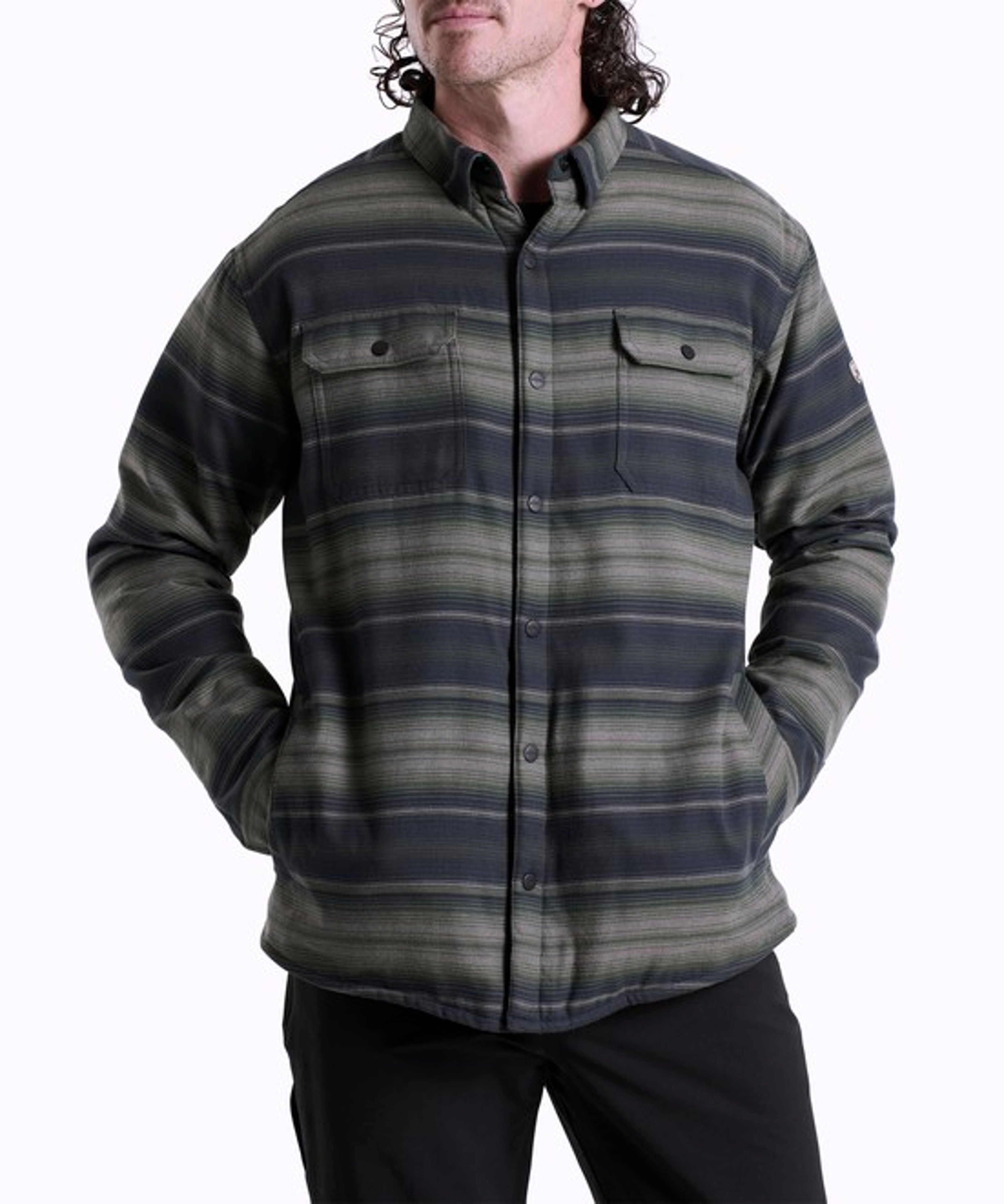
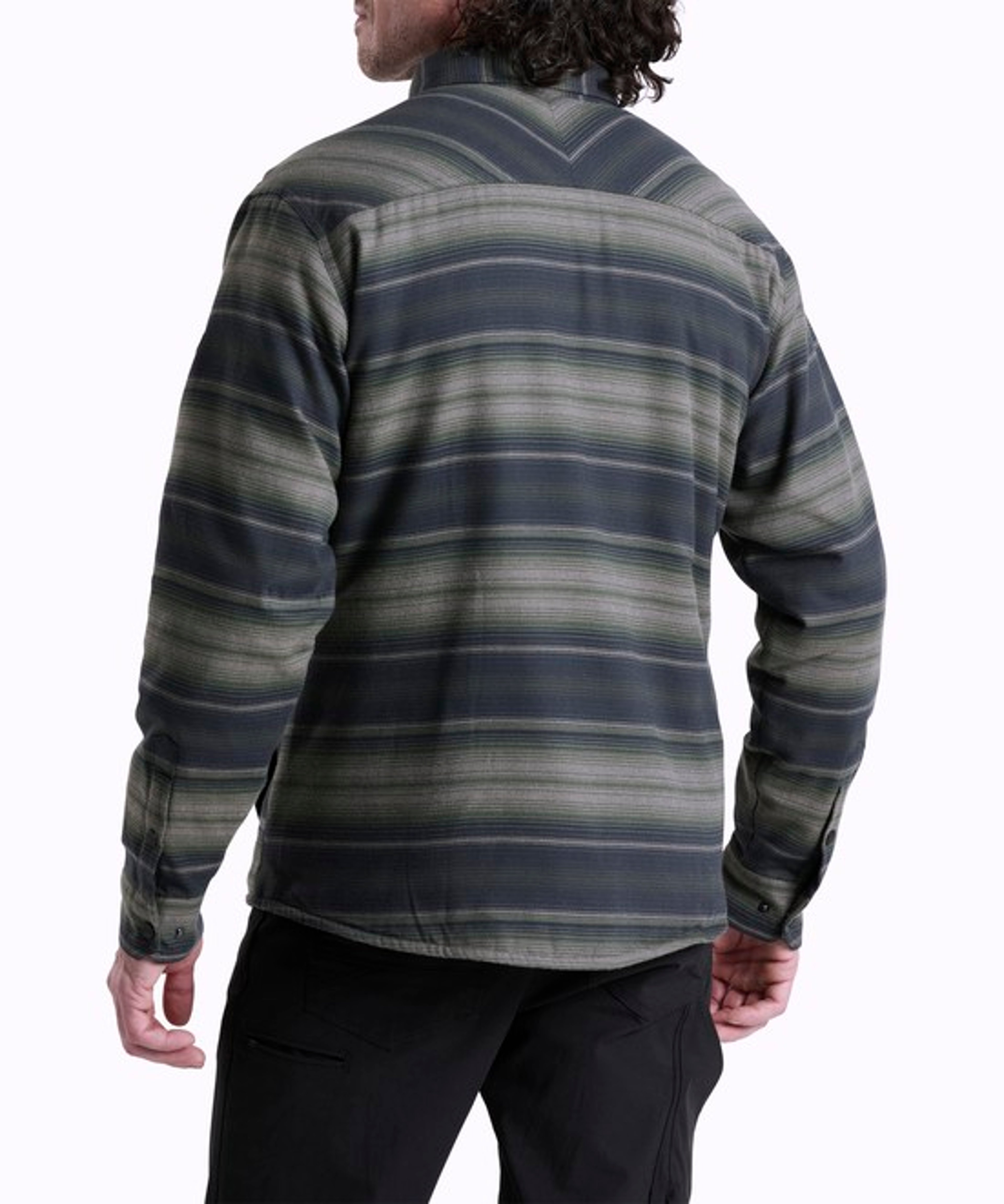
Fleece-Lined Flannel. For cold mornings on the jobsite or shoulder-season hikes, a brushed flannel shell over a soft fleece body lining traps body heat without the bulk of a true jacket. The classic plaid reads as a shirt. The lining behaves like a fleece mid-layer. Button-secure chest pockets keep essentials close.
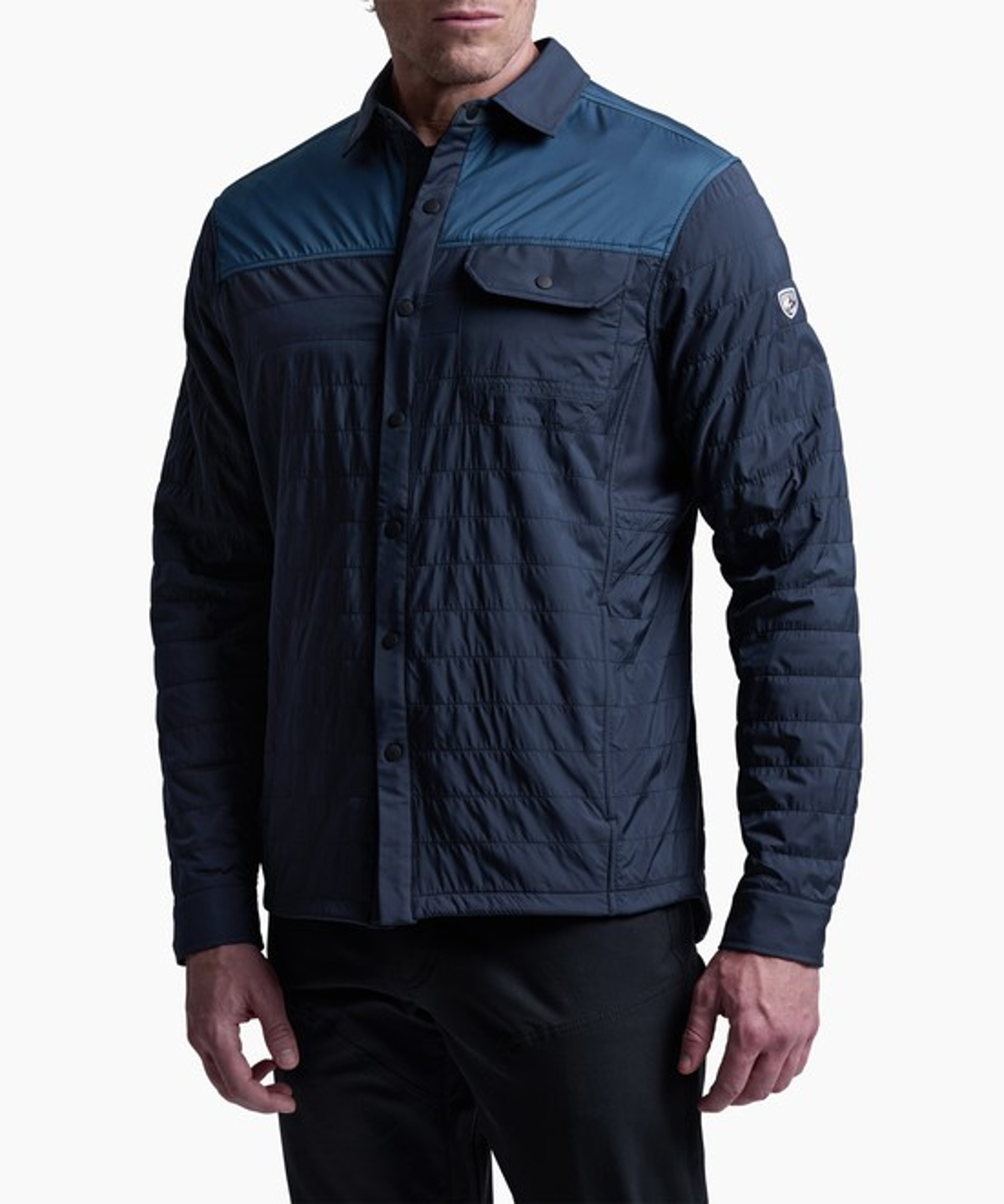
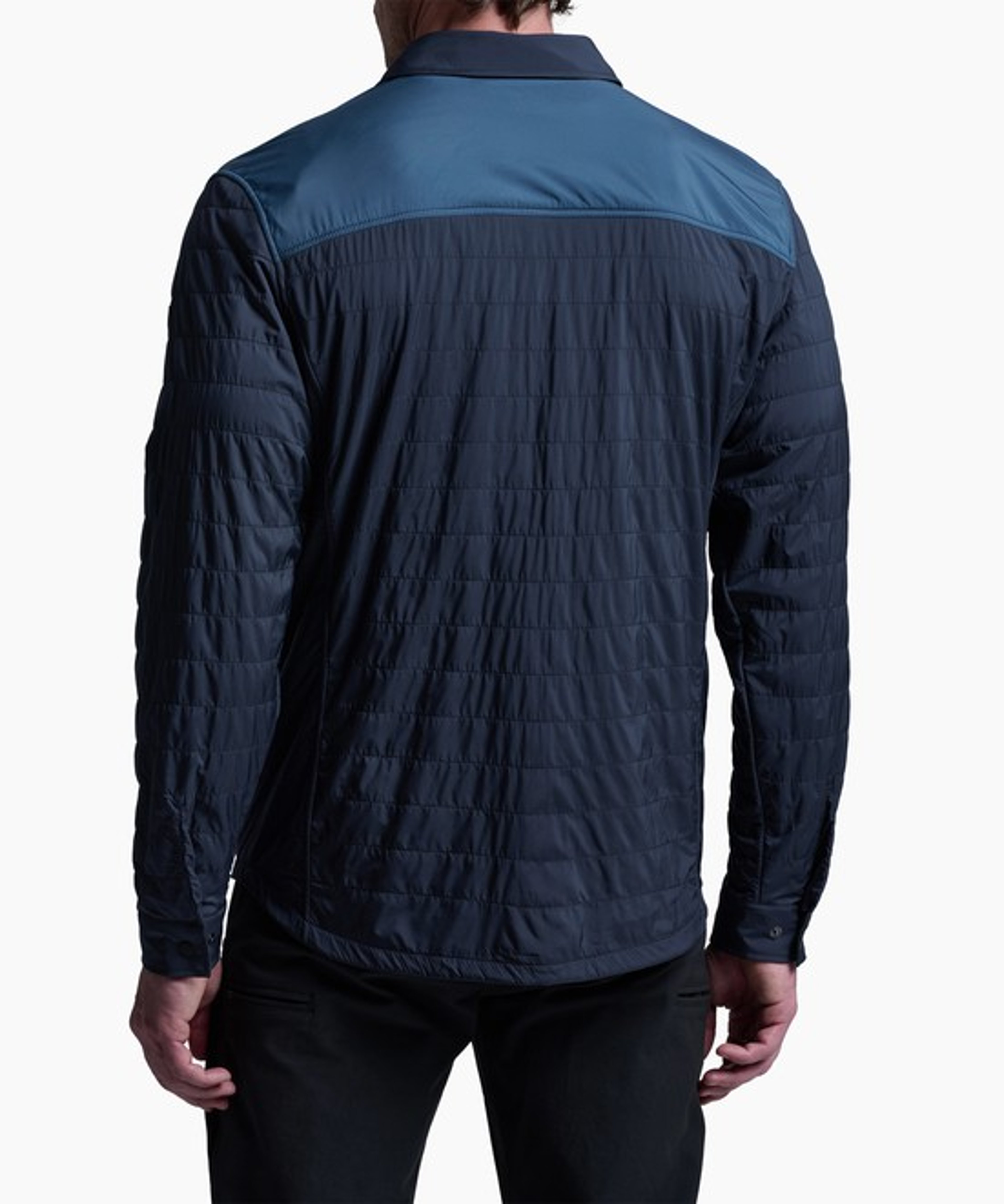
Insulated Shirt-Jacs. When temperatures drop, insulated options add real warmth in a low-profile silhouette. Designs run from 800-fill-power, RDS-certified goose down for an unbeatable warmth-to-weight ratio to synthetic knit insulation engineered to keep working when the weather turns damp. Body-mapped overlays put heat where you actually need it.
Wind- and Water-Resistant Construction. For active use, look for a softshell-leaning build with a DWR finish, wind-resistant face fabric, and breathable underarm or knit side panels. It handles a brisk hike or a drizzly commute without the rustle of a hardshell, and pairs cleanly with our softshell jackets when conditions push past light rain.
Rugged Waxed Canvas. A waxed cotton canvas shirt-jac resists abrasion, wind, and light moisture, and earns character with every wear. It ages into your wardrobe rather than out of it.
Casual Cotton & Corduroy. For pub nights, weekend errands, and travel days that don't need technical performance, a 100% cotton corduroy shirt-jac delivers breathable warmth and a subtle plaid that fits anywhere our casual outerwear collection goes.
Look for signature touches like button-secure chest pockets, zippered handwarmer pockets for security on the move, articulated sleeves for unrestricted reach, and underarm ventilation panels that keep things breathing when you pick up the pace.
The shirt-jac sits where a button-down ends and outerwear begins. It carries the relaxed silhouette of a flannel with the snap-up structure, lined warmth, and weather resistance of a proper layer, so it works as a standalone mid-season piece or as a mid-layer under a heavier shell.
Choose from a variety of fabrics, styles, and features for the men's shirt-jacs that are right for you:
Fleece-Lined Flannel. For cold mornings on the jobsite or shoulder-season hikes, a brushed flannel shell over a soft fleece body lining traps body heat without the bulk of a true jacket. The classic plaid reads as a shirt. The lining behaves like a fleece mid-layer. Button-secure chest pockets keep essentials close.
Insulated Shirt-Jacs. When temperatures drop, insulated options add real warmth in a low-profile silhouette. Designs run from 800-fill-power, RDS-certified goose down for an unbeatable warmth-to-weight ratio to synthetic knit insulation engineered to keep working when the weather turns damp. Body-mapped overlays put heat where you actually need it.
Wind- and Water-Resistant Construction. For active use, look for a softshell-leaning build with a DWR finish, wind-resistant face fabric, and breathable underarm or knit side panels. It handles a brisk hike or a drizzly commute without the rustle of a hardshell, and pairs cleanly with our softshell jackets when conditions push past light rain.
Rugged Waxed Canvas. A waxed cotton canvas shirt-jac resists abrasion, wind, and light moisture, and earns character with every wear. It ages into your wardrobe rather than out of it.
Casual Cotton & Corduroy. For pub nights, weekend errands, and travel days that don't need technical performance, a 100% cotton corduroy shirt-jac delivers breathable warmth and a subtle plaid that fits anywhere our casual outerwear collection goes.
Look for signature touches like button-secure chest pockets, zippered handwarmer pockets for security on the move, articulated sleeves for unrestricted reach, and underarm ventilation panels that keep things breathing when you pick up the pace.
A buyer's guide to men's shirt-jacs: what to look for, how shells and insulation differ, and how to dial in fit for layering and trail use.
What should you look for in men's shirt jackets?
The best men's shirt-jacs pair the easy silhouette of a button-up with real outerwear performance: weather resistance, breathability, and room to layer.
Look for a face fabric matched to your conditions: brushed flannel for warmth, waxed canvas or softshell for wind and light rain. The lining sets the warmth ceiling: fleece or synthetic knit for cool days, light down for cold ones. An articulated sleeve and a trim-to-relaxed body let you reach overhead without the hem riding up. Chest pockets handle cards, keys, and a phone. Handwarmer pockets cover cold-fingered mornings.
Look for a face fabric matched to your conditions: brushed flannel for warmth, waxed canvas or softshell for wind and light rain. The lining sets the warmth ceiling: fleece or synthetic knit for cool days, light down for cold ones. An articulated sleeve and a trim-to-relaxed body let you reach overhead without the hem riding up. Chest pockets handle cards, keys, and a phone. Handwarmer pockets cover cold-fingered mornings.
What's the difference between a hardshell, softshell, and insulated jacket?
A hardshell is a fully waterproof, seam-taped outer layer built for sustained rain or snow. A softshell trades some waterproofing for stretch, breathability, and wind resistance. An insulated jacket prioritizes warmth with down or synthetic fill.
Shirt-jacs sit closer to the softshell and insulated end of that spectrum. Most use a DWR finish for light moisture rather than a waterproof membrane, exactly right for the temperature range a shirt-jac is built for. Under a heavy hardshell, the shirt-jac becomes the mid-layer instead.
Shirt-jacs sit closer to the softshell and insulated end of that spectrum. Most use a DWR finish for light moisture rather than a waterproof membrane, exactly right for the temperature range a shirt-jac is built for. Under a heavy hardshell, the shirt-jac becomes the mid-layer instead.
How do you choose between down and synthetic insulation?
Down wins on warmth-to-weight and packability. Synthetic wins when the insulation is going to get wet.
High fill-power, RDS-certified goose down (around 800 fill) gives the most warmth per ounce and compresses small. It excels in cold, dry conditions. Synthetic insulation, including the knit synthetics used in newer shirt-jacs, keeps loft when damp, dries faster, and shrugs off drizzle. For a single year-round shirt-jac in variable weather, synthetic is the safer pick. For dry-cold trips and the lightest warm layer, choose down.
High fill-power, RDS-certified goose down (around 800 fill) gives the most warmth per ounce and compresses small. It excels in cold, dry conditions. Synthetic insulation, including the knit synthetics used in newer shirt-jacs, keeps loft when damp, dries faster, and shrugs off drizzle. For a single year-round shirt-jac in variable weather, synthetic is the safer pick. For dry-cold trips and the lightest warm layer, choose down.
Are shirt jackets waterproof or just water-resistant?
Most shirt-jacs are water-resistant, not fully waterproof.
That's by design. A true waterproof shell uses a laminated membrane and taped seams, which adds stiffness and weight that's overkill for a piece you'll wear on dry days or under a heavier shell. A DWR finish on tightly woven canvas, ripstop, or flannel sheds light rain and snow long enough to get you to cover. For sustained rain, layer the shirt-jac under a shell from our rain outerwear collection rather than asking the shirt-jac to do that job alone.
That's by design. A true waterproof shell uses a laminated membrane and taped seams, which adds stiffness and weight that's overkill for a piece you'll wear on dry days or under a heavier shell. A DWR finish on tightly woven canvas, ripstop, or flannel sheds light rain and snow long enough to get you to cover. For sustained rain, layer the shirt-jac under a shell from our rain outerwear collection rather than asking the shirt-jac to do that job alone.
How should a shirt jackets fit for layering?
A shirt-jac should fit close enough to wear as a standalone shirt with just enough room for a base layer and a thin mid-layer underneath.
Aim for a trim-to-relaxed body that follows your torso without pulling at the chest when buttoned, sleeves long enough to clear the wrist when your arms are raised, and a hem at the belt line so it doesn't bunch under a jacket. Articulated sleeves and a slight back drop matter more than total volume. They let you reach, climb, and swing a pack on without the cuffs hiking up. For heavy mid-layer wear, size one up. For shirt-only wear, take your true size.
Aim for a trim-to-relaxed body that follows your torso without pulling at the chest when buttoned, sleeves long enough to clear the wrist when your arms are raised, and a hem at the belt line so it doesn't bunch under a jacket. Articulated sleeves and a slight back drop matter more than total volume. They let you reach, climb, and swing a pack on without the cuffs hiking up. For heavy mid-layer wear, size one up. For shirt-only wear, take your true size.
What features matter most when hiking or backpacking?
For trail use, prioritize breathability, pocket access under a pack, and a face fabric that resists brush.
Specifically: underarm knit panels or mesh ventilation to dump heat on climbs, chest pockets you can reach with hipbelt straps in place, since handwarmer pockets disappear under a pack waist belt, a DWR-treated, tightly woven face fabric that shrugs off branches and light rain, and articulated sleeves that don't bind when you're using poles or scrambling. A shirt-jac is a mid-weight piece in a backpacking system: pair it with a packable insulated layer for camp and a hardshell for storms.
Specifically: underarm knit panels or mesh ventilation to dump heat on climbs, chest pockets you can reach with hipbelt straps in place, since handwarmer pockets disappear under a pack waist belt, a DWR-treated, tightly woven face fabric that shrugs off branches and light rain, and articulated sleeves that don't bind when you're using poles or scrambling. A shirt-jac is a mid-weight piece in a backpacking system: pair it with a packable insulated layer for camp and a hardshell for storms.