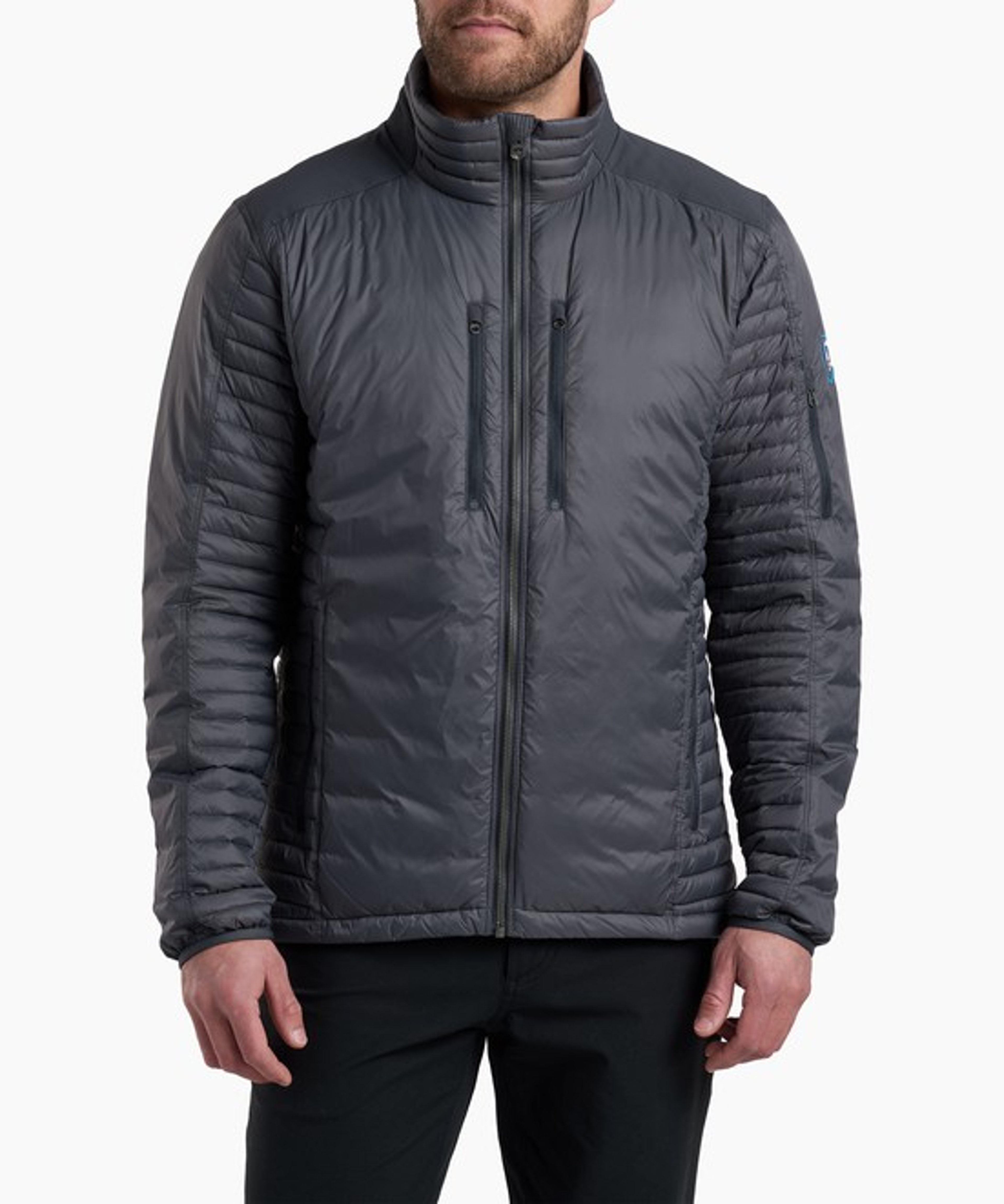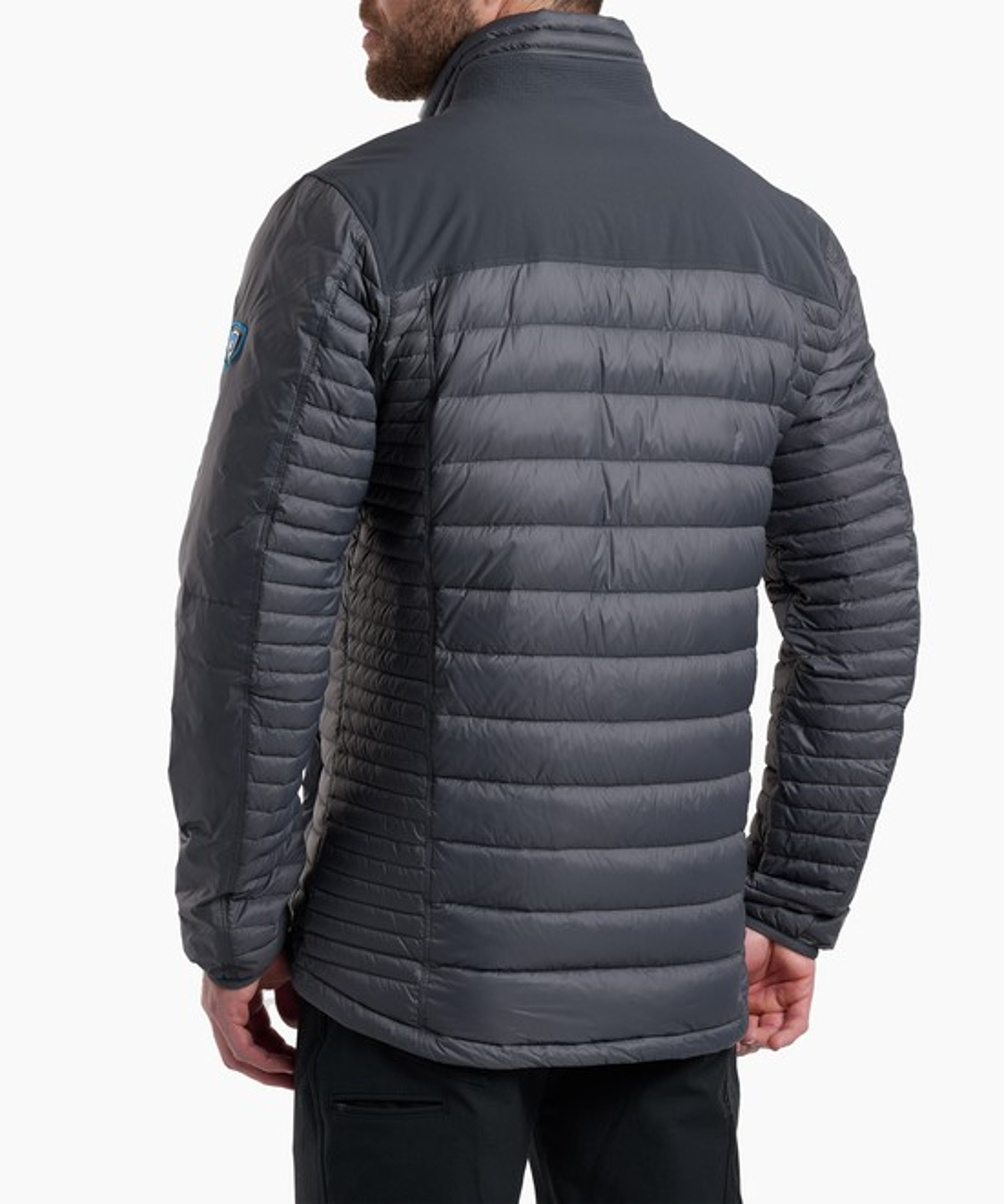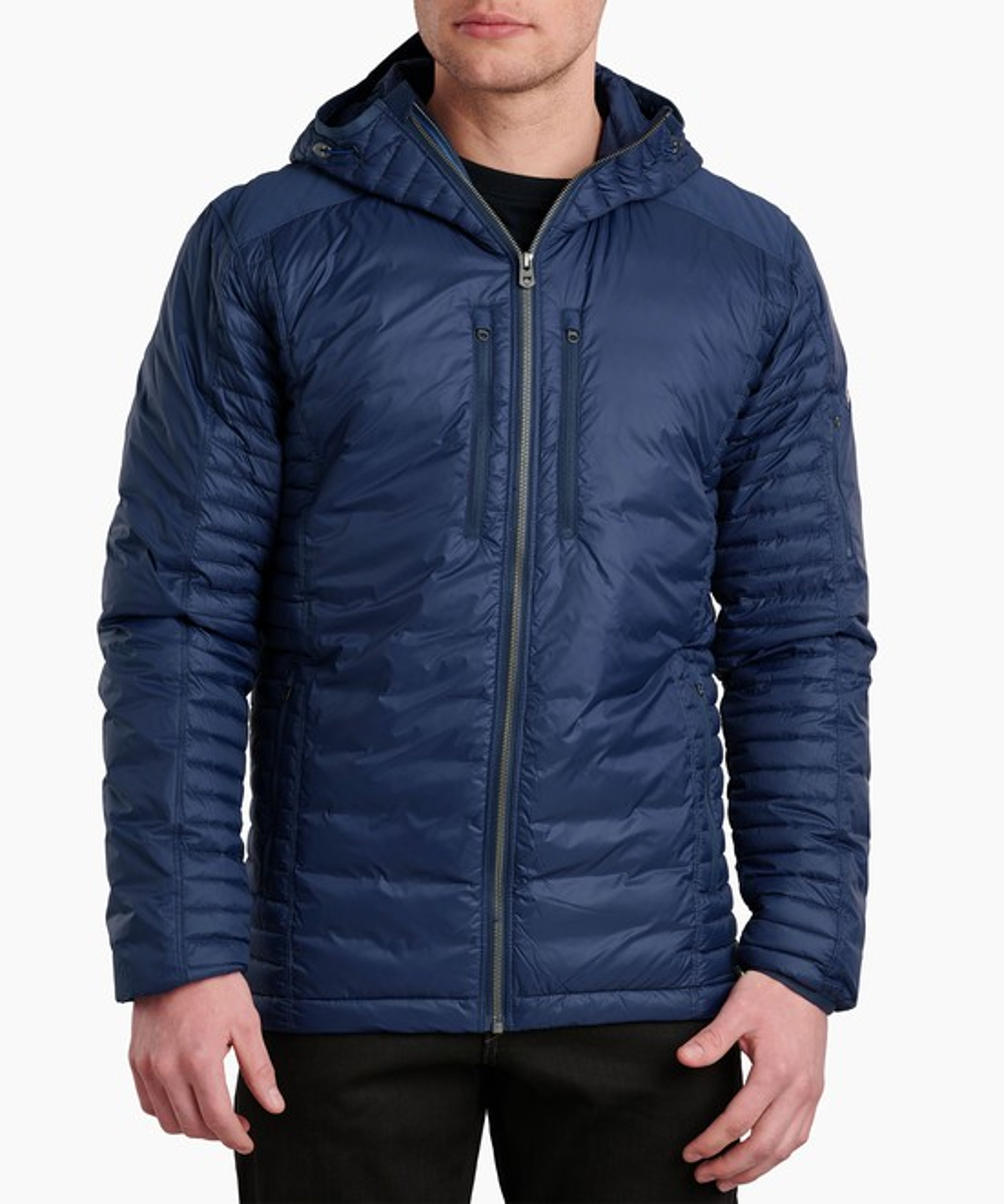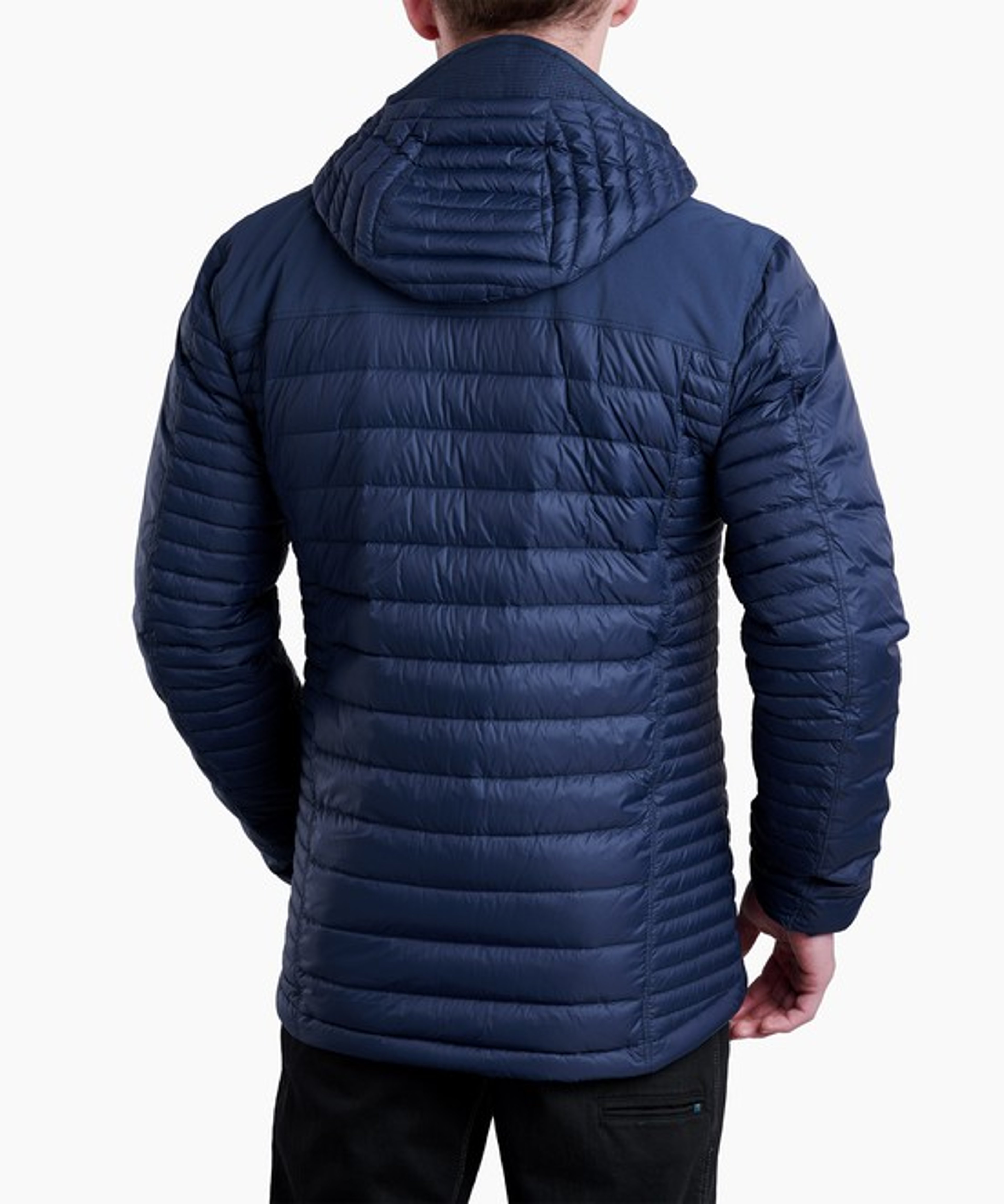





Men's Down Jackets
Lock in Warmth Without the Bulk in KÜHL Men's Down Jackets.
Choose from a variety of fabrics, styles, and features for the men's down jackets that are right for you:
Thermal Body Mapping. Down does its best work when the fill is placed with intent. Look for body-mapped construction that loads more down at the chest and back and trims it at the underarms, where you generate the most heat. The result is a jacket that feels lighter than it is and breathes when you push the pace.
Responsibly Sourced Insulation. KÜHL down jackets use RDS-certified 800 fill-power goose down, high loft, high warmth-to-weight, traceable back to the farm. Fill power is the most useful spec on the tag, and 800 puts you in the premium tier without the fragility of expedition fill.
Weather-Ready Exteriors. A down jacket is only as good as the shell around it. Across the lineup you'll find wax-coated finishes, stretch-woven faces, and tough ripstop exteriors paired with a DWR finish to shed light precipitation. For sustained rain, layer one of our men's rain jackets over the top. Down is a poor swimmer, and the shell-over-puffy combo is the warmest, driest answer in cold wet conditions.
Built to Move. Hiking, scrambling, shoveling the driveway: a down jacket has to articulate. Reinforced shoulders take pack-strap abuse, gusseted underarms vent excess heat, and articulated sleeves keep the hem from riding up when you reach overhead. When only the core needs warmth, our men's vests cover that brief and free the arms entirely.
Layering Anchor. Down sits at the warm end of a layering kit. Worn under a hard shell, over a midweight grid men's fleece and a baselayer, it's the warmth engine of a cold-weather system. The slim cuts here are deliberate: room for a fleece underneath, not a sweater.
Look for signature touches like reinforced shoulders for pack abrasion, body-mapped baffles for even warmth, articulated sleeves for freedom of movement, and a DWR-treated face to keep moisture off the fill. For broader cold-weather options, see the full men's outerwear lineup.
Choose from a variety of fabrics, styles, and features for the men's down jackets that are right for you:
Thermal Body Mapping. Down does its best work when the fill is placed with intent. Look for body-mapped construction that loads more down at the chest and back and trims it at the underarms, where you generate the most heat. The result is a jacket that feels lighter than it is and breathes when you push the pace.
Responsibly Sourced Insulation. KÜHL down jackets use RDS-certified 800 fill-power goose down, high loft, high warmth-to-weight, traceable back to the farm. Fill power is the most useful spec on the tag, and 800 puts you in the premium tier without the fragility of expedition fill.
Weather-Ready Exteriors. A down jacket is only as good as the shell around it. Across the lineup you'll find wax-coated finishes, stretch-woven faces, and tough ripstop exteriors paired with a DWR finish to shed light precipitation. For sustained rain, layer one of our men's rain jackets over the top. Down is a poor swimmer, and the shell-over-puffy combo is the warmest, driest answer in cold wet conditions.
Built to Move. Hiking, scrambling, shoveling the driveway: a down jacket has to articulate. Reinforced shoulders take pack-strap abuse, gusseted underarms vent excess heat, and articulated sleeves keep the hem from riding up when you reach overhead. When only the core needs warmth, our men's vests cover that brief and free the arms entirely.
Layering Anchor. Down sits at the warm end of a layering kit. Worn under a hard shell, over a midweight grid men's fleece and a baselayer, it's the warmth engine of a cold-weather system. The slim cuts here are deliberate: room for a fleece underneath, not a sweater.
Look for signature touches like reinforced shoulders for pack abrasion, body-mapped baffles for even warmth, articulated sleeves for freedom of movement, and a DWR-treated face to keep moisture off the fill. For broader cold-weather options, see the full men's outerwear lineup.
Down jackets deliver the best warmth-to-weight you can buy. Here's how to pick one that breathes, layers, and shrugs off weather.
What should you look for in men's down jackets?
The best men's down jackets pair high fill-power down with a tough, weather-shedding shell and a fit that layers cleanly.
Four criteria. Fill power: 800 fill is the sweet spot for everyday mountain use. Higher gets fragile, lower gets heavy. Shell fabric: a stretch-woven or ripstop face with a DWR finish keeps light precipitation and abrasion off the down. Construction: body-mapped or stitch-free baffles place insulation where you lose heat. Fit: slim enough to layer under a shell, roomy enough over a midweight fleece.
Four criteria. Fill power: 800 fill is the sweet spot for everyday mountain use. Higher gets fragile, lower gets heavy. Shell fabric: a stretch-woven or ripstop face with a DWR finish keeps light precipitation and abrasion off the down. Construction: body-mapped or stitch-free baffles place insulation where you lose heat. Fit: slim enough to layer under a shell, roomy enough over a midweight fleece.
What's the difference between a hardshell, softshell, and insulated jacket?
A hardshell is fully waterproof, a softshell is wind- and light-moisture-resistant with built-in stretch, and an insulated jacket, including down, adds warmth rather than blocking weather on its own.
A hardshell uses a waterproof membrane and taped seams for sustained rain and wet snow. A softshell trades full waterproofing for breathability and stretch, which suits high-output cold-weather activity. An insulated down jacket is the warmth layer between them: your outer piece on cold dry days, or a mid-layer under a shell when it's wet.
A hardshell uses a waterproof membrane and taped seams for sustained rain and wet snow. A softshell trades full waterproofing for breathability and stretch, which suits high-output cold-weather activity. An insulated down jacket is the warmth layer between them: your outer piece on cold dry days, or a mid-layer under a shell when it's wet.
How do you choose between down and synthetic insulation?
Pick down for the best warmth-to-weight in cold, dry conditions, and synthetic when you expect sustained wet weather or heavy sweat.
Down is lighter, warmer, and more compressible per ounce. Nothing synthetic has caught it at high fill powers. The tradeoff is moisture: wet down collapses and loses most of its loft until it dries. Synthetic keeps a meaningful share of its warmth when damp and dries faster, which matters on multi-day trips in maritime climates. For dry alpine cold, down still wins on weight and packed volume.
Down is lighter, warmer, and more compressible per ounce. Nothing synthetic has caught it at high fill powers. The tradeoff is moisture: wet down collapses and loses most of its loft until it dries. Synthetic keeps a meaningful share of its warmth when damp and dries faster, which matters on multi-day trips in maritime climates. For dry alpine cold, down still wins on weight and packed volume.
Are down jackets waterproof or just water-resistant?
Down jackets are water-resistant, not waterproof. They shed light precipitation thanks to a DWR finish on the shell, but they aren't built for sustained rain.
DWR makes water bead off the face fabric, which buys you time in flurries, mist, and brief showers. It does not seal seams and won't survive a downpour. For real rain, layer a waterproof hardshell on top. The shell-over-puffy pairing keeps the down dry and preserves its loft. A wax-coated exterior extends the dry-weather range without crossing into true rainwear.
DWR makes water bead off the face fabric, which buys you time in flurries, mist, and brief showers. It does not seal seams and won't survive a downpour. For real rain, layer a waterproof hardshell on top. The shell-over-puffy pairing keeps the down dry and preserves its loft. A wax-coated exterior extends the dry-weather range without crossing into true rainwear.
How should a down jacket fit for layering?
A down jacket should fit trim through the torso with room for a baselayer and a midweight fleece, and articulated sleeves that don't ride up when you reach overhead.
Zip it over the layers you plan to wear, raise both arms, then twist. The hem should stay below the waistband, the cuffs at your wrists, and the shoulders shouldn't pull. Active-use down jackets run slimmer. Resort pieces run roomier. Sizing over a heavy mid-layer, go up one. As a standalone jacket, stay true to size.
Zip it over the layers you plan to wear, raise both arms, then twist. The hem should stay below the waistband, the cuffs at your wrists, and the shoulders shouldn't pull. Active-use down jackets run slimmer. Resort pieces run roomier. Sizing over a heavy mid-layer, go up one. As a standalone jacket, stay true to size.
What features matter most when hiking or backpacking?
For hiking and backpacking, prioritize packability, reinforced shoulders, hand pockets that clear a hipbelt, and a hood that fits under or over a helmet.
Weight and packed size come first. A jacket that doesn't compress isn't worth carrying. Reinforced shoulder overlays survive pack-strap abrasion. Hand pockets set too low get blocked by a hipbelt, leaving nowhere to stash hands at a rest stop. A hood that cinches around a beanie or layers under a shell hood is worth the small weight penalty.
Weight and packed size come first. A jacket that doesn't compress isn't worth carrying. Reinforced shoulder overlays survive pack-strap abrasion. Hand pockets set too low get blocked by a hipbelt, leaving nowhere to stash hands at a rest stop. A hood that cinches around a beanie or layers under a shell hood is worth the small weight penalty.