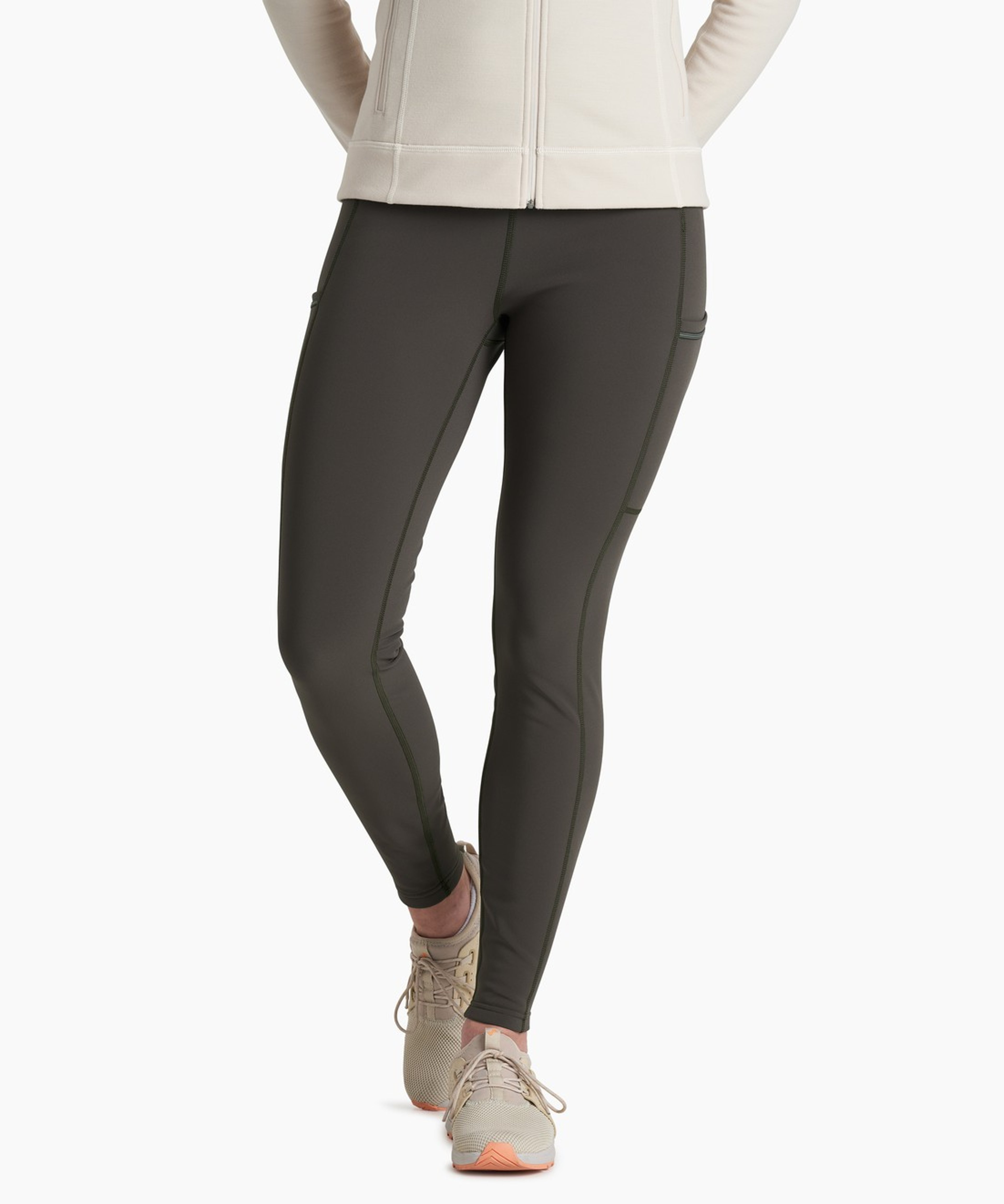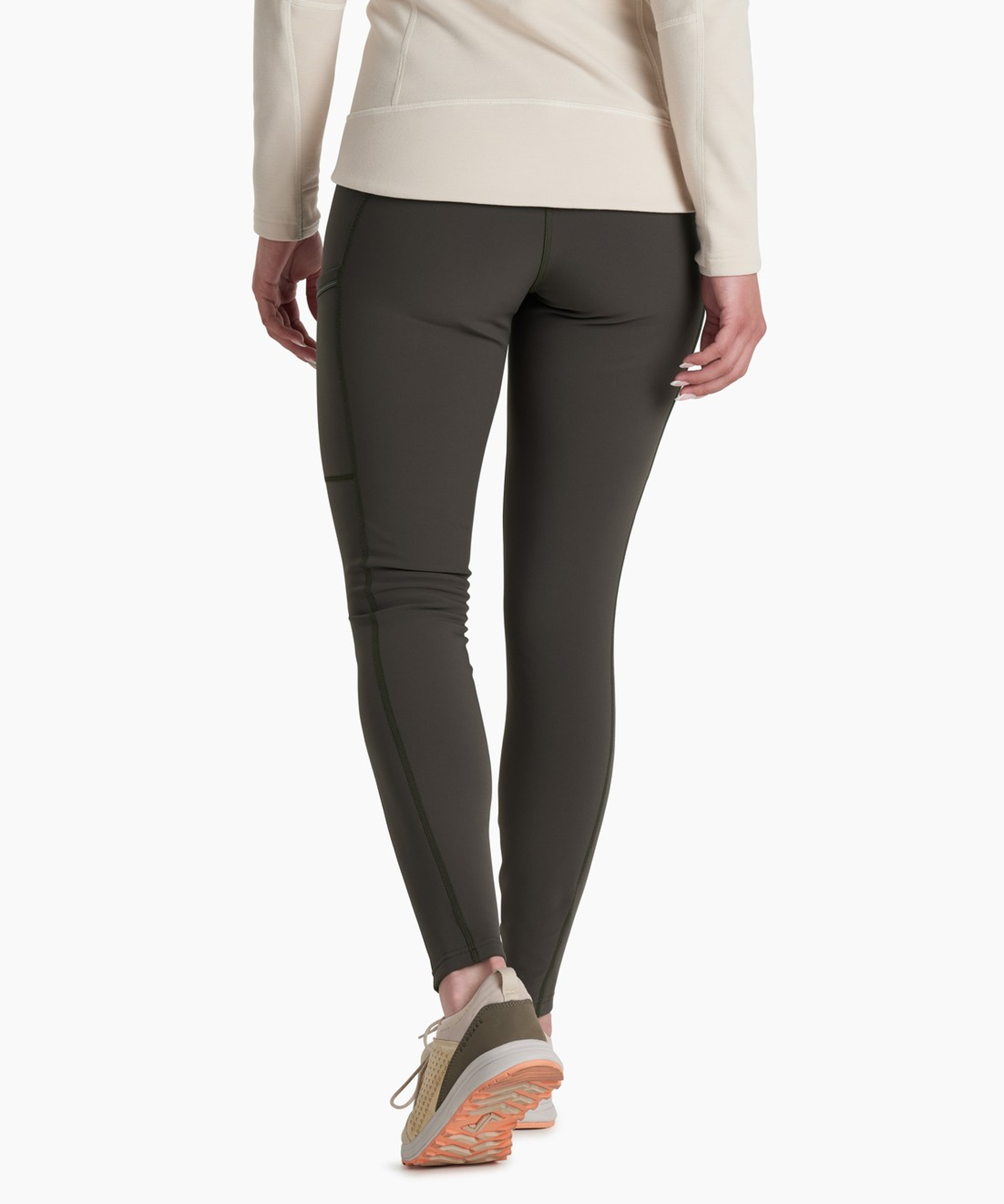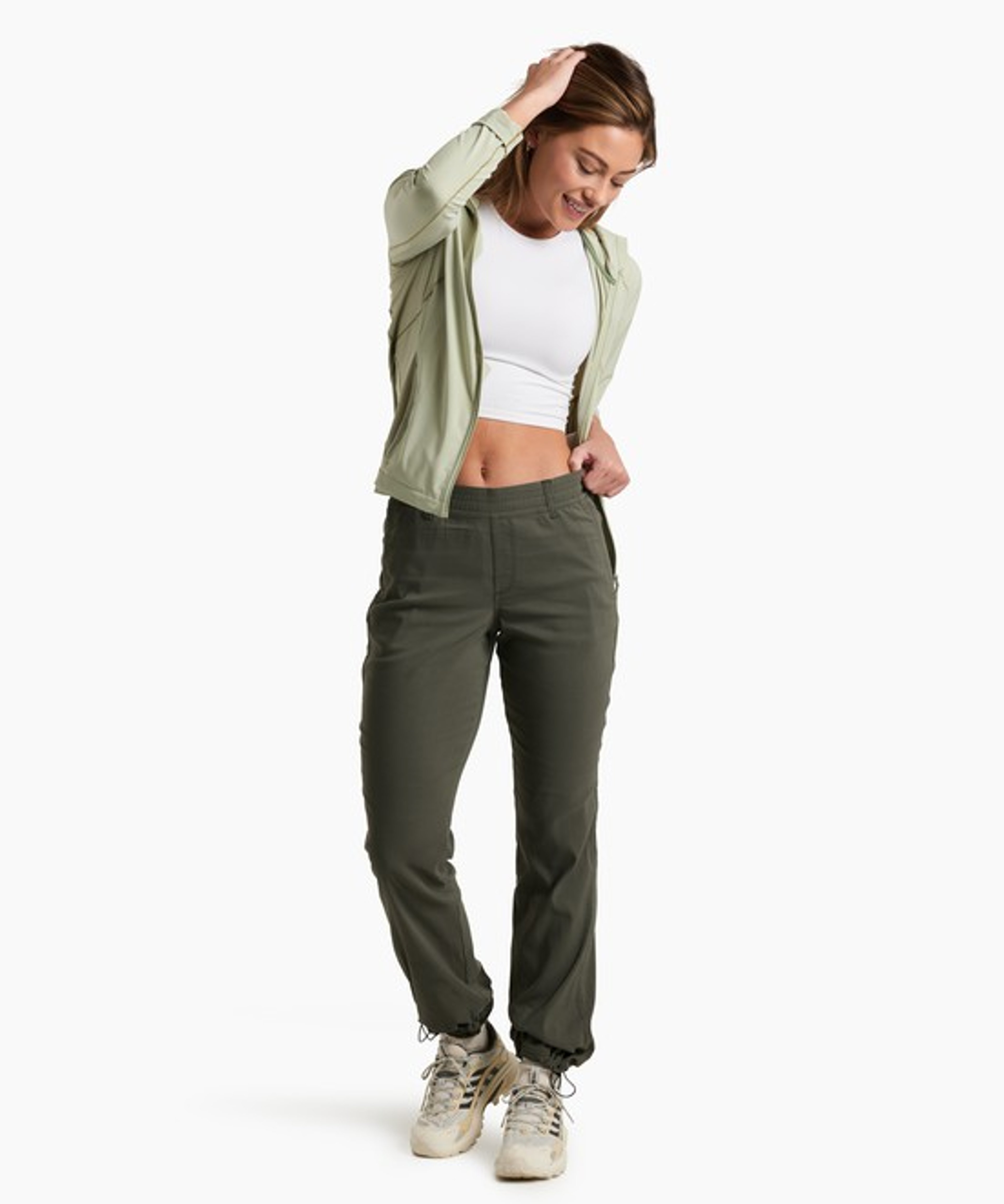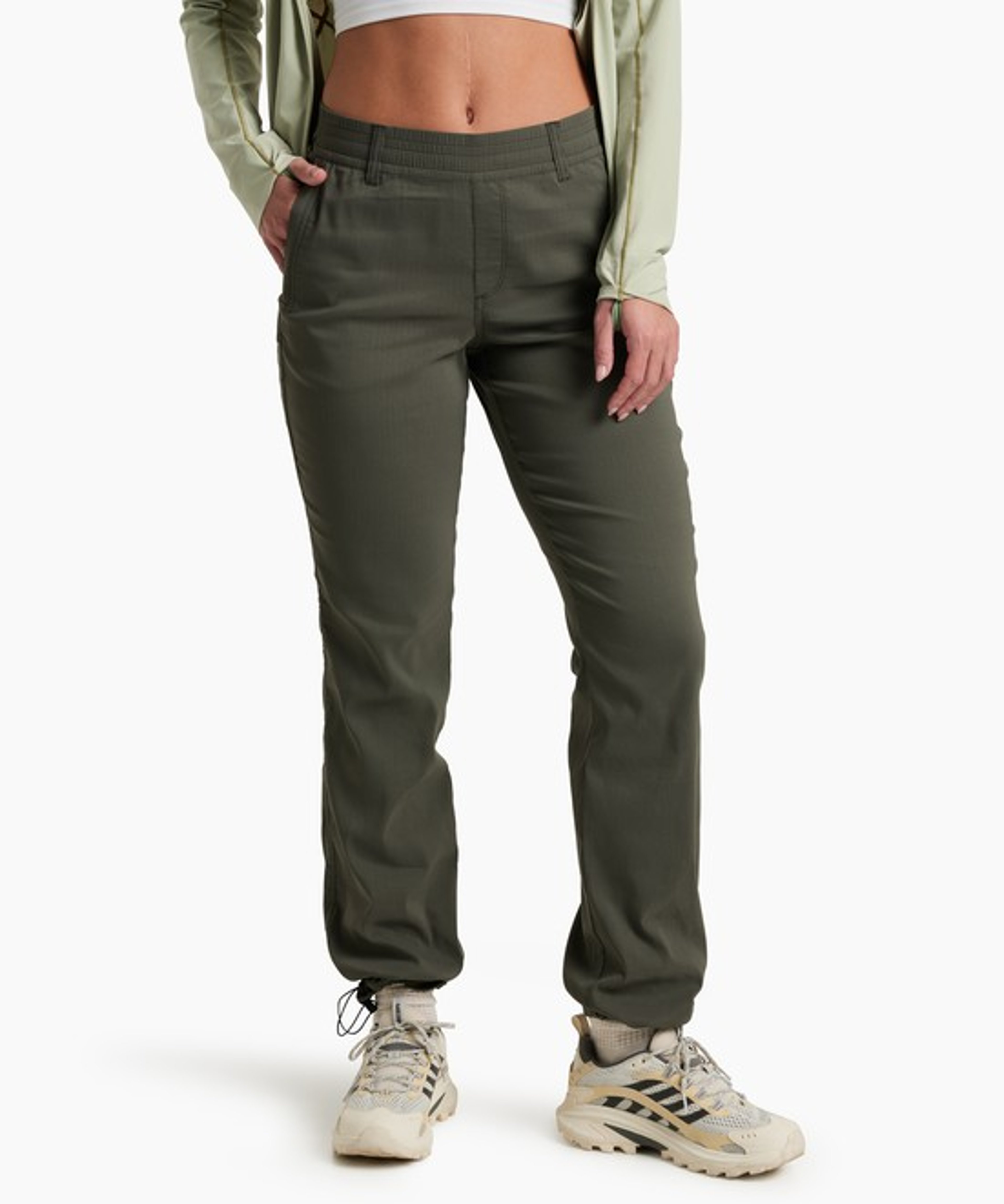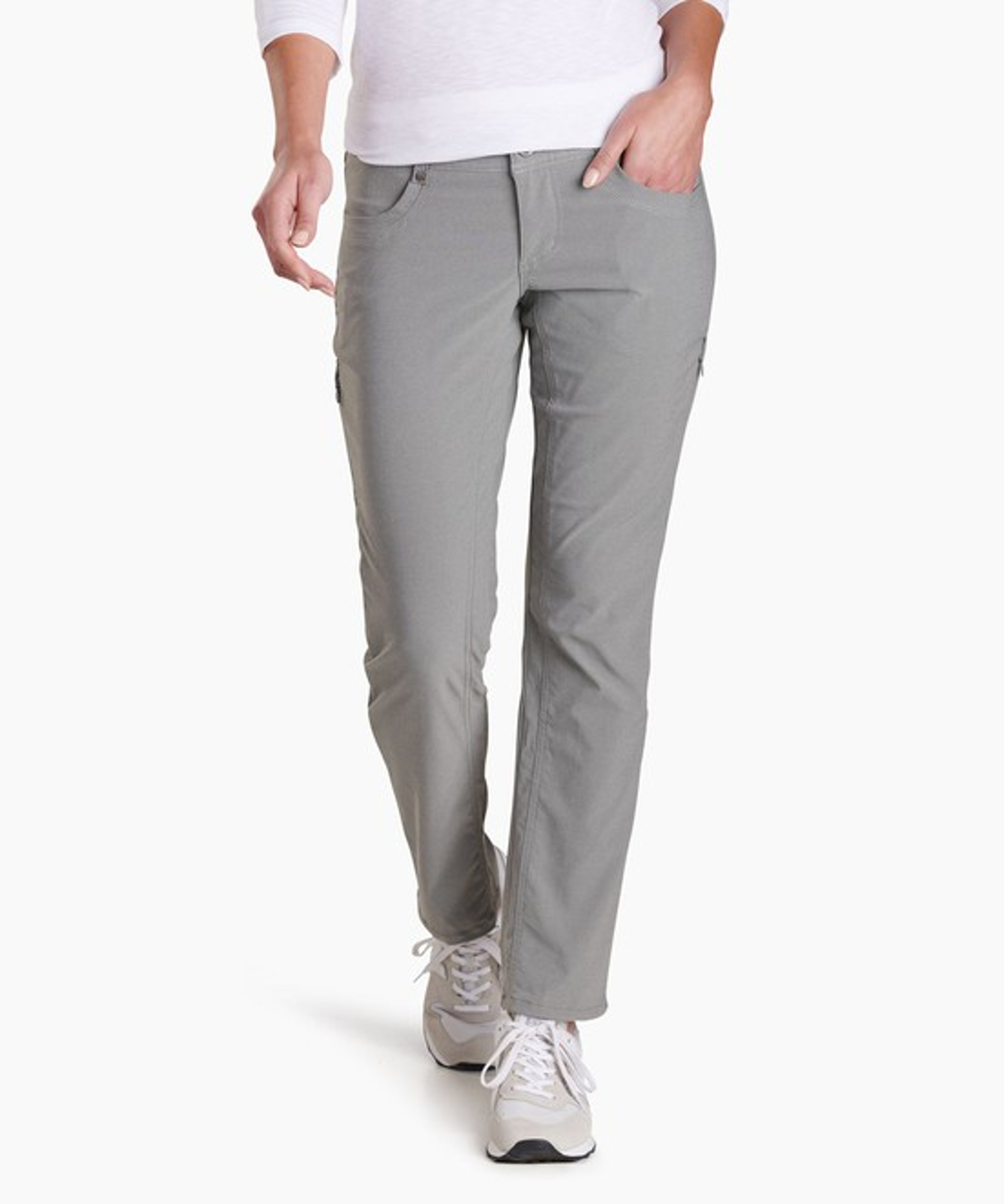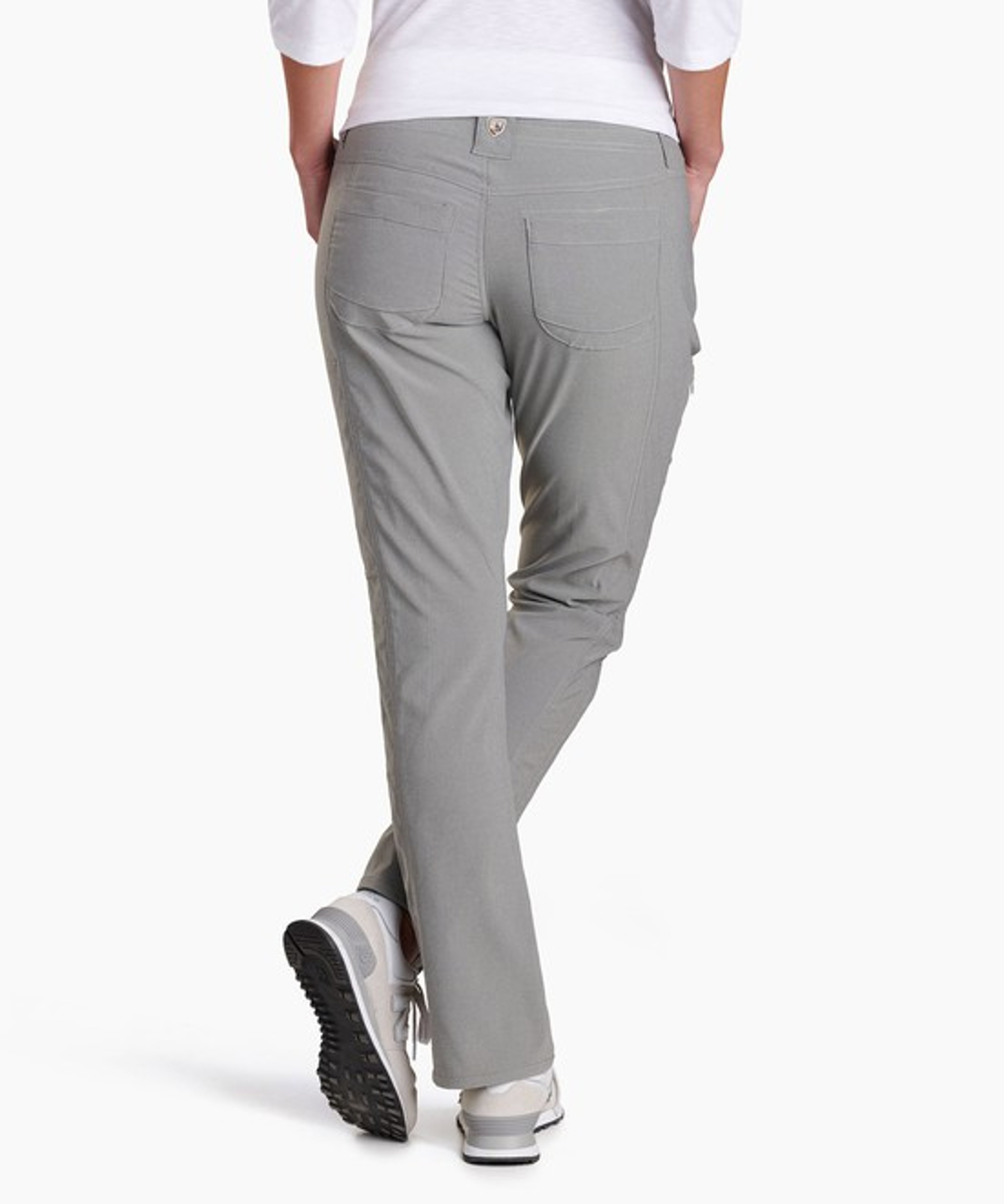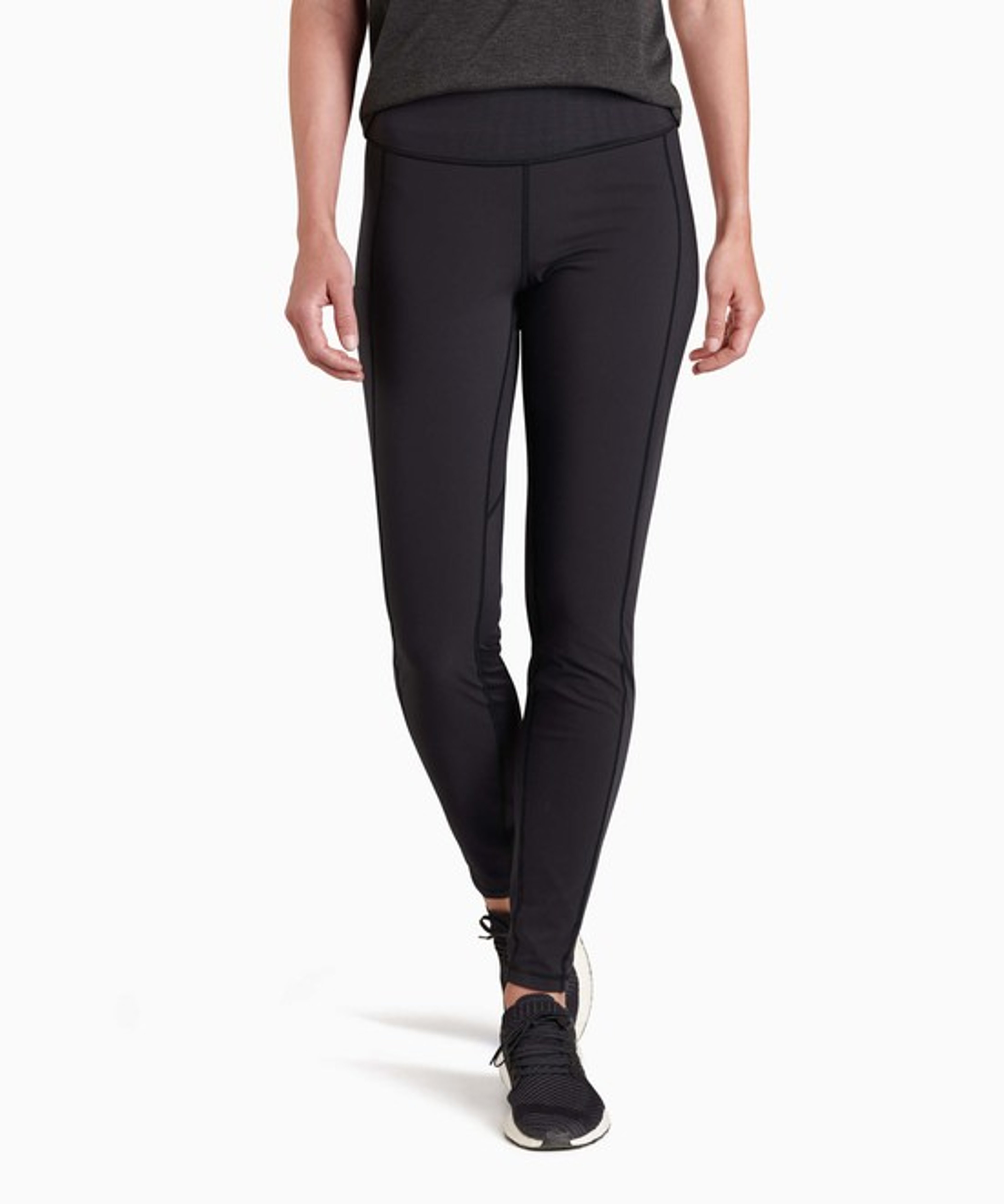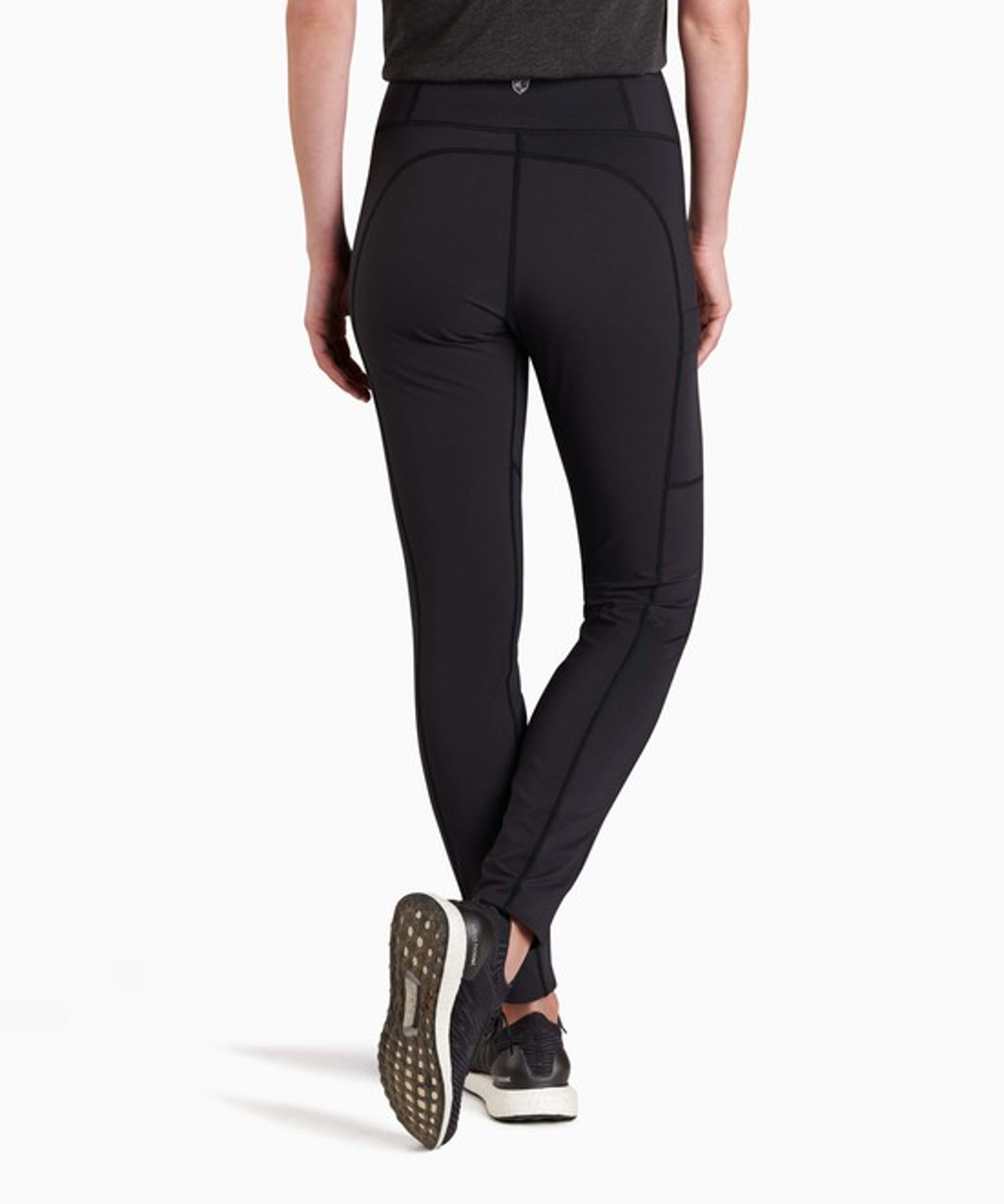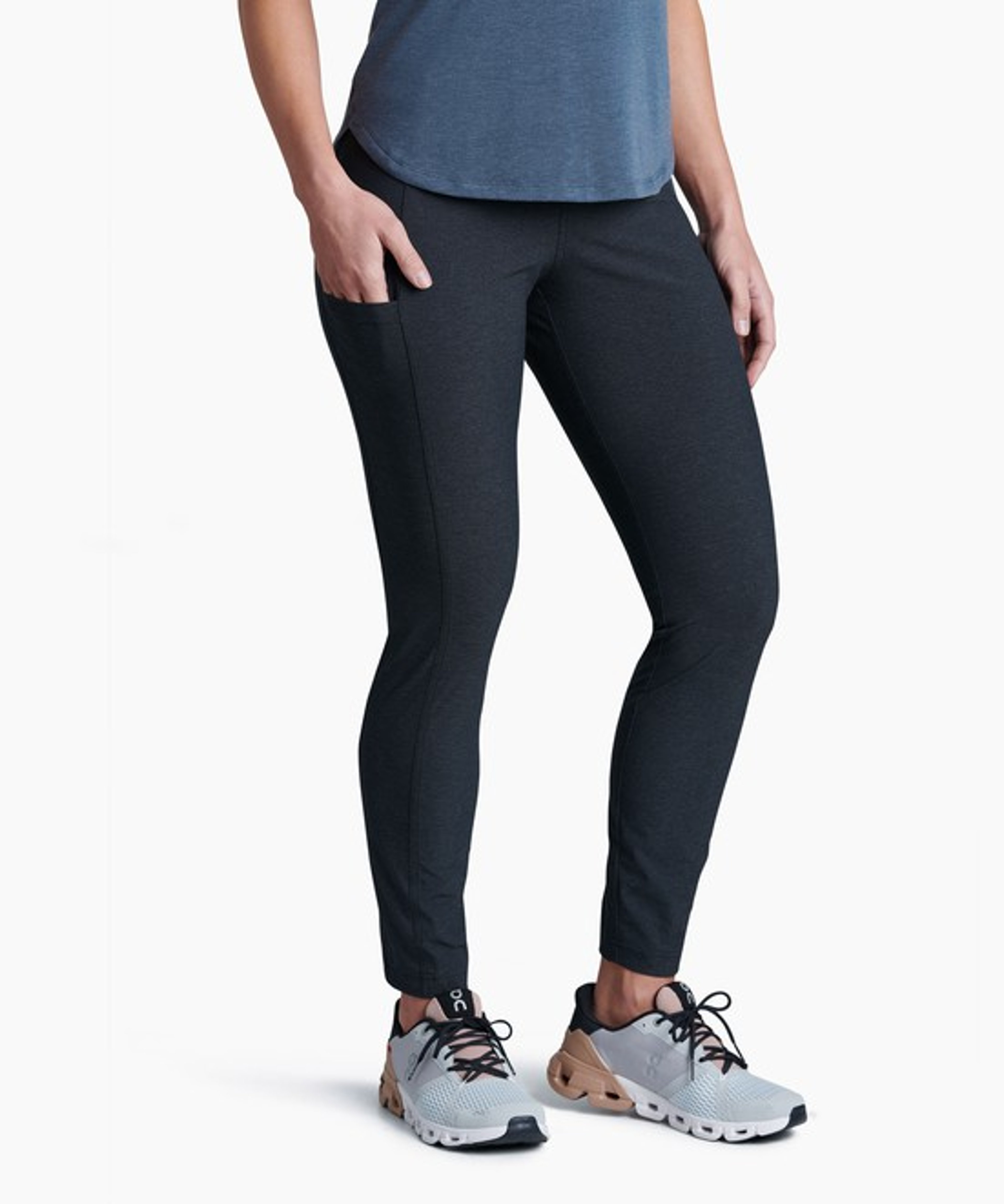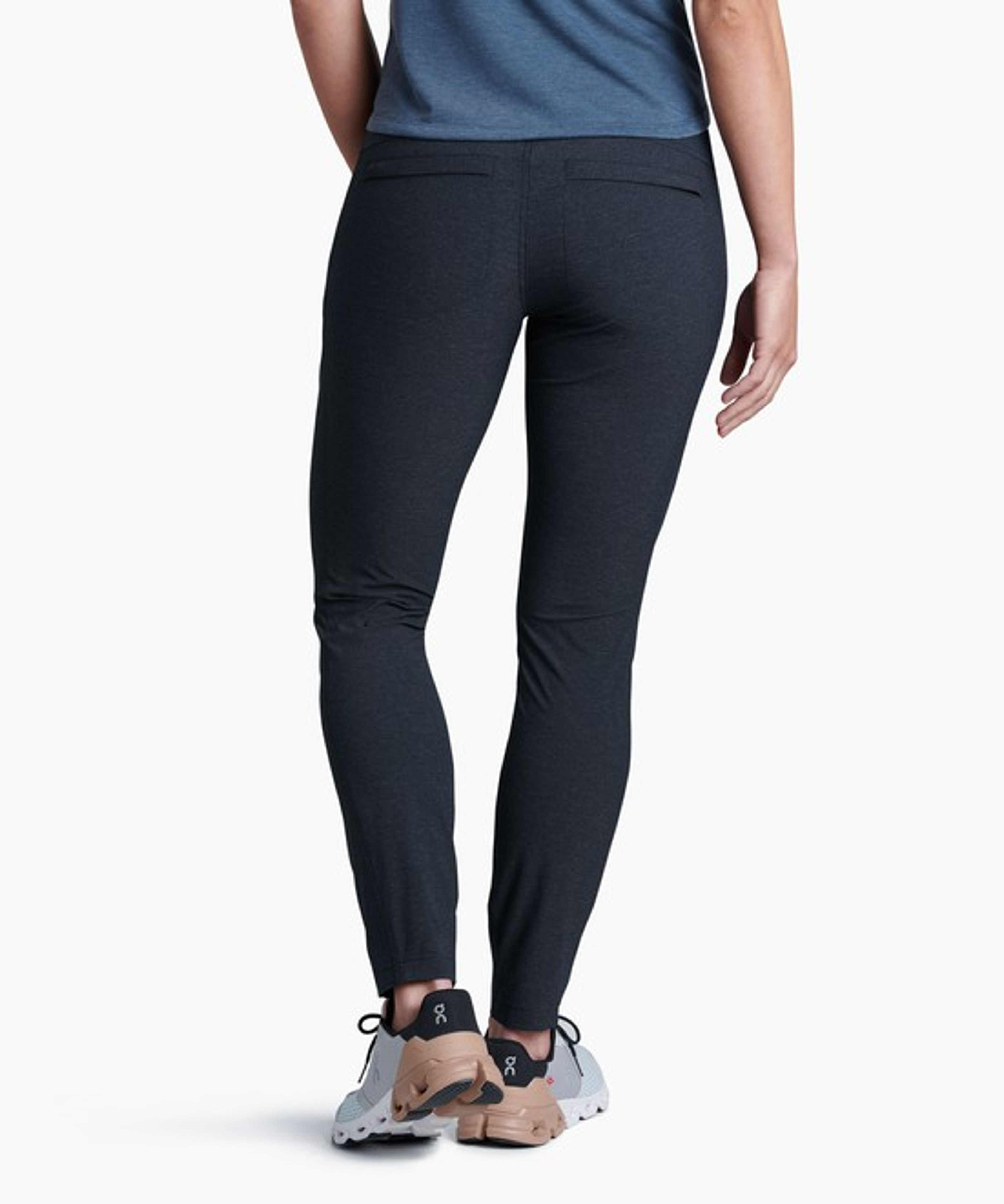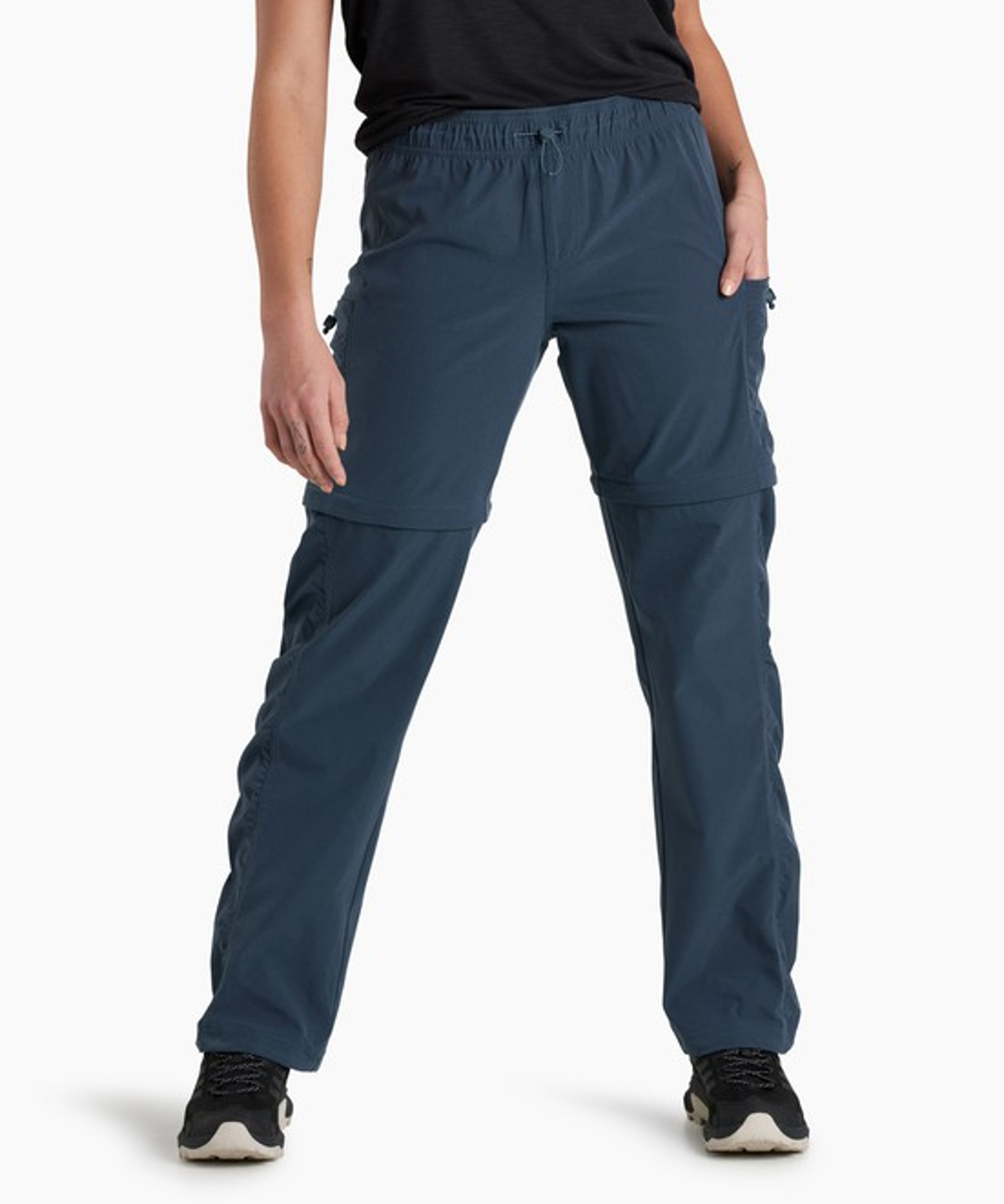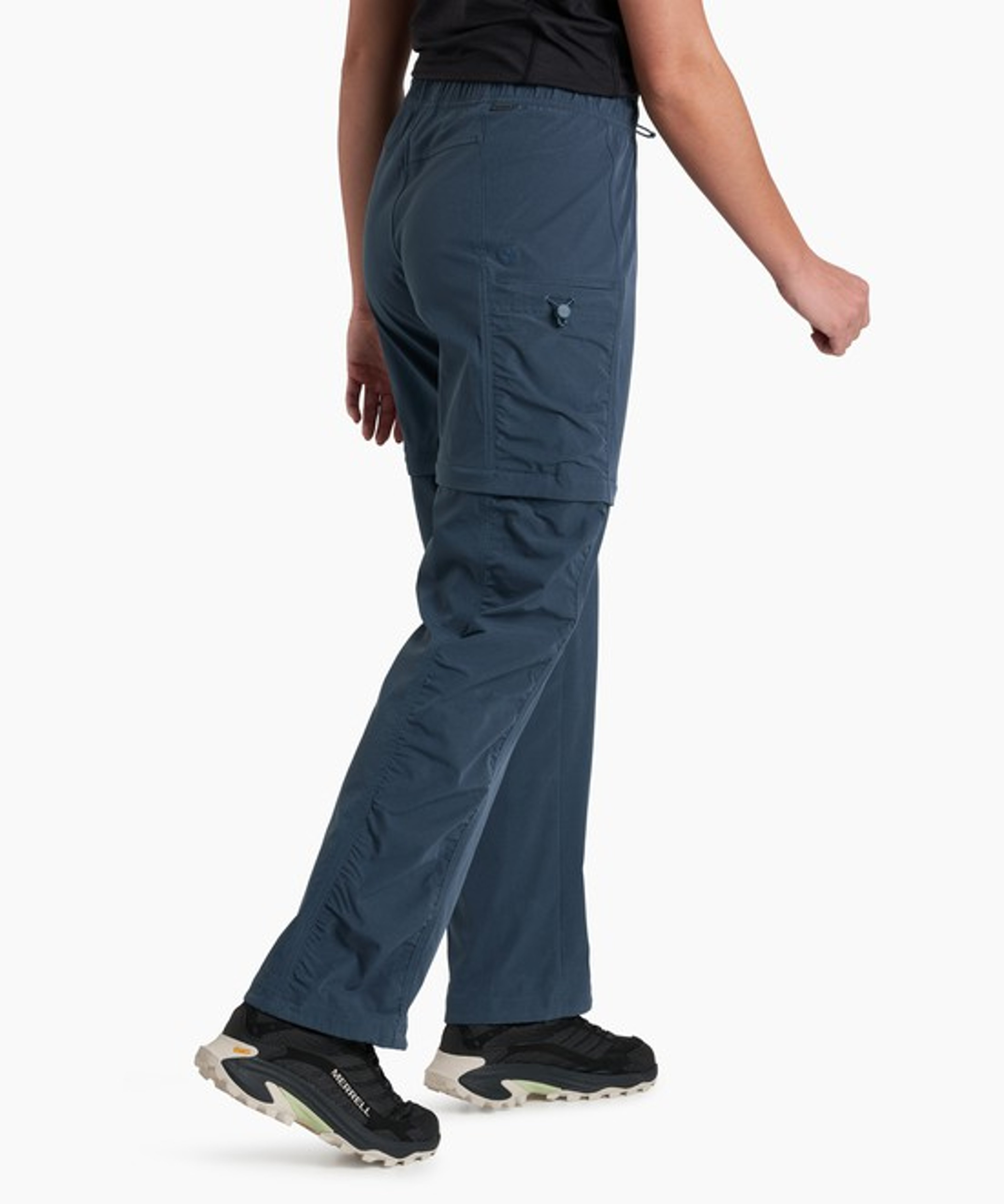




Women's Technical Pants
Move with intent in KÜHL women's technical pants.
Choose from a variety of fabrics, fits, and features for the women's technical pants that match how you actually move:
Trail-Ready Stretch. Technical pants built for hiking lean on 4-way stretch synthetic blends that move with every step. Articulated knees and a gusseted crotch keep the fabric out of your way on steep ground, while a DWR finish sheds light rain and UPF 50+ protects on exposed ridgelines. If your days lean more trail than town, see our women's hiking pants for styles tuned to long miles.
FREEFLEX™ Comfort. Our FREEFLEX™ knit delivers luxurious softness with stretch that rebounds stride after stride, so the pant holds its shape from morning to night. Moisture-wicking and quick-dry properties keep you comfortable when the pace picks up, and a relaxed, free-flowing fit reads as easily in town as on a warm-weather trail.
The FreeRyde™ Waistband. A signature touch across our technical pants line, the FreeRyde™ waistband sits flat under a pack, doesn't bind, and disappears under a long hem. Pair it with a relaxed leg or a slimmer cut depending on your activity.
Travel-Friendly Construction. Lightweight ripstop and softshell fabrics pack down small, dry overnight in a hotel sink, and look polished enough for a dinner reservation. Hidden pockets keep essentials secure between gates. For pieces built specifically for the airport-to-itinerary loop, browse our women's travel pants.
Look for signature touches like articulated knees for unrestricted motion, a gusseted crotch for deep stride, the FreeRyde™ waistband, and DWR-treated faces that shed light moisture without sacrificing breathability.
Choose from a variety of fabrics, fits, and features for the women's technical pants that match how you actually move:
Trail-Ready Stretch. Technical pants built for hiking lean on 4-way stretch synthetic blends that move with every step. Articulated knees and a gusseted crotch keep the fabric out of your way on steep ground, while a DWR finish sheds light rain and UPF 50+ protects on exposed ridgelines. If your days lean more trail than town, see our women's hiking pants for styles tuned to long miles.
FREEFLEX™ Comfort. Our FREEFLEX™ knit delivers luxurious softness with stretch that rebounds stride after stride, so the pant holds its shape from morning to night. Moisture-wicking and quick-dry properties keep you comfortable when the pace picks up, and a relaxed, free-flowing fit reads as easily in town as on a warm-weather trail.
The FreeRyde™ Waistband. A signature touch across our technical pants line, the FreeRyde™ waistband sits flat under a pack, doesn't bind, and disappears under a long hem. Pair it with a relaxed leg or a slimmer cut depending on your activity.
Travel-Friendly Construction. Lightweight ripstop and softshell fabrics pack down small, dry overnight in a hotel sink, and look polished enough for a dinner reservation. Hidden pockets keep essentials secure between gates. For pieces built specifically for the airport-to-itinerary loop, browse our women's travel pants.
Look for signature touches like articulated knees for unrestricted motion, a gusseted crotch for deep stride, the FreeRyde™ waistband, and DWR-treated faces that shed light moisture without sacrificing breathability.
Everything you need to know about choosing women's technical pants: fabrics, fit, weather protection, and how they compare to hiking, work, and travel cuts.
What should you look for in women's technical pants?
Look for synthetic-blend fabrics with 4-way stretch, articulated knees, a gusseted crotch, a DWR finish, and UPF 50+ sun protection. These five details separate a real technical pant from a casual one that just borrows the look.
Stretch and articulation determine how the pant moves with your body. Without them, you'll feel every step on steep terrain. DWR sheds light rain without trapping heat, and UPF 50+ matters on exposed ridgelines where sleeves and hats aren't enough. Our FREEFLEX™ knit and FreeRyde™ waistband are two signature touches worth seeking out.
Stretch and articulation determine how the pant moves with your body. Without them, you'll feel every step on steep terrain. DWR sheds light rain without trapping heat, and UPF 50+ matters on exposed ridgelines where sleeves and hats aren't enough. Our FREEFLEX™ knit and FreeRyde™ waistband are two signature touches worth seeking out.
Are jeans or cotton pants OK for hiking, working, or traveling in?
No, cotton is the wrong fiber for any of those use cases. It soaks up sweat and rain, takes hours to dry, and gets heavy and cold against the skin once wet.
Synthetic-blend technical fabrics solve all three problems. They wick moisture away from skin, dry in minutes, and keep their insulating value when damp. A nylon-spandex softshell or a 4-way stretch knit will outperform denim on every metric that matters once you're more than a mile from the car.
Synthetic-blend technical fabrics solve all three problems. They wick moisture away from skin, dry in minutes, and keep their insulating value when damp. A nylon-spandex softshell or a 4-way stretch knit will outperform denim on every metric that matters once you're more than a mile from the car.
What's the difference between hiking, work, and travel pants?
Each is tuned to a different stress profile. Hiking cuts prioritize stretch, breathability, and quick-dry performance for miles of trail movement. Travel cuts split the difference with lightweight, packable fabrics that wrinkle less and look polished off the trail. Our women's work pants lean on heavier abrasion-resistant fabrics and reinforced wear points for jobsite durability.
If your week covers all three contexts, a versatile technical pant with 4-way stretch and a DWR finish handles most of it. If one use case dominates, the specialized cut is worth it.
If your week covers all three contexts, a versatile technical pant with 4-way stretch and a DWR finish handles most of it. If one use case dominates, the specialized cut is worth it.
What's the best fit for technical pants, slim, relaxed, or wide-leg?
The right silhouette depends on your activity, but construction details matter more than the leg shape. A gusseted crotch and articulated knees will outperform any silhouette label when you're actually moving.
Slim cuts layer cleanly under shells and read polished in town. Relaxed fits breathe better in heat and stack neatly over hiking boots. Wide-leg styles feel airy on hot days and pull a sharp casual look. Across all three, look for a FreeRyde™ waistband that sits flat under a pack.
Slim cuts layer cleanly under shells and read polished in town. Relaxed fits breathe better in heat and stack neatly over hiking boots. Wide-leg styles feel airy on hot days and pull a sharp casual look. Across all three, look for a FreeRyde™ waistband that sits flat under a pack.
What should you wear in hot vs cold weather?
In heat, prioritize lightweight ripstop or softshell fabrics with UPF 50+ and good ventilation. In cold, look for brushed-interior softshells layered over a baselayer. The fabric weight and weave change everything about how a pant performs at temperature extremes.
For summer trails, a quick-dry synthetic blend keeps you cool while blocking UV. For winter, a heavier softshell paired with women's baselayer bottoms creates a two-layer system that traps warmth without bulk. Both leverage the same stretch and waistband construction, just at different fabric weights.
For summer trails, a quick-dry synthetic blend keeps you cool while blocking UV. For winter, a heavier softshell paired with women's baselayer bottoms creates a two-layer system that traps warmth without bulk. Both leverage the same stretch and waistband construction, just at different fabric weights.
Are technical pants waterproof, or just water-resistant?
Most technical pants are water-resistant via a DWR (durable water repellent) finish, not waterproof. DWR sheds light rain, splashes, and morning dew, but it won't keep you dry in a sustained downpour.
For all-day wet conditions, pair a hardshell rain pant over your technical pant. The DWR-treated softshell handles the morning, and the hardshell takes over when the weather turns. This combination breathes better than a fully waterproof pant alone and packs down smaller in your bag when the rain stops.
For all-day wet conditions, pair a hardshell rain pant over your technical pant. The DWR-treated softshell handles the morning, and the hardshell takes over when the weather turns. This combination breathes better than a fully waterproof pant alone and packs down smaller in your bag when the rain stops.