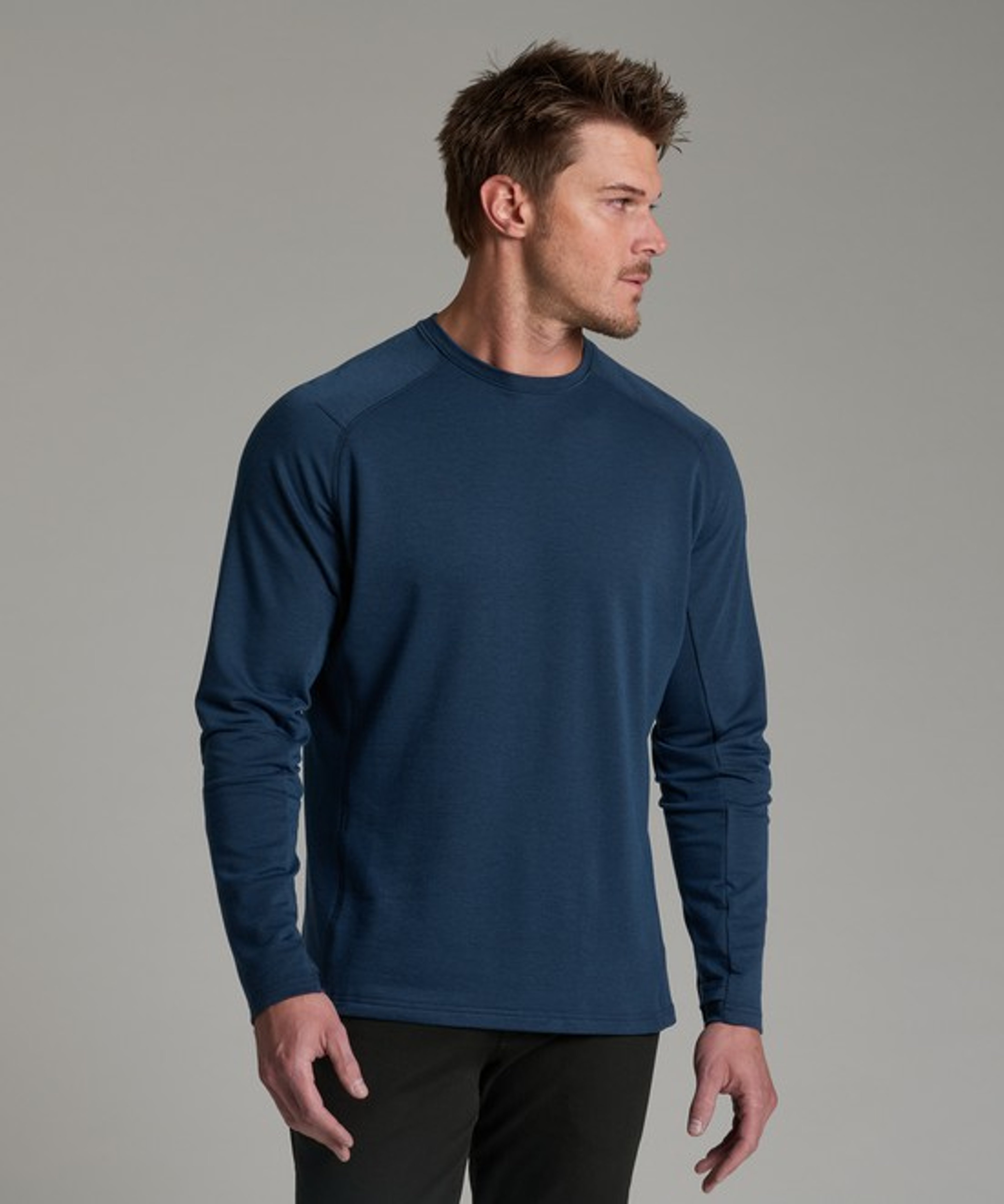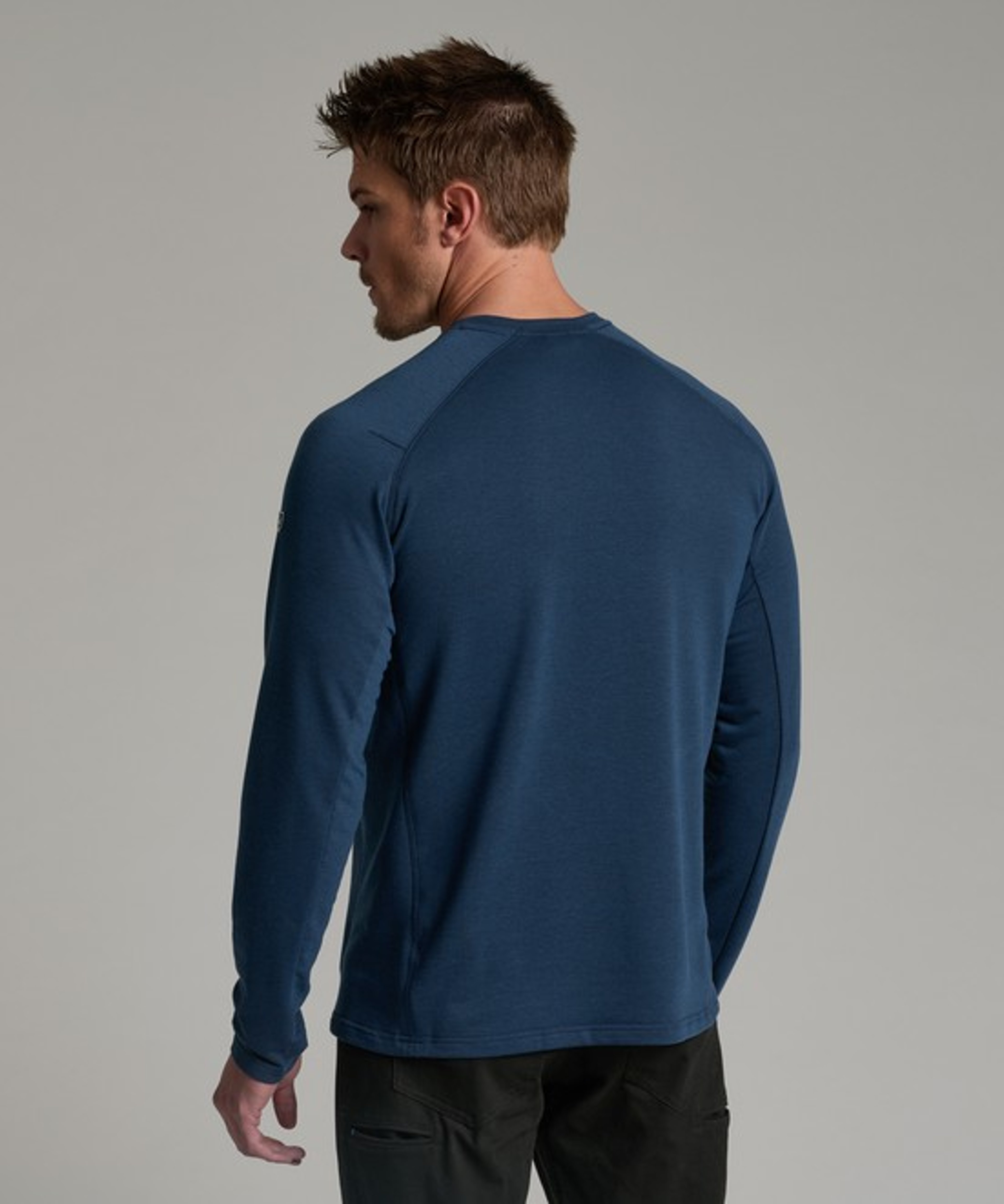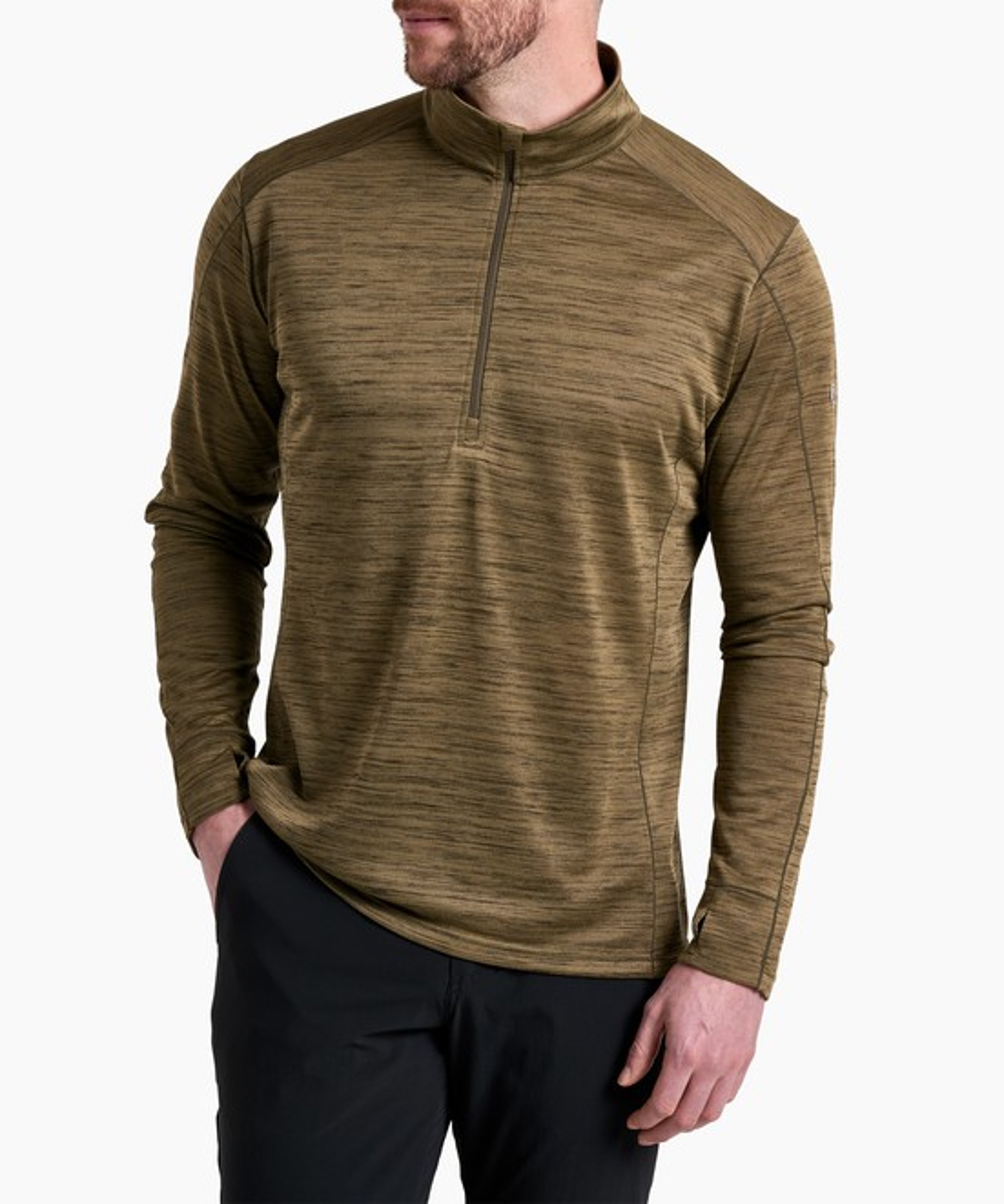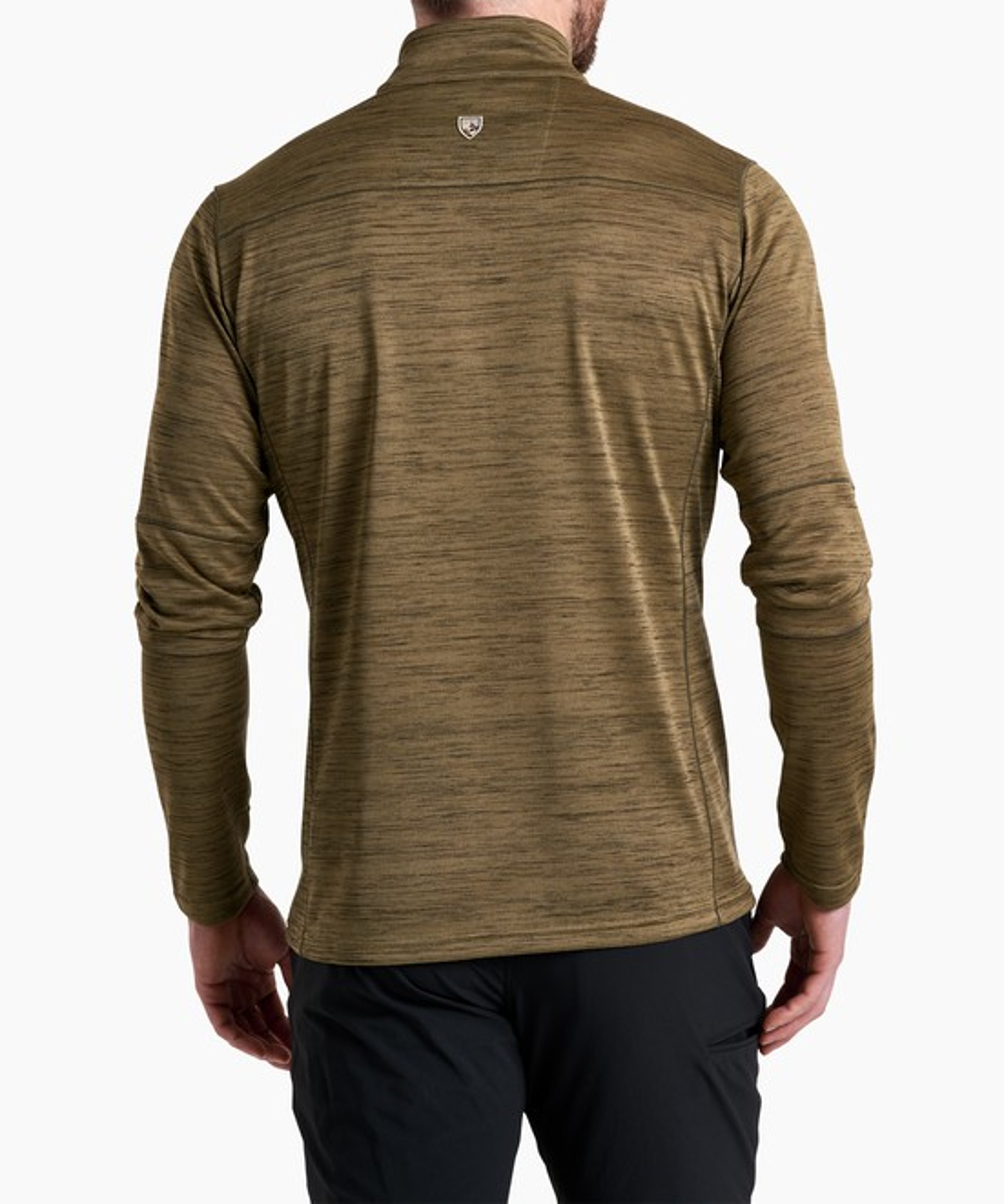




Men's Baselayer Tops
Breathe Easy with Performance Baselayer Tops for Men.
Choose from a variety of fabrics, styles, and features for the men's baselayer tops that are right for you:
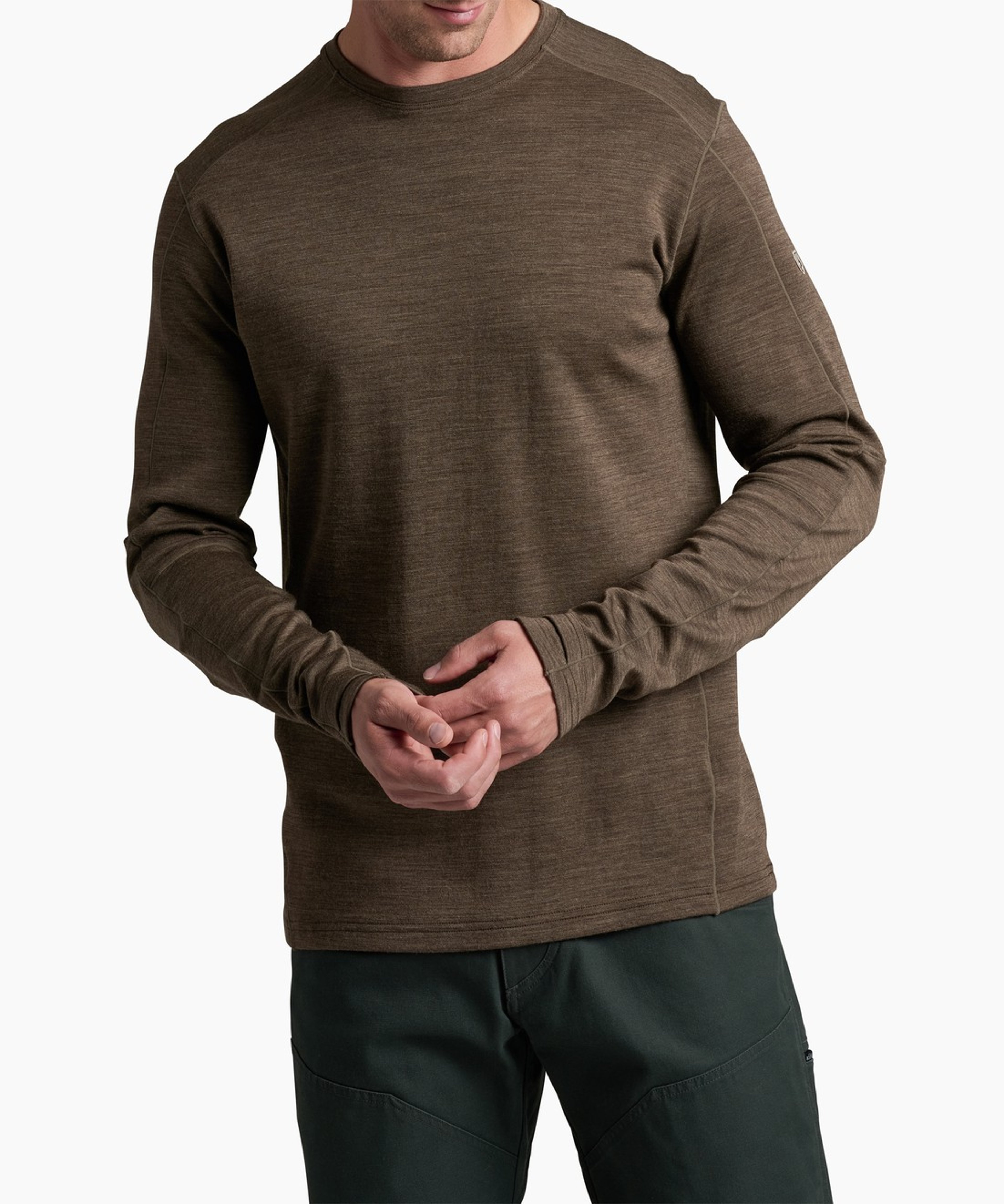
Merino Warmth. Cold-weather baselayer tops built on superfine merino wool deliver temperature regulation, natural odor resistance, and that no-itch comfort that wool blends from a generation ago could never quite hit. Knit constructions that trap micro air pockets keep you warmer without piling on weight, so a single layer pulls more of its share when the mercury drops. For wool-first styles across crews, 1/4-zips, and heavier knits, see our men's merino wool collection.
Synthetic Performance. Technical knits move sweat off your skin and dry on the move. Moisture-wicking and quick-dry properties mean a hard climb doesn't end with a soaked, clammy first layer, and 3D patterning that follows the shape of the body cuts the bunching that ruins a long day under a pack.
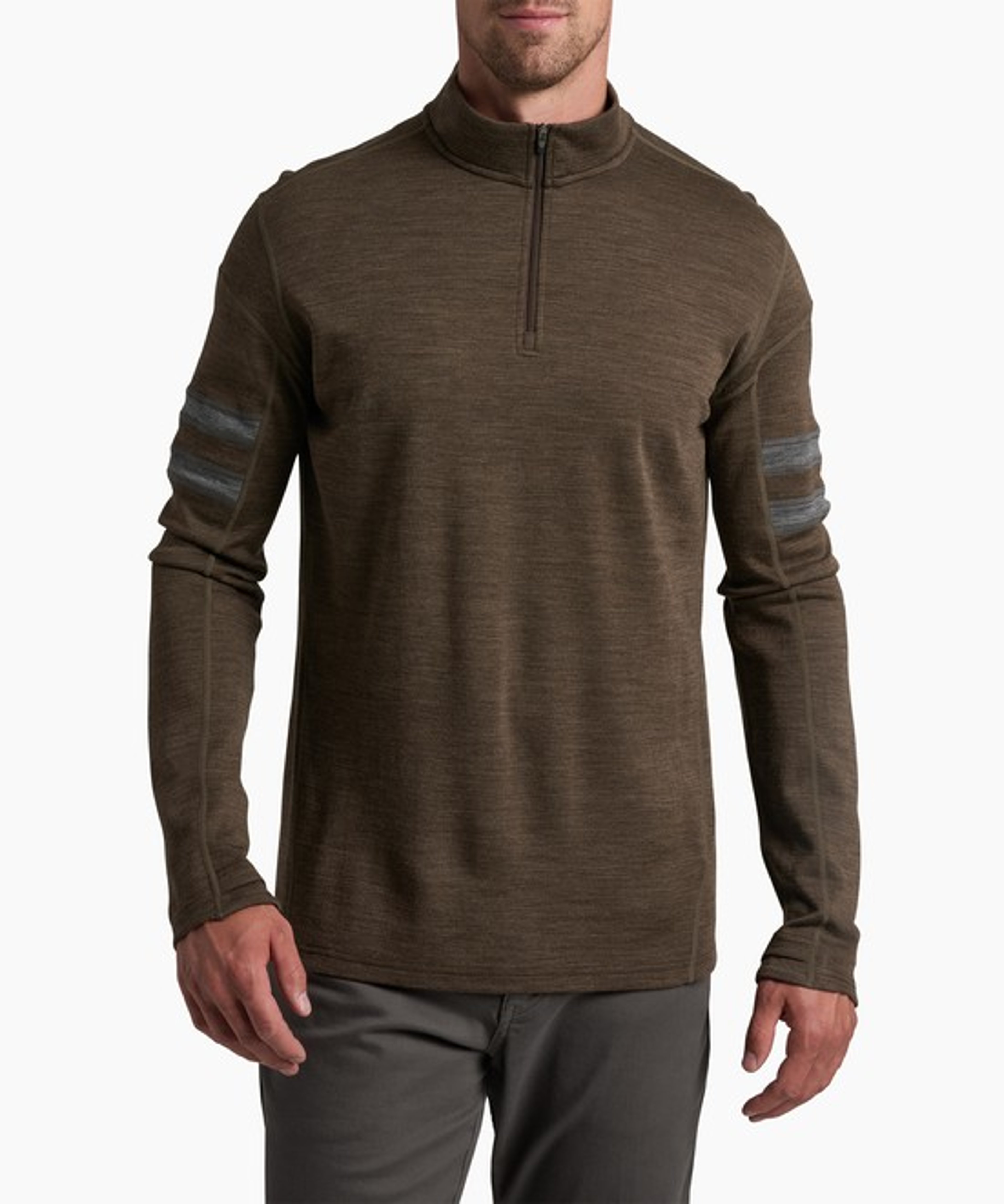
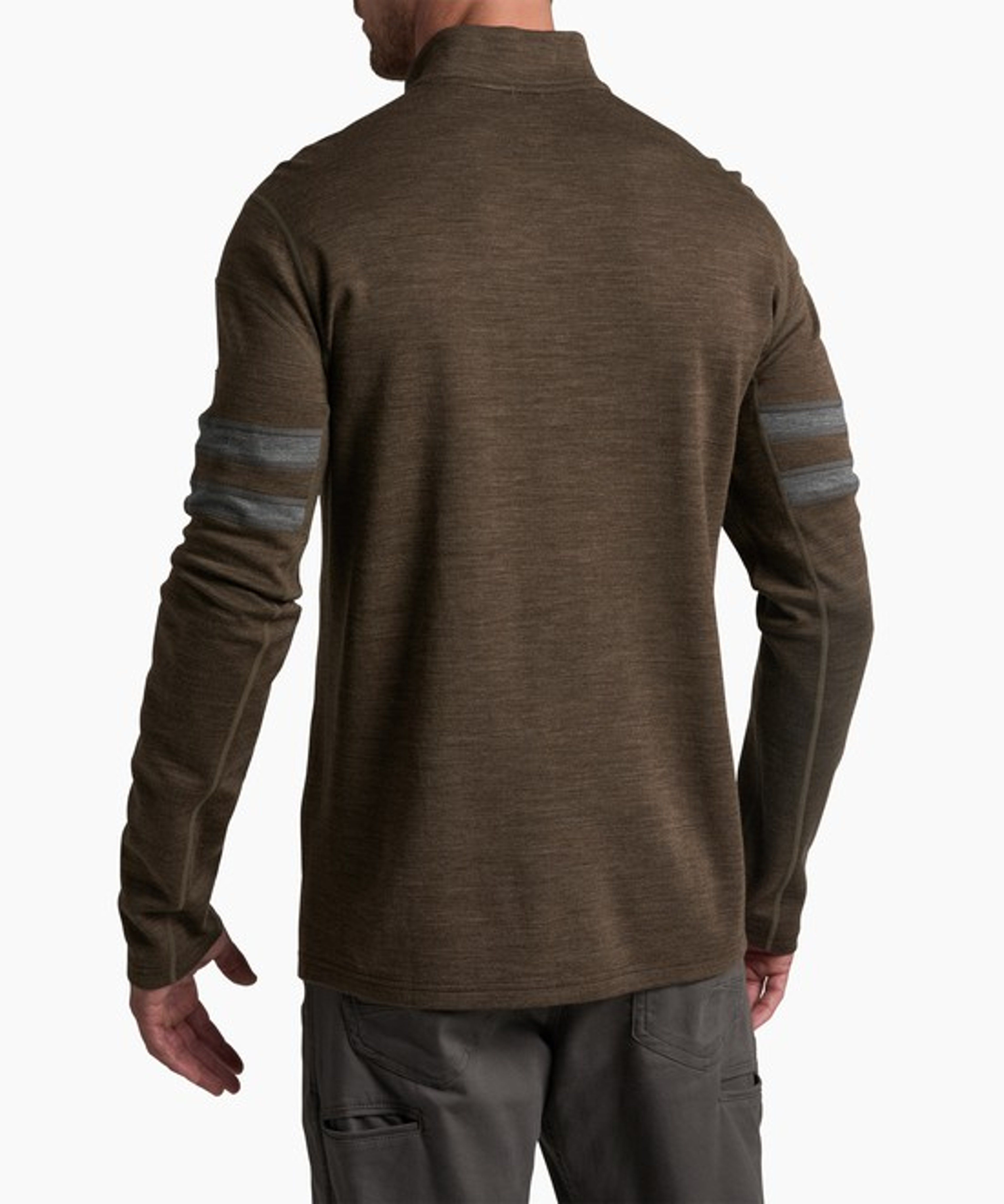
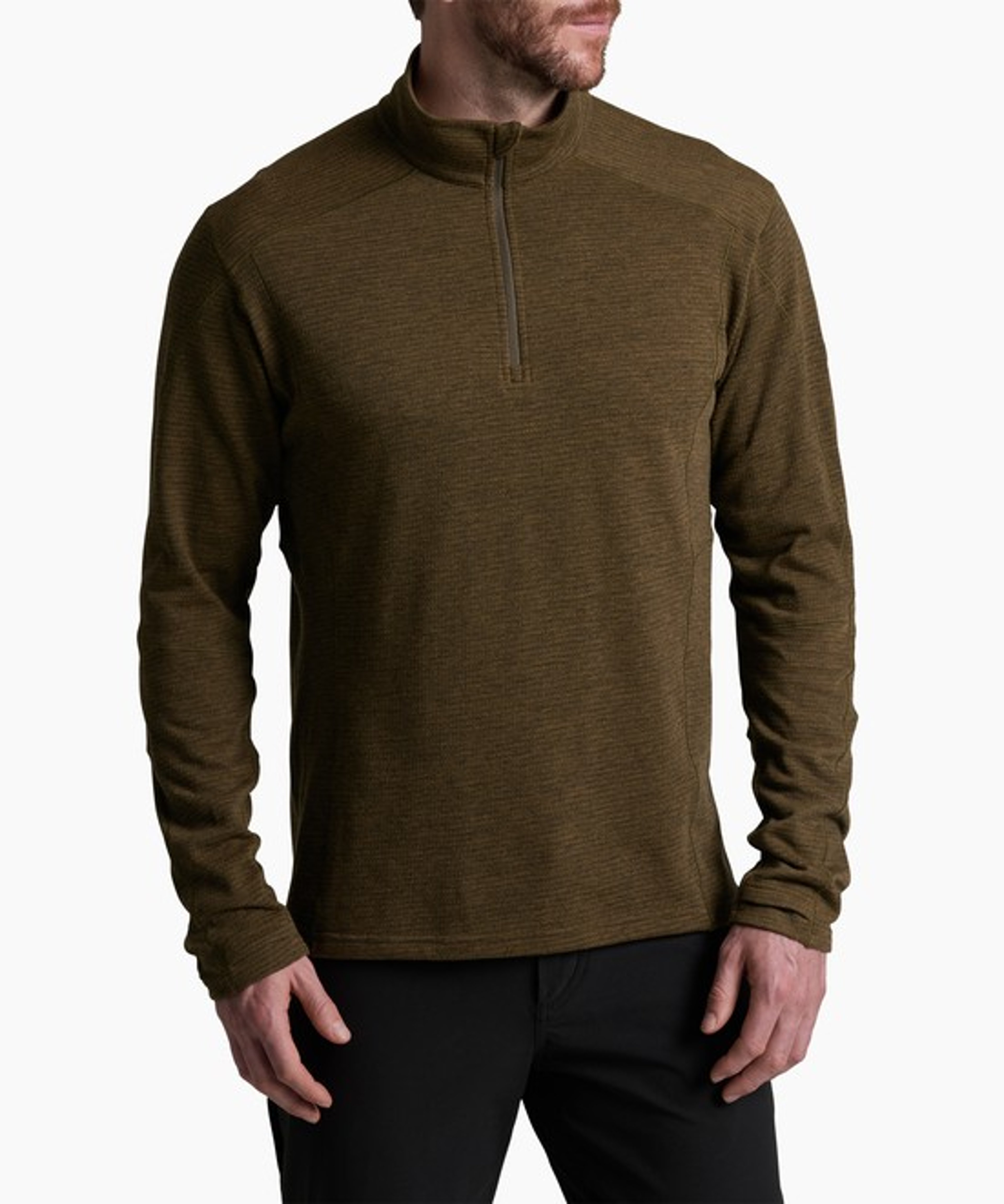
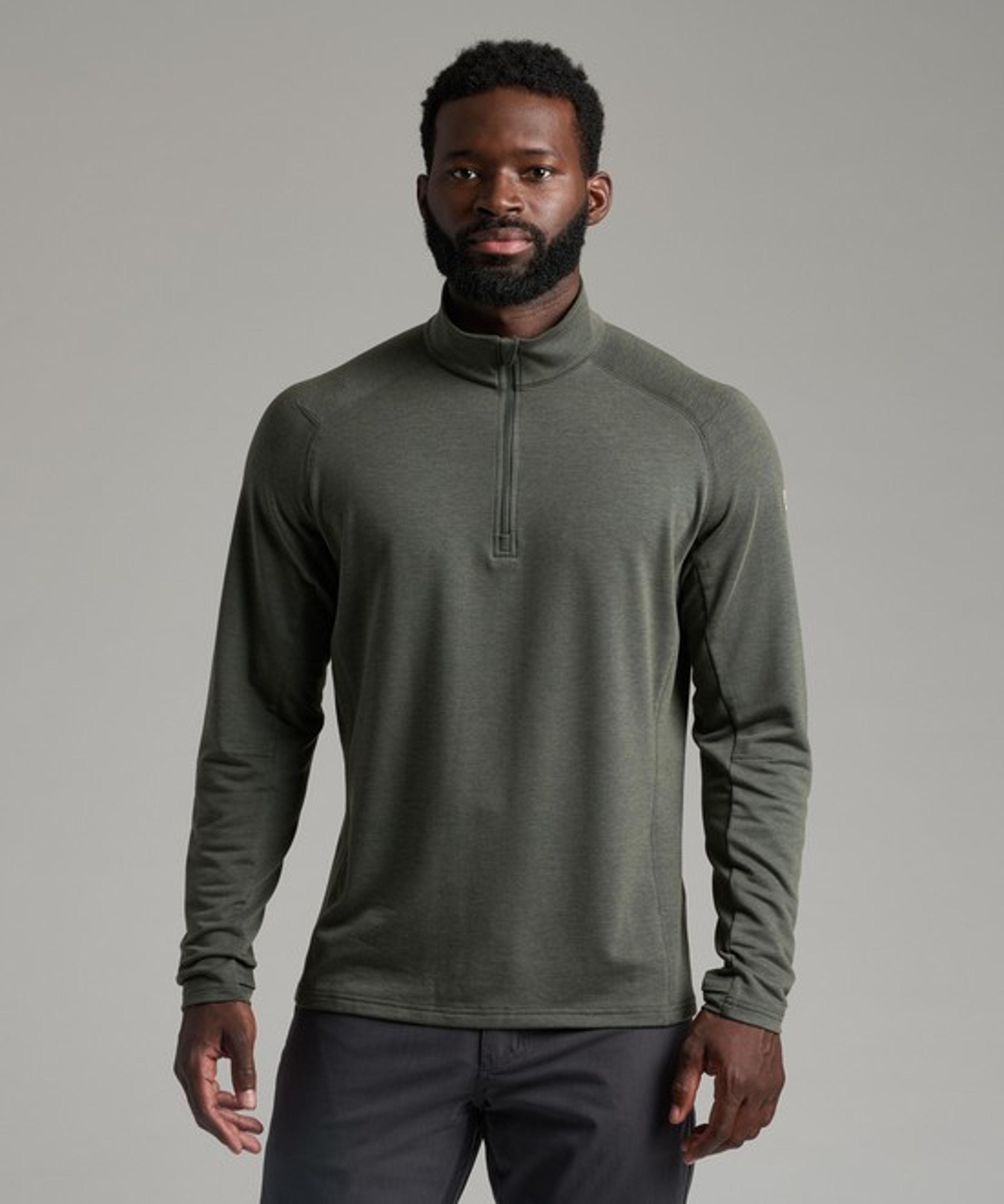
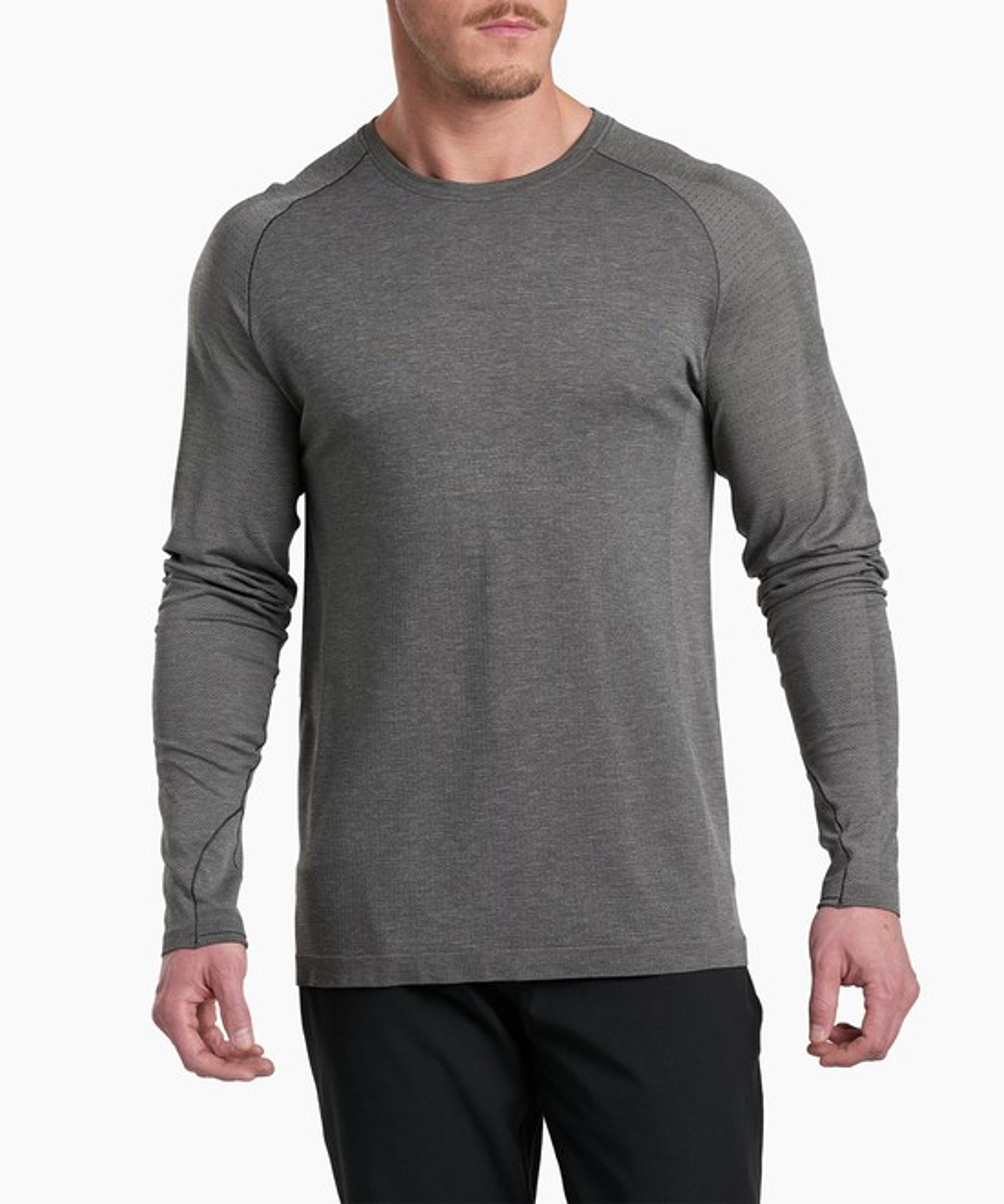
1/4-Zip Construction: A short zip at the chest gives you a temperature dial. Pop it open on the skin track, close it on the descent. Articulated sleeve patterning and flat, low-bulk seams keep the silhouette trim enough to layer cleanly under a softshell or hardshell without binding at the shoulder.
Sun-Ready Long Sleeve. On exposed alpine pitches and high-desert traverses, long sleeves beat short. Tight-knit synthetics with UPF 50+ block direct UV across the arms without the heat penalty most buyers expect, and thumb loops keep cuffs anchored over the back of the hand. For broader long-sleeve styling across hiking, casual, and travel, see our men's long sleeve shirts.
Warm-Weather Counterpart. When the trail's short and the sun's high, the shorter-coverage answer lives in our men's short sleeve shirts, same wicking, quick-dry priorities, less fabric.
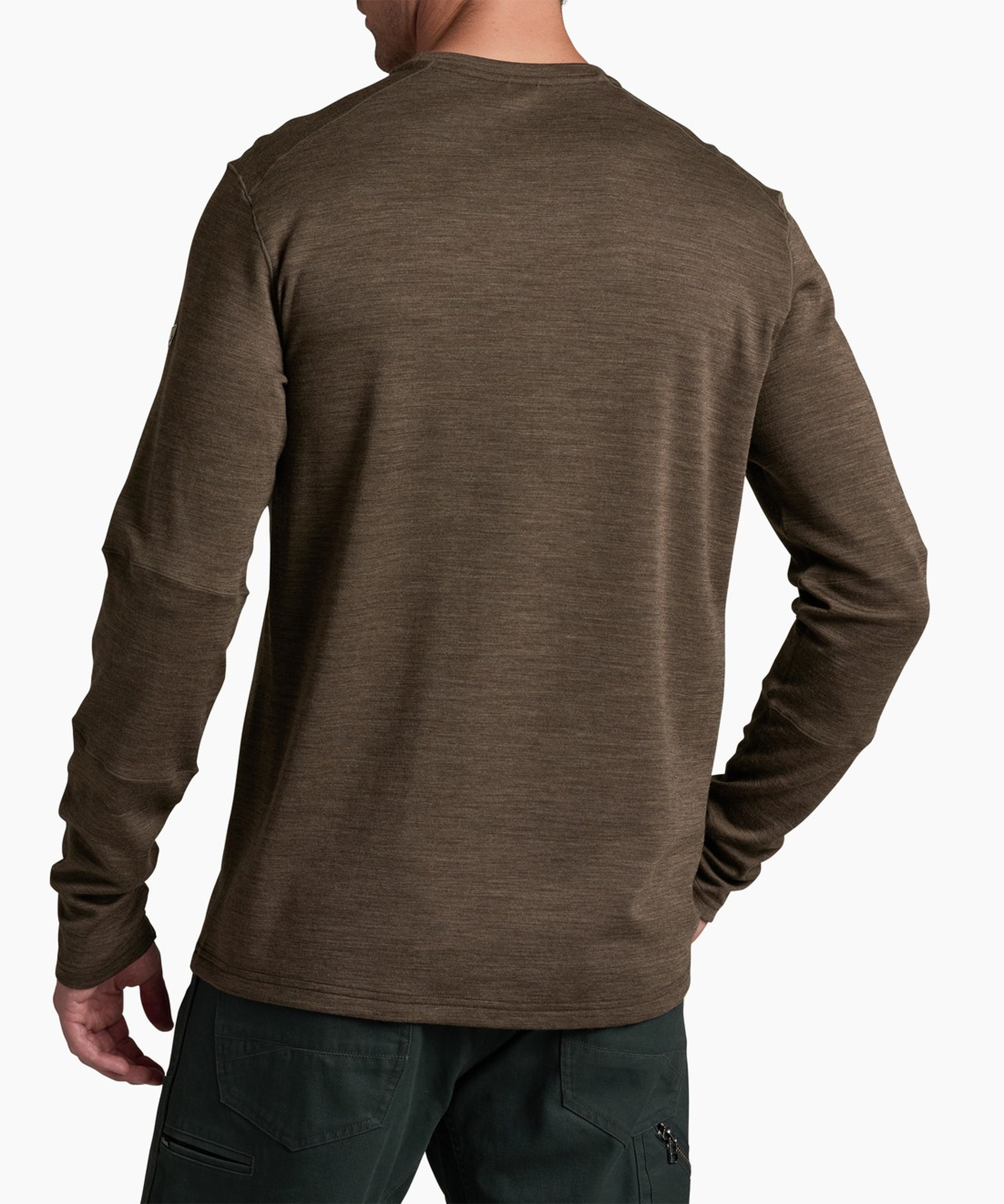
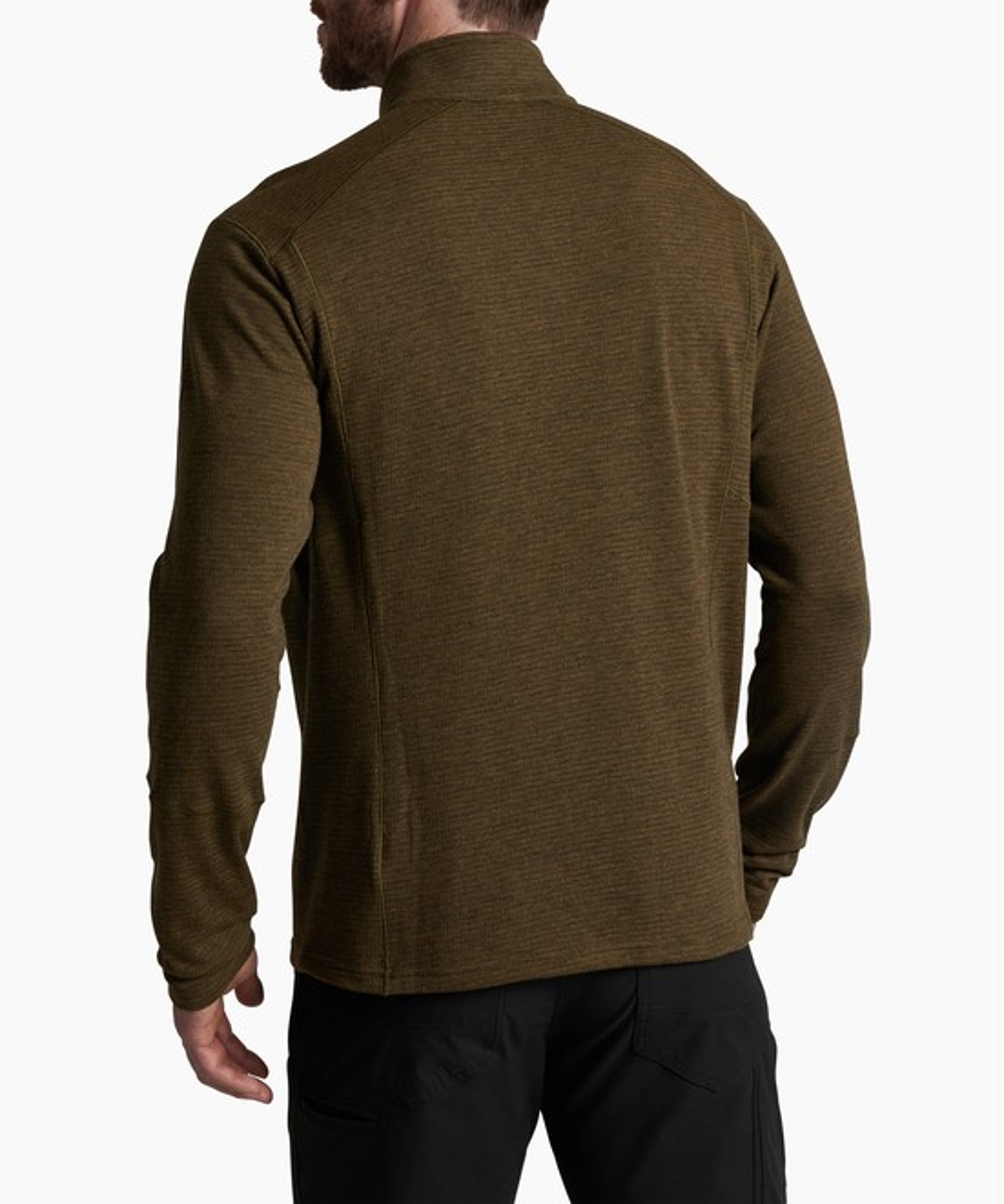
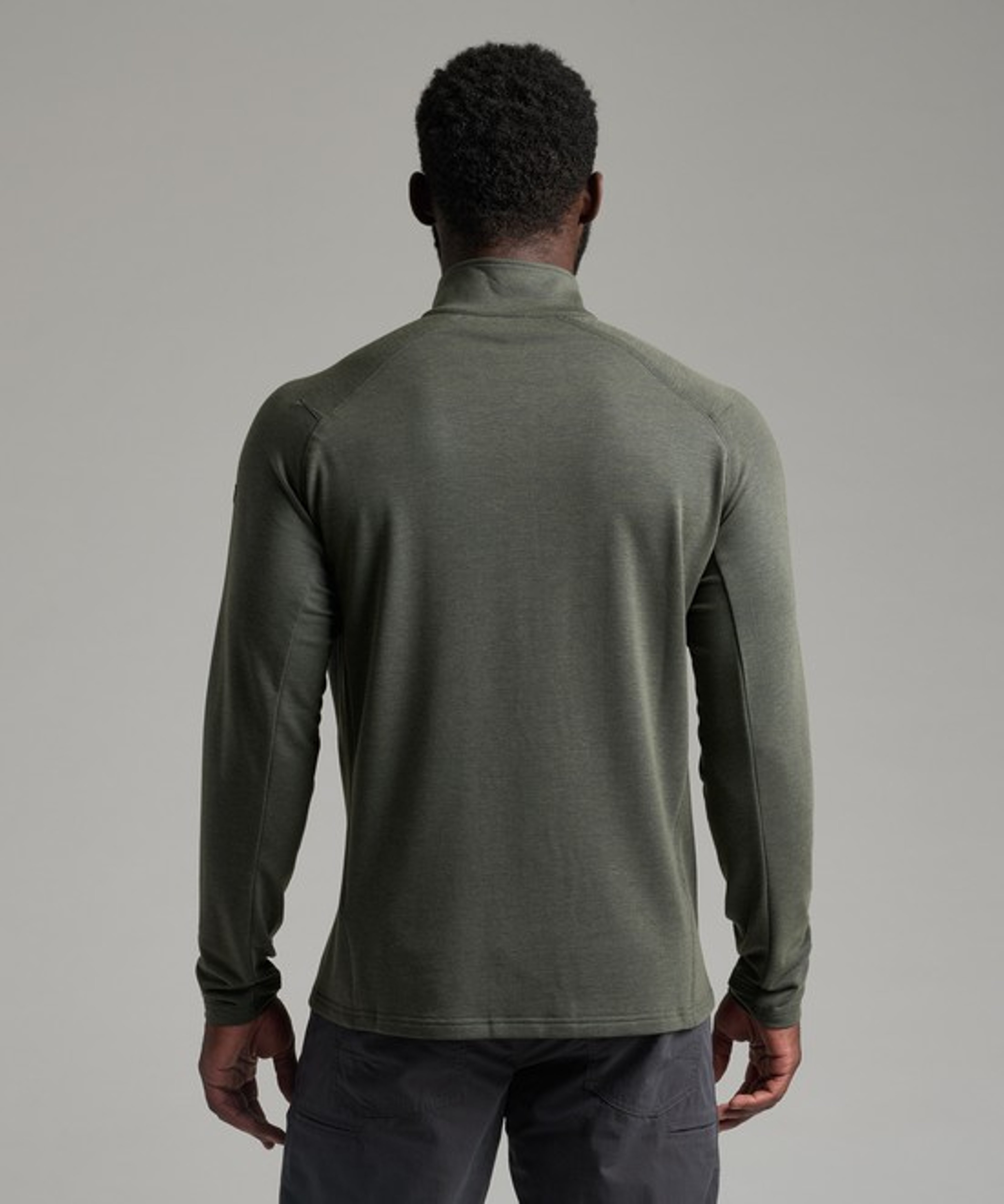
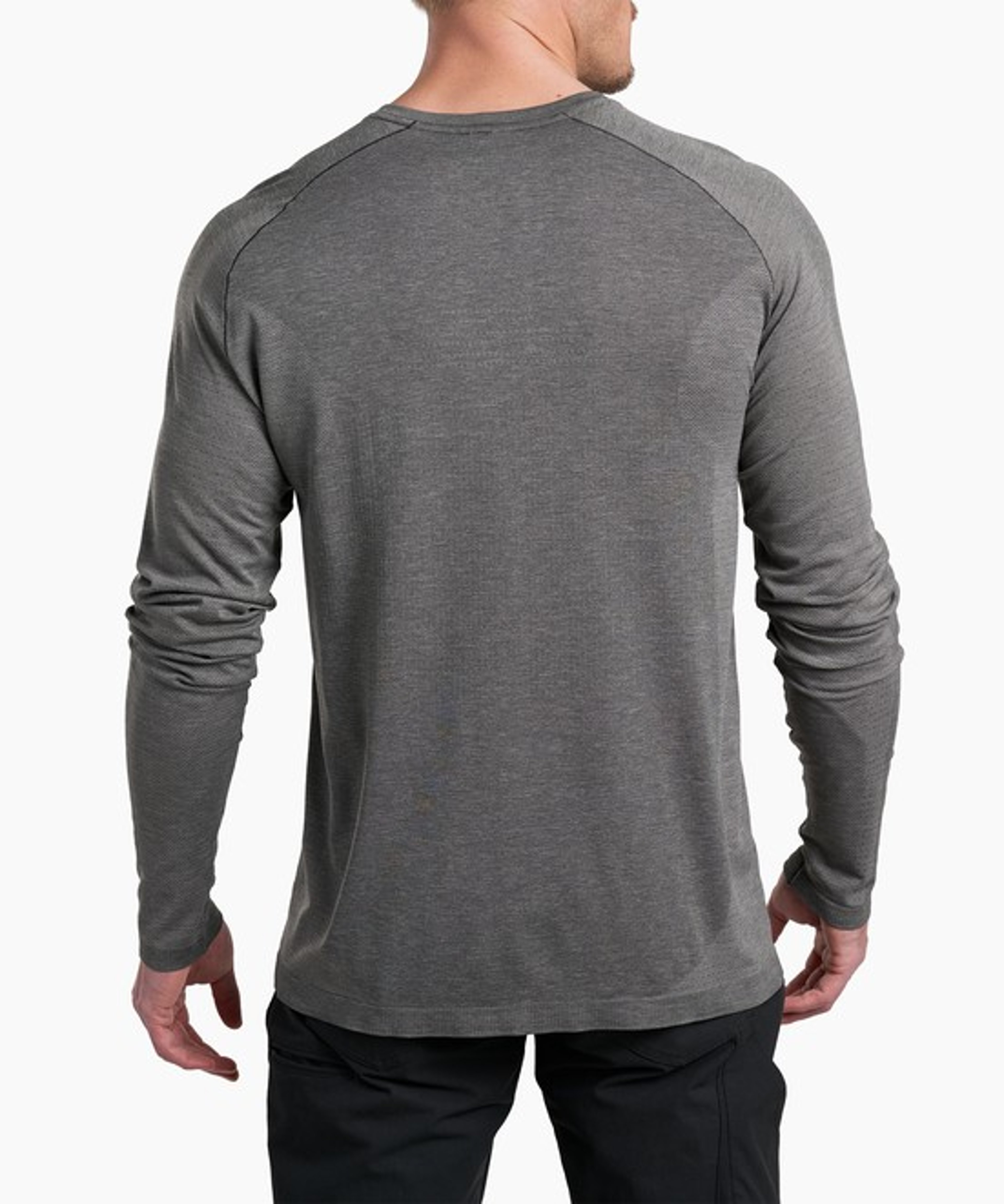
When selecting the right baselayer top, look for signature touches: articulated sleeves for unrestricted reach, flatlock seams that disappear under straps, thumb loops to seal out the cold, and a trim enough cut to layer without bulk.
Choose from a variety of fabrics, styles, and features for the men's baselayer tops that are right for you:
Merino Warmth. Cold-weather baselayer tops built on superfine merino wool deliver temperature regulation, natural odor resistance, and that no-itch comfort that wool blends from a generation ago could never quite hit. Knit constructions that trap micro air pockets keep you warmer without piling on weight, so a single layer pulls more of its share when the mercury drops. For wool-first styles across crews, 1/4-zips, and heavier knits, see our men's merino wool collection.
Synthetic Performance. Technical knits move sweat off your skin and dry on the move. Moisture-wicking and quick-dry properties mean a hard climb doesn't end with a soaked, clammy first layer, and 3D patterning that follows the shape of the body cuts the bunching that ruins a long day under a pack.
1/4-Zip Construction: A short zip at the chest gives you a temperature dial. Pop it open on the skin track, close it on the descent. Articulated sleeve patterning and flat, low-bulk seams keep the silhouette trim enough to layer cleanly under a softshell or hardshell without binding at the shoulder.
Sun-Ready Long Sleeve. On exposed alpine pitches and high-desert traverses, long sleeves beat short. Tight-knit synthetics with UPF 50+ block direct UV across the arms without the heat penalty most buyers expect, and thumb loops keep cuffs anchored over the back of the hand. For broader long-sleeve styling across hiking, casual, and travel, see our men's long sleeve shirts.
Warm-Weather Counterpart. When the trail's short and the sun's high, the shorter-coverage answer lives in our men's short sleeve shirts, same wicking, quick-dry priorities, less fabric.
When selecting the right baselayer top, look for signature touches: articulated sleeves for unrestricted reach, flatlock seams that disappear under straps, thumb loops to seal out the cold, and a trim enough cut to layer without bulk.
Men's baselayer tops in merino wool and technical synthetics, moisture-wicking, quick-dry, UPF-protective, and built to layer under everything from a softshell to a hardshell.
What makes the best baselayer tops for you?
The best baselayer top checks four boxes: a moisture-wicking fabric, quick-dry performance, smart construction, and a fit that layers cleanly.
That means a synthetic or merino knit (cotton is out), flatlock seams that disappear under pack straps, articulated sleeves for full reach overhead, and a silhouette trim enough to slide under a softshell without bunching. Thumb loops and a 1/4 zip for venting separate a layer you forget about from one you keep adjusting.
That means a synthetic or merino knit (cotton is out), flatlock seams that disappear under pack straps, articulated sleeves for full reach overhead, and a silhouette trim enough to slide under a softshell without bunching. Thumb loops and a 1/4 zip for venting separate a layer you forget about from one you keep adjusting.
What fabric is best for performance shirts: synthetic, merino, or blend?
Merino wool wins on odor resistance and temperature regulation. Synthetic wins on wicking speed and durability. Blends split the difference.
Superfine merino regulates body temperature across a wide range and resists odor for multi-day trips where laundry isn't an option. Technical synthetic knits move moisture faster, dry quicker after a hard effort, and shrug off abrasion under hipbelts and pack straps better than pure wool. Pick by trip length: under a day, synthetic. Multi-day, merino or a wool-forward blend.
Superfine merino regulates body temperature across a wide range and resists odor for multi-day trips where laundry isn't an option. Technical synthetic knits move moisture faster, dry quicker after a hard effort, and shrug off abrasion under hipbelts and pack straps better than pure wool. Pick by trip length: under a day, synthetic. Multi-day, merino or a wool-forward blend.
Do you really need a technical shirt, or will a cotton tee do?
A technical baselayer matters the moment you sweat. Cotton soaks it up, holds it against your skin, and stays wet for hours, which gets cold fast.
Technical knits, in either merino or synthetic, pull moisture off the skin to the surface where it evaporates, so you stay drier and warmer when the wind picks up. The avoid-cotton rule is universal in cold and wet conditions. In dry summer heat a cotton tee is survivable but still beaten by a moisture-wicking knit with UPF 50+.
Technical knits, in either merino or synthetic, pull moisture off the skin to the surface where it evaporates, so you stay drier and warmer when the wind picks up. The avoid-cotton rule is universal in cold and wet conditions. In dry summer heat a cotton tee is survivable but still beaten by a moisture-wicking knit with UPF 50+.
Can you wear long-sleeve shirts in summer?
Yes, and on exposed days, a UPF 50+ long sleeve beats a short-sleeve tee for keeping you cool.
A tightly knit long sleeve does three things short sleeves can't. It blocks direct UV across the arms, where you take most of your sun load on a ridge or open trail. It traps a thin layer of moving air that helps evaporative cooling. And it keeps bugs, scrapes, and brush off your skin on overgrown trail.
The one rule: pick a moisture-wicking, quick-dry fabric with a high UPF rating.
A tightly knit long sleeve does three things short sleeves can't. It blocks direct UV across the arms, where you take most of your sun load on a ridge or open trail. It traps a thin layer of moving air that helps evaporative cooling. And it keeps bugs, scrapes, and brush off your skin on overgrown trail.
The one rule: pick a moisture-wicking, quick-dry fabric with a high UPF rating.
How should a baselayer top fit for layering?
A baselayer top should fit trim and close to the body without binding: snug enough to wick efficiently, loose enough to move freely.
Look for an articulated sleeve pattern so you can reach overhead without the hem riding up, flatlock seams that won't chafe under a pack strap, and shoulder seams that sit flat rather than perched on the bone. If a baselayer pinches at the shoulders or balloons at the waist, it'll fight every layer you put over it.
Look for an articulated sleeve pattern so you can reach overhead without the hem riding up, flatlock seams that won't chafe under a pack strap, and shoulder seams that sit flat rather than perched on the bone. If a baselayer pinches at the shoulders or balloons at the waist, it'll fight every layer you put over it.
What's the best baselayer top for hot-weather hikes?
For hot-weather hikes, choose a lightweight, ultra-breathable synthetic or merino-blend long sleeve with UPF 50+ and ventilation built into the construction.
Look for an open-knit fabric that moves air across the skin, flat shoulder seams to prevent chafe under pack straps, and a slightly relaxed cut through the torso. Long sleeves with a high UPF rating outperform short sleeves on exposed days, a small trade in arm airflow for a much bigger reduction in heat gain. Pair the top with a moisture-wicking lower layer like our men's underwear collection to keep the full kit dry on long climbs.
Stay cool and covered out there.
Look for an open-knit fabric that moves air across the skin, flat shoulder seams to prevent chafe under pack straps, and a slightly relaxed cut through the torso. Long sleeves with a high UPF rating outperform short sleeves on exposed days, a small trade in arm airflow for a much bigger reduction in heat gain. Pair the top with a moisture-wicking lower layer like our men's underwear collection to keep the full kit dry on long climbs.
Stay cool and covered out there.