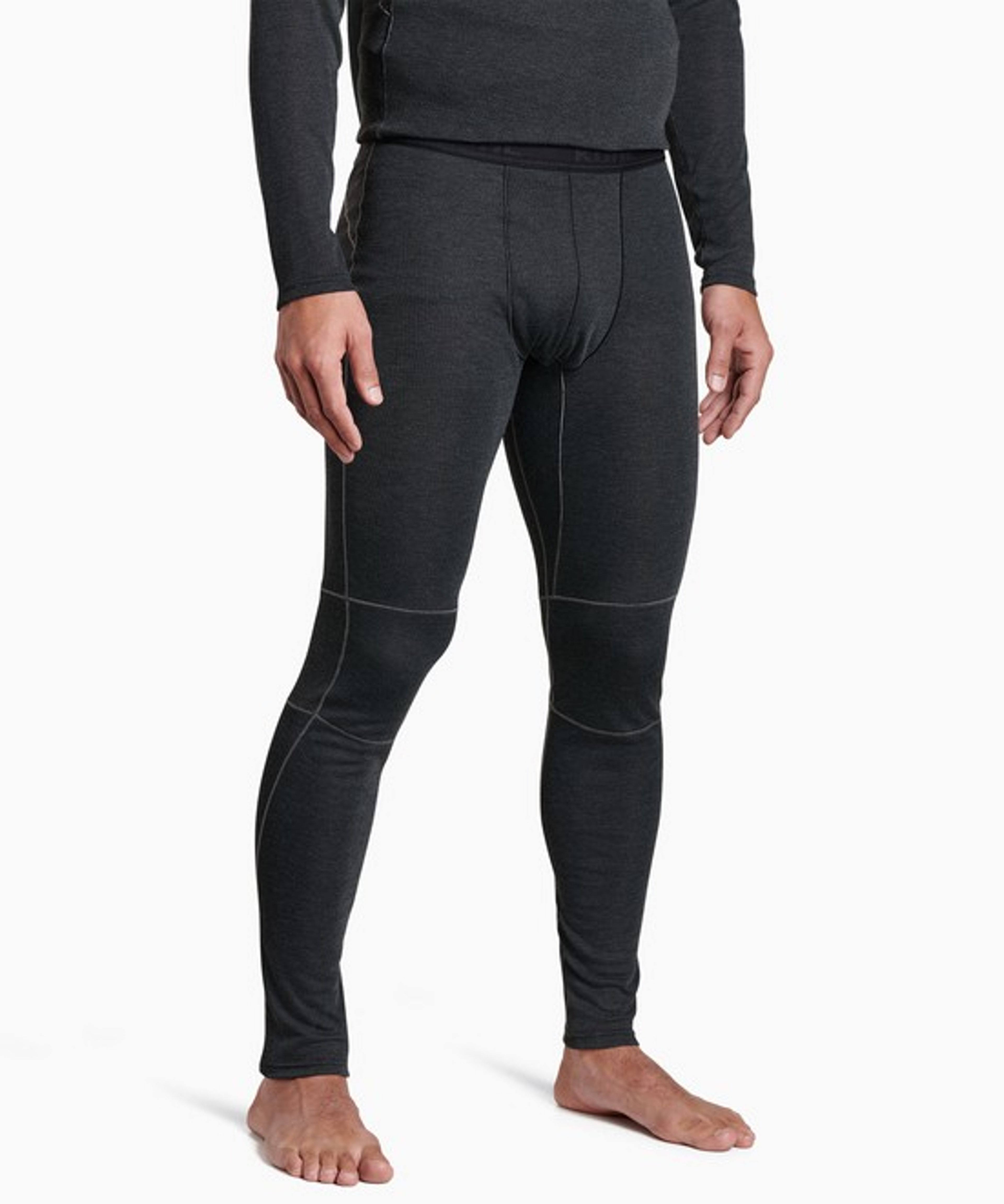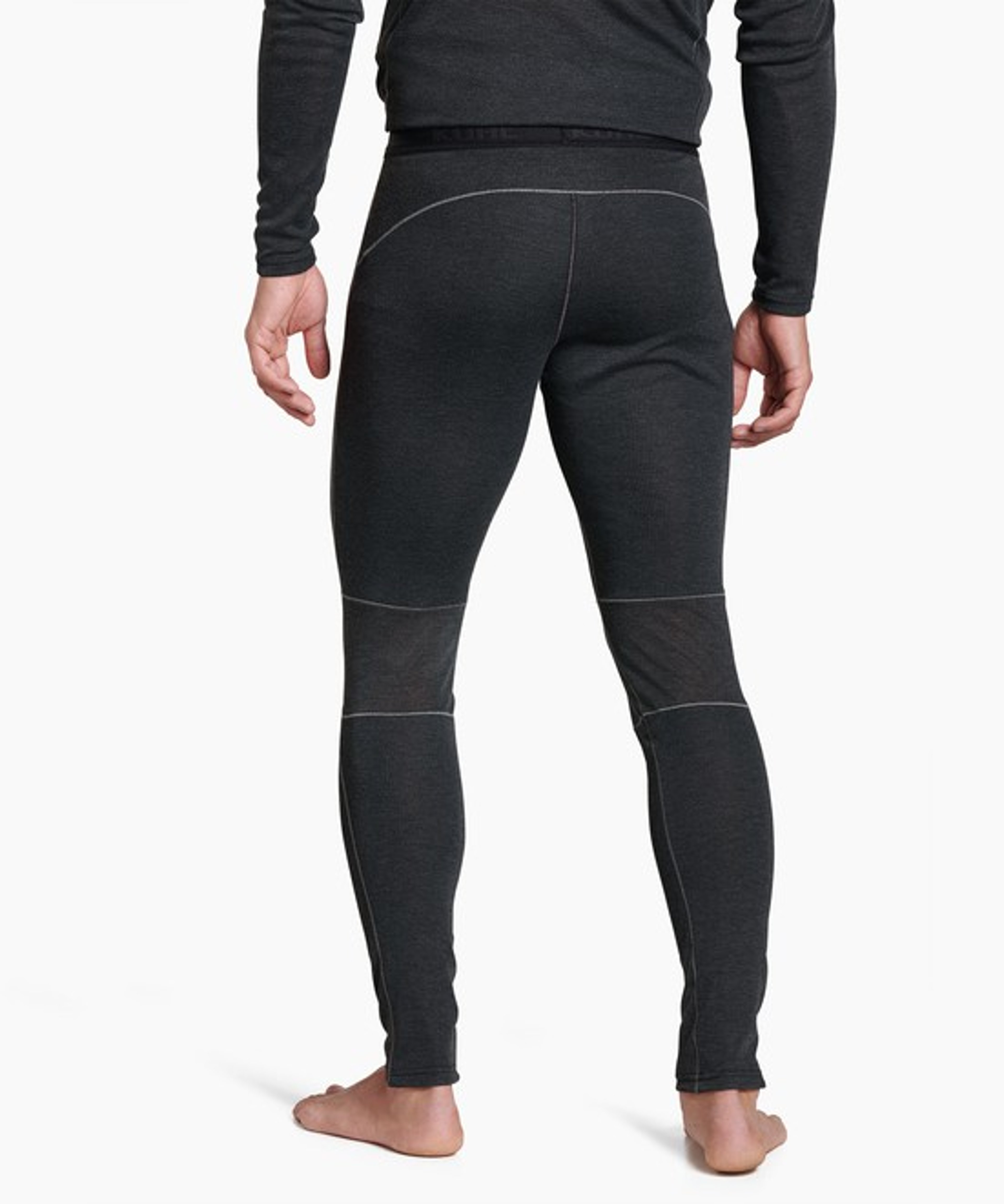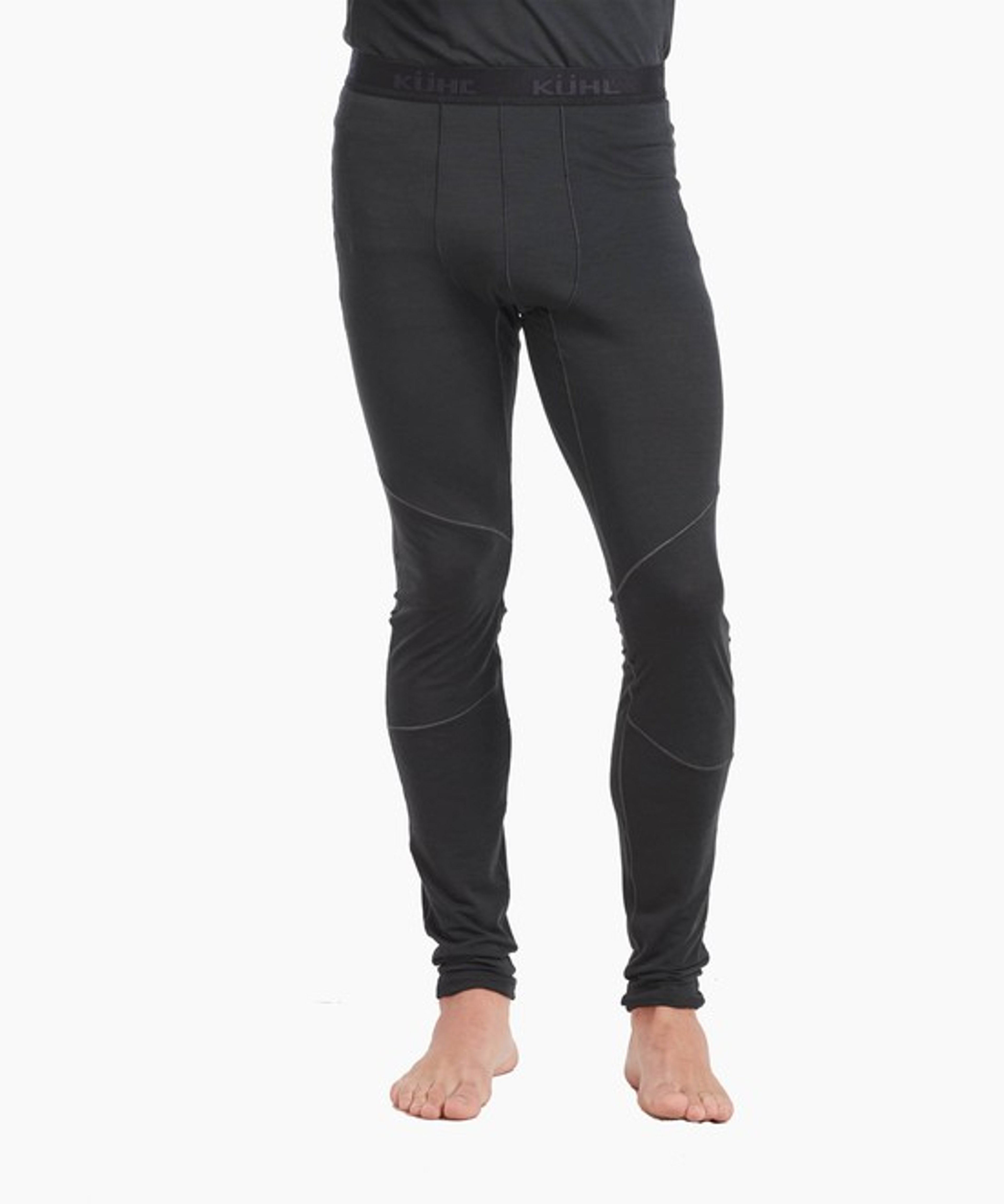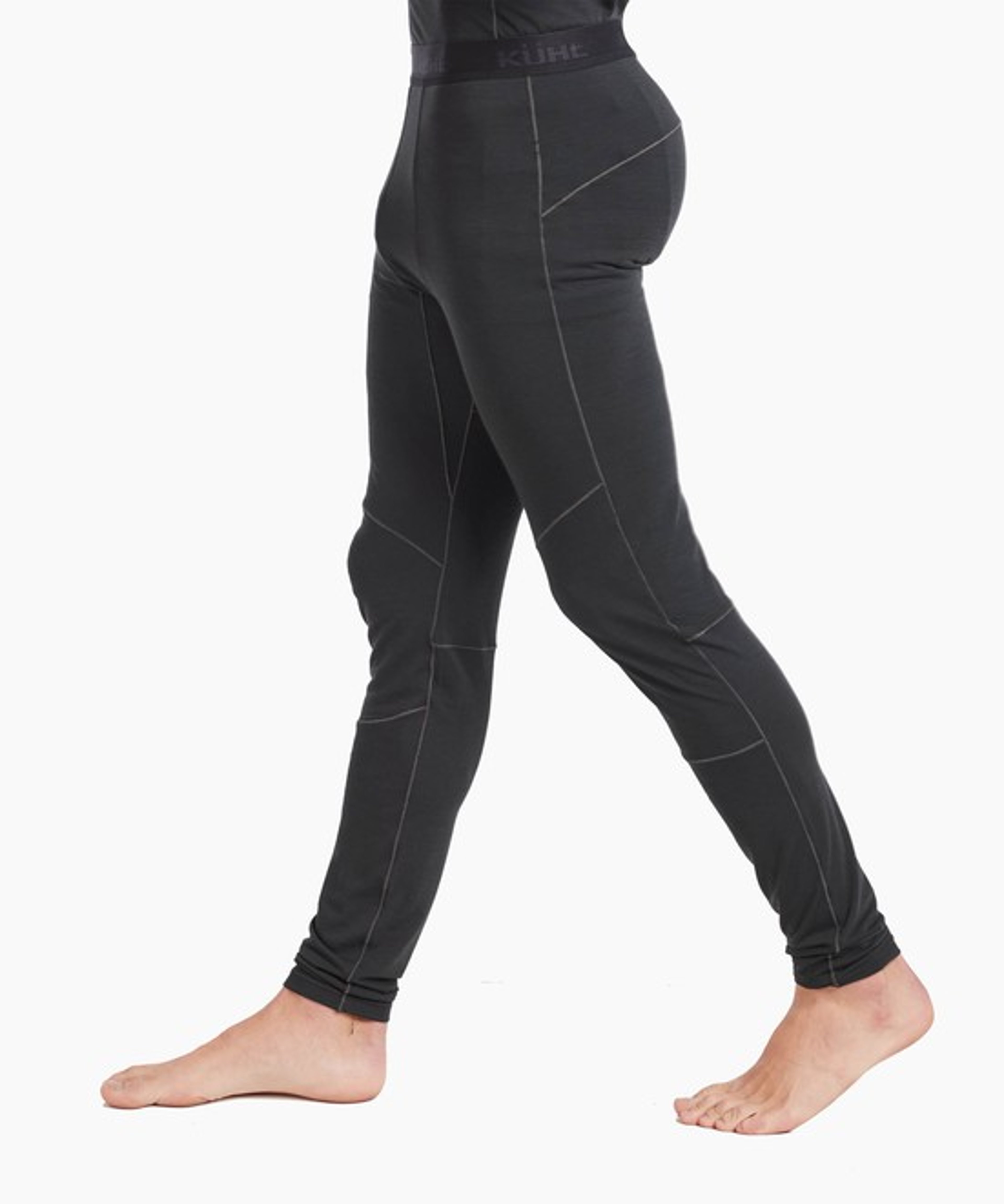




Men's Baselayer Bottoms
Layer Smart with KÜHL Men's Baselayer Bottoms
A baselayer bottom is the first thing on, the last thing off, and the piece doing the quiet work between your skin and everything else. Done right, it manages moisture, regulates temperature, and disappears under your pants. Done wrong, it bunches at the knee and soaks through by mile three.
Choose from a variety of fabrics, knits, and weights for the men's baselayer bottoms that are right for you:
Merino Wool Baselayer Bottoms. Built for cold-weather wear that doesn't itch or stink after a long day. A fine-gauge Merino blend insulates when wet, wicks moisture off the skin, and resists odor over consecutive wears, the trait that makes wool the long-haul choice for backcountry trips. Low-bulk seams sit flat under a midlayer so nothing chafes when you're moving.
Technical Synthetic Baselayer Bottoms. Multi-filament synthetic yarn moves sweat fast and dries faster, which matters when output is high and the temperature is low. These run lighter than wool, pack smaller, and recover their shape after repeat wears. A good fit is close but not compressive, with 4-way stretch through the seat and thigh.
Graphene-Infused Grid Bottoms. A grid-faced knit traps a thin layer of warm air against the skin while channels pull moisture out. Graphene fibers help the fabric retain or release heat in step with body temperature, useful on stop-start days where you alternate between ridge wind and protected south-facing climbs.
When layering for cold, baselayer bottoms work as the foundation for an insulated men's pants build. Pull a softshell or insulated trouser over the top, and the system holds. For shoulder-season days where the morning is cold and the afternoon isn't, a lightweight baselayer underneath lets you regulate by shedding the outer layer rather than starting over.
Look for signature touches like flatlock seams that sit flat under outerwear, an articulated knee for stride freedom, and a soft, low-bulk waistband that sits flat under a pack belt.
A baselayer bottom is the first thing on, the last thing off, and the piece doing the quiet work between your skin and everything else. Done right, it manages moisture, regulates temperature, and disappears under your pants. Done wrong, it bunches at the knee and soaks through by mile three.
Choose from a variety of fabrics, knits, and weights for the men's baselayer bottoms that are right for you:
Merino Wool Baselayer Bottoms. Built for cold-weather wear that doesn't itch or stink after a long day. A fine-gauge Merino blend insulates when wet, wicks moisture off the skin, and resists odor over consecutive wears, the trait that makes wool the long-haul choice for backcountry trips. Low-bulk seams sit flat under a midlayer so nothing chafes when you're moving.
Technical Synthetic Baselayer Bottoms. Multi-filament synthetic yarn moves sweat fast and dries faster, which matters when output is high and the temperature is low. These run lighter than wool, pack smaller, and recover their shape after repeat wears. A good fit is close but not compressive, with 4-way stretch through the seat and thigh.
Graphene-Infused Grid Bottoms. A grid-faced knit traps a thin layer of warm air against the skin while channels pull moisture out. Graphene fibers help the fabric retain or release heat in step with body temperature, useful on stop-start days where you alternate between ridge wind and protected south-facing climbs.
When layering for cold, baselayer bottoms work as the foundation for an insulated men's pants build. Pull a softshell or insulated trouser over the top, and the system holds. For shoulder-season days where the morning is cold and the afternoon isn't, a lightweight baselayer underneath lets you regulate by shedding the outer layer rather than starting over.
Look for signature touches like flatlock seams that sit flat under outerwear, an articulated knee for stride freedom, and a soft, low-bulk waistband that sits flat under a pack belt.
Men's baselayer bottoms are the foundation of any cold-weather kit, wicking moisture, holding warmth, and layering flat under your pants.
What should you look for in men's baselayer bottoms?
Look for a snug-but-not-compressive fit, a moisture-wicking fabric, and flat seams that won't chafe under your outer pants. An articulated knee and a gusseted crotch matter as much in a baselayer as they do in a hiking pant.
Fabric is the other half of the call. Merino wool wins for warmth and odor resistance over long trips. A technical synthetic with 4-way stretch wins for high-output days and faster dry times. A soft, low-bulk waistband is non-negotiable. It sits under a pack belt and a pair of pants.
Fabric is the other half of the call. Merino wool wins for warmth and odor resistance over long trips. A technical synthetic with 4-way stretch wins for high-output days and faster dry times. A soft, low-bulk waistband is non-negotiable. It sits under a pack belt and a pair of pants.
Are jeans or cotton pants OK for hiking, working, or traveling in?
No, cotton is the wrong tool for any of these jobs. Cotton absorbs sweat, holds it against your skin, takes hours to dry, and loses its insulating value once wet. In cold weather that's a safety issue, not just a comfort one.
Synthetic blends and Merino wool do the opposite: they wick moisture off the skin, dry quickly, and hold warmth even when damp. A moisture-wicking baselayer under technical men's travel pants keeps you dry without the heat-spike-then-clammy cycle cotton creates.
Synthetic blends and Merino wool do the opposite: they wick moisture off the skin, dry quickly, and hold warmth even when damp. A moisture-wicking baselayer under technical men's travel pants keeps you dry without the heat-spike-then-clammy cycle cotton creates.
What's the difference between hiking, work, and travel pants?
Hiking pants prioritize stretch, breathability, and UPF 50+ for miles of trail movement. Work pants lean on heavier, abrasion-resistant fabrics built for jobsite punishment. Travel pants split the difference, lighter, more packable, with a cleaner look that reads at a restaurant without giving up performance.
A baselayer bottom layers under all three. Pair it with men's work pants for a cold jobsite, or slide one under a hiking pant when the morning starts below freezing. The baselayer is the constant. The outer pant changes with the day.
A baselayer bottom layers under all three. Pair it with men's work pants for a cold jobsite, or slide one under a hiking pant when the morning starts below freezing. The baselayer is the constant. The outer pant changes with the day.
What's the best fit for baselayer bottoms, slim, relaxed, or wide-leg?
Slim, close to the skin, but not compressive. A baselayer needs full skin contact to wick moisture. A relaxed fit creates dead air pockets where sweat collects.
What actually drives comfort is the construction. An articulated knee follows your stride. A gusseted crotch removes the seam pressure point that causes chafing on long days. Flatlock seams sit flush under your outer pants. Get those three right and the slim fit disappears under the outer layer.
What actually drives comfort is the construction. An articulated knee follows your stride. A gusseted crotch removes the seam pressure point that causes chafing on long days. Flatlock seams sit flush under your outer pants. Get those three right and the slim fit disappears under the outer layer.
What should you wear in hot vs cold weather?
In cold, layer a Merino wool or grid-knit synthetic baselayer under a softshell or insulated pant: the baselayer manages moisture, the outer layer blocks wind and traps warmth. In sustained cold, a heavier gauge earns its keep.
In heat, skip the baselayer. A lightweight, UPF 50+ hiking pant with mesh ventilation does the job alone. Adding a layer underneath in summer only traps heat. The exception is high-altitude or desert nights, where a lightweight baselayer packs small and doubles as sleepwear.
In heat, skip the baselayer. A lightweight, UPF 50+ hiking pant with mesh ventilation does the job alone. Adding a layer underneath in summer only traps heat. The exception is high-altitude or desert nights, where a lightweight baselayer packs small and doubles as sleepwear.
Are baselayer bottoms waterproof, or just water-resistant?
Neither, a baselayer is a moisture-management layer, not a weather barrier. Its job is to move sweat off your skin, not to keep rain off it. Pulling a wet-weather pant over the top is what handles precipitation.
For sustained rain or wet snow, pair your baselayer with water-resistant men's pants carrying a DWR finish, and step up to a hardshell rain pant when the forecast is committed wet. The baselayer keeps you dry from the inside. The outer keeps you dry from the outside.
For sustained rain or wet snow, pair your baselayer with water-resistant men's pants carrying a DWR finish, and step up to a hardshell rain pant when the forecast is committed wet. The baselayer keeps you dry from the inside. The outer keeps you dry from the outside.